
Brampton Teens Among Three Charged After Loaded Handguns Seized Following Police Pursuit

Brampton, Ont. — Two Brampton teenagers are among three individuals facing multiple firearms-related charges after Peel Regional Police say they seized loaded handguns and high-capacity ammunition magazines following a vehicle pursuit earlier this month.

Police say the incident unfolded on the evening of December 9, when officers attempted to investigate a vehicle in a residential area of Brampton. What began as a routine interaction quickly escalated into a dangerous situation that ended with arrests, firearm seizures, and a renewed spotlight on youth gun violence in the region.


Vehicle Flees From Officers

According to Peel police, officers attempted to investigate a vehicle on Worthington Avenue at approximately 7 p.m. The circumstances that initially drew police attention to the vehicle were not disclosed.

When officers approached, police allege the driver fled at a high rate of speed, prompting immediate concern for public safety.

“A driver fleeing from police creates a significant risk to pedestrians, residents and other motorists,” police said in a statement following the incident.

The pursuit was short-lived. Police say the vehicle lost control shortly afterward and became disabled, allowing officers to move in and make arrests without further incident.


Three Arrested at the Scene

Following the crash, officers arrested two adults and one youth who were inside the vehicle. No serious injuries were reported.

During a search of the vehicle, police claim they discovered a cache of firearms and ammunition, including:

  • Two loaded Glock handguns

  • A high-capacity magazine containing 26 rounds of ammunition

  • A drum magazine, which is capable of holding a large volume of ammunition

Peel police emphasized that the firearms were loaded at the time of seizure, heightening concerns about the potential for violence had the situation unfolded differently.


Teenagers Facing Extensive Gun Charges

Police confirmed that two of the accused are teenagers from Brampton, while the third is a young adult from outside the city.

An 18-year-old Brampton man has been charged with:

  • Dangerous operation of a vehicle

  • Flight from a peace officer

  • Ten firearms-related offences

A 16-year-old Brampton youth is facing:

  • Fourteen gun-related charges, including offences related to possession of prohibited firearms and ammunition

A 20-year-old man from Dundalk, Ont., is charged with:

  • Nine firearms-related offences

Because one of the accused is a minor, police have not released identifying information in accordance with the Youth Criminal Justice Act.


Firearms and High-Capacity Magazines Raise Alarm

Police and public safety advocates say the seizure of high-capacity magazines and a drum magazine is particularly concerning.

Under Canadian law, most handgun magazines are limited to 10 rounds, and possession of prohibited or modified magazines can carry serious penalties.

“High-capacity magazines dramatically increase the lethality of firearms,” law enforcement officials have said in past statements. “Their presence often points to an increased risk of mass harm.”

While police did not disclose whether the firearms were legally registered or linked to other crimes, investigators say the matter remains under investigation.


Rising Concerns Over Youth Gun Involvement

The case adds to growing concern over the involvement of youth and young adults in gun-related offences in Peel Region.

In recent years, Peel police have repeatedly warned about the increasing accessibility of illegal firearms, particularly among teenagers. Many of these weapons are believed to be smuggled into Canada through organized crime networks or obtained through straw purchasing.

Police officials have noted that young people are increasingly being recruited or influenced by criminal networks, often through social media, peer pressure, or promises of status and financial gain.

“This is not just a policing issue,” community leaders have said. “It’s a social issue that requires prevention, education and intervention.”


Risks of Police Pursuits in Residential Areas

The incident also highlights the dangers associated with vehicle pursuits, especially in residential neighbourhoods.

Police services across Ontario follow strict pursuit policies that balance the need to apprehend suspects against the risk to the public. In many cases, pursuits are terminated if the danger becomes too great.

While Peel police did not provide details on pursuit tactics used in this case, the force noted that the vehicle became disabled shortly after fleeing, preventing a prolonged chase.

“No one wants to see a pursuit end in tragedy,” a policing expert said. “The presence of firearms only heightens the stakes.”


Legal Consequences and Court Process Ahead

All three accused are expected to face serious legal consequences if convicted.

Firearms offences involving loaded handguns and prohibited magazines can carry:

  • Lengthy prison sentences

  • Mandatory minimum penalties in some cases

  • Long-term prohibitions on firearm possession

For youth offenders, the Youth Criminal Justice Act allows courts to impose sentences that focus on rehabilitation while still holding individuals accountable for serious crimes.

The accused are expected to appear in court at a later date. None of the allegations have been tested in court.


Community Reaction and Calls for Prevention

Incidents involving firearms continue to fuel anxiety among residents, particularly when they occur in residential neighbourhoods and involve young people.

Community advocates say enforcement must be paired with early intervention programs, mentorship opportunities, and support for at-risk youth.

“Every gun taken off the street matters,” one community leader said. “But we also need to ask how these young people got here in the first place.”

Peel police have emphasized ongoing efforts to disrupt illegal gun trafficking through targeted enforcement, intelligence-led investigations, and partnerships with federal agencies.


Police Urge Public Assistance

Peel police are asking anyone with information related to illegal firearms or criminal activity to come forward.

Anonymous tips can be submitted through Peel Crime Stoppers, and police say community cooperation remains one of the most effective tools in preventing gun violence.


Conclusion

The arrest of three individuals — including two Brampton teenagers — and the seizure of loaded handguns following a vehicle pursuit underscores the continuing challenge of gun violence in Peel Region.

Police say removing illegal firearms from the streets is a critical step, but acknowledge that long-term solutions will require collaboration between law enforcement, community organizations, families and governments.

As the case moves through the courts, it serves as another reminder of the risks posed by illegal guns — and the urgency of preventing them from falling into the hands of young people.
Brampton Restaurant Receives Warning After Food Safety Violations Found During Peel Health Inspection

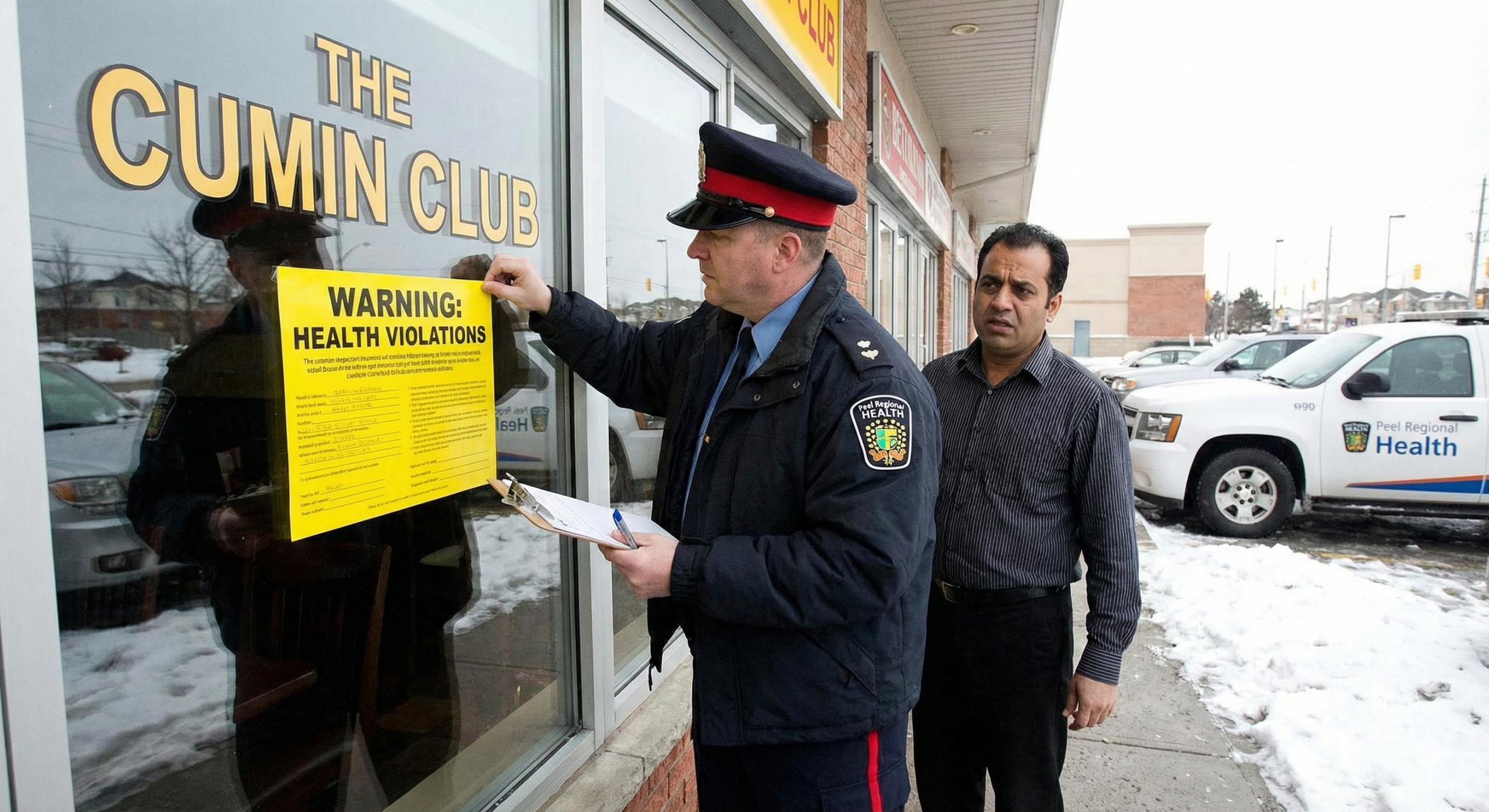
Brampton, Ont. — A Brampton restaurant was issued a conditional pass following a recent inspection by Peel Public Health, after inspectors identified several food safety and sanitation issues that did not meet provincial standards.

The restaurant, Fresh Tandoori, located at 3 Charles St., was inspected on December 11 as part of Peel Region’s routine food premises inspection program. While the business was permitted to continue operating, inspectors flagged multiple violations that required corrective action. A follow-up inspection on December 15 confirmed that the issues had been addressed, resulting in the establishment receiving a full pass.

Peel Public Health routinely inspects restaurants, bakeries, bars, beverage rooms, takeout counters, and other food establishments to ensure they comply with the Health Protection and Promotion Act, Ontario’s primary legislation governing food safety.


Inspection Reveals Multiple Areas of Non-Compliance

According to inspection records released by Peel Region, Fresh Tandoori failed to meet compliance requirements in several key areas during the December 11 inspection.

Among the violations cited by inspectors were issues related to temperature control, sanitation, water supply, and staff hygiene, all of which play a critical role in preventing foodborne illness.

Key violations identified included:

  • Lack of accurate and easy-to-read thermometers, which are required to monitor food temperatures safely

  • Improper food storage, increasing the risk of contamination or adulteration — classified as a significant risk

  • Insufficient supply of potable hot and cold running water under pressure

  • Missing or inadequate handwashing supplies at designated stations

  • Unsanitary washroom conditions, including missing required supplies

  • Poor housekeeping practices throughout the facility

  • Mechanical ventilation issues, preventing proper removal of odours, fumes and heat

  • Absence of a certified food handler or supervisor on site during hours of operation

One violation related to the maintenance of food-contact surfaces was corrected during the inspection, according to the report.

While no immediate closure was ordered, inspectors issued a yellow conditional pass, indicating that corrective measures were required to address potential health risks.


Follow-Up Inspection Results in Pass

Peel Public Health conducted a follow-up inspection on December 15, four days after the initial visit. During that inspection, officials confirmed that Fresh Tandoori had addressed the deficiencies outlined in the earlier report.

As a result, the restaurant received a green pass, meaning it was found to be in compliance with food safety regulations at the time of the follow-up visit.

Public health officials note that a conditional pass does not necessarily indicate an imminent health hazard, but rather that certain risks must be corrected promptly to ensure public safety.


How Peel’s Food Inspection System Works

Peel Public Health’s inspection program is designed to ensure transparency and accountability while protecting residents from foodborne illnesses. Inspection results are made publicly available so consumers can make informed choices about where they eat.

Under the system, food establishments receive one of three possible outcomes:

Green Pass

A green pass indicates the establishment is meeting all food safety and operational requirements under provincial law. These businesses are considered compliant at the time of inspection.

Yellow Conditional Pass

A yellow sign means inspectors found violations that must be corrected, particularly those posing a risk of illness. Businesses may remain open but are subject to follow-up inspections to confirm compliance.

Red Closed

A red sign is issued when inspectors identify a serious health hazard. The establishment must close immediately and remain closed until all risks are addressed and verified by public health officials.

Peel Region emphasizes that inspection results reflect conditions at the time of inspection and that compliance status can change over time.


Why Food Safety Violations Matter

Food safety experts stress that violations related to temperature control, sanitation, and hygiene are among the most common contributors to foodborne illness outbreaks.

Improper food storage can allow harmful bacteria such as Salmonella, E. coli, and Listeria to grow, while inadequate handwashing facilities increase the risk of cross-contamination between raw and cooked foods.

Similarly, lack of potable water, poor ventilation, and unsanitary washrooms can compromise overall cleanliness and pose risks not only to customers but also to food service workers.

Public health inspectors assess these risks using standardized provincial guidelines, focusing on prevention rather than punishment.


Frequency of Inspections in Peel Region

Food premises in Peel are inspected at least once a year, with higher-risk establishments subject to more frequent visits. Additional inspections may be conducted following complaints, illness reports, or previous non-compliance.

Inspectors are authorized to:

  • Enter food establishments without notice

  • Review food handling procedures

  • Take food samples if necessary

  • Order corrective actions

  • Close establishments when health hazards are identified

Peel Public Health says the goal of the program is not to penalize businesses, but to support safe food handling practices and reduce the risk of illness in the community.


What Consumers Can Do

Residents are encouraged to check inspection results before dining out. Peel Region publishes inspection outcomes online, allowing the public to search by restaurant name or location.

Consumers can also take note of posted inspection signs, which must be clearly visible at the entrance of food establishments.

Public health officials recommend customers:

  • Look for a green pass sign before entering

  • Report concerns such as poor cleanliness or food handling practices

  • Seek medical advice if they suspect food-related illness


Reminder for Food Operators

Peel Public Health regularly reminds food operators of their responsibilities under provincial law, including:

  • Ensuring at least one certified food handler is on site during operating hours

  • Maintaining clean, functional handwashing and washroom facilities

  • Monitoring food temperatures accurately

  • Practicing good housekeeping and pest prevention

Failure to comply can result in repeat inspections, fines, or closure orders in serious cases.


Public Transparency and Accountability

Peel Region says making inspection results public helps promote food safety awareness and encourages businesses to maintain high standards.

“Food safety is a shared responsibility,” public health officials note. “Inspection programs work best when operators, inspectors, and consumers all play a role in maintaining safe environments.”


Conclusion

While Fresh Tandoori was initially flagged for multiple food safety issues, the restaurant corrected the violations and passed a follow-up inspection within days. Peel Public Health says this demonstrates how the inspection system is intended to work — identifying risks, requiring corrective action, and verifying compliance.

As residents continue dining out across Brampton and the wider Peel Region, public health officials encourage the public to stay informed and remain vigilant about food safety standards.

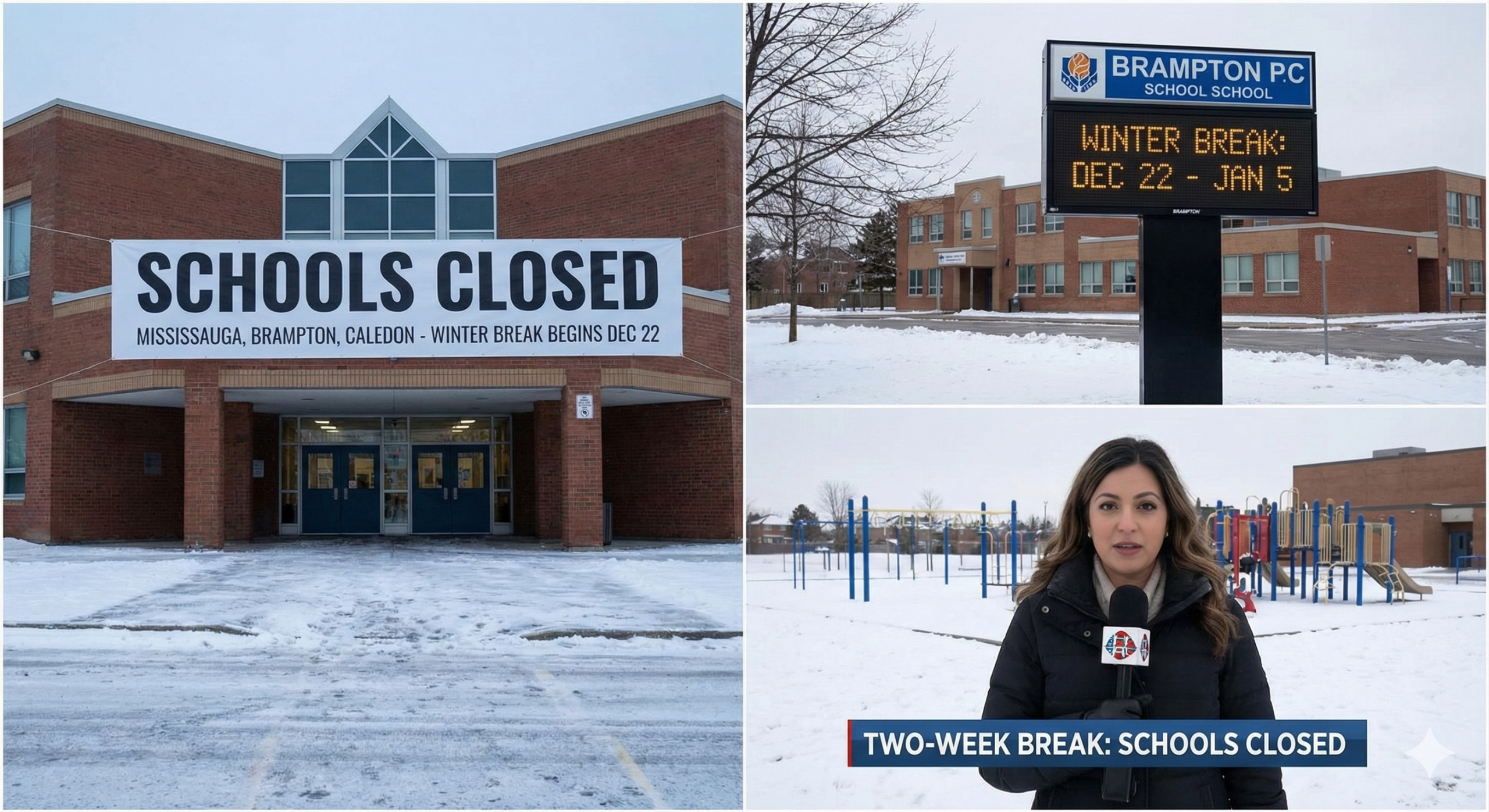
Schools Closed Across Mississauga, Brampton and Caledon as Two-Week Winter Break Begins Dec. 22

Mississauga, Ont. — Students and families across Mississauga, Brampton and Caledon are preparing for a much-anticipated pause in the school year as elementary and secondary schools under the Peel District School Board and the Dufferin-Peel Catholic District School Board close for the annual two-week winter break, beginning Monday, December 22.

The last day of classes for students in both boards is Friday, December 19, marking the official start of the holiday season for thousands of families across the Region of Peel. Schools will remain closed through Friday, January 2, 2026, with students returning to class on Monday, January 5.

The winter break includes major holidays such as Christmas Day, Boxing Day, and New Year’s Day, offering students and educators an opportunity to rest, travel, and spend time with family before the second half of the academic year begins.


A Welcome Pause for Students and Educators

The two-week winter break is one of the longest scheduled breaks in the Ontario school calendar and is widely viewed as an important reset point for students and staff alike. After nearly four months of continuous instruction since September, educators say the break supports student well-being, mental health, and academic focus.

Parents across Peel have also welcomed the break, especially those balancing work schedules and holiday planning. Many families use the time to travel, participate in cultural celebrations, or simply unwind at home.

School boards encourage families to review official calendars and board communications to ensure they are aware of all key dates and expectations for the remainder of the school year.


Peel District School Board: Key Dates to Know

The Peel District School Board (PDSB), which serves tens of thousands of students across the region, has released its full list of PA days, holidays, and exam periods for the 2025–26 school year.

PA Days (No Classes for Students)

  • Monday, January 19 — Elementary students only

  • Thursday, January 29 — Secondary students only

  • Friday, February 13 — All students

  • Friday, May 15 — All students

  • Monday, June 8 — Elementary students only

  • Wednesday, June 24 — Secondary students only

  • Thursday, June 25 — Secondary students only

School Holidays

  • Winter Break: Monday, Dec. 22 to Friday, Jan. 2, 2026

  • Family Day: Monday, Feb. 16

  • March Break: Monday, March 16 to Friday, March 20

  • Good Friday: Friday, April 3

  • Easter Monday: Monday, April 6

  • Victoria Day: Monday, May 18

Secondary School Exam Periods

  • Semester 1 Exams: Thursday, Jan. 22 to Wednesday, Jan. 28

  • Semester 2 Exams: Wednesday, June 17 to Tuesday, June 23

Other Important Dates

  • Friday, Jan. 30: First day of Semester 2

  • Tuesday, June 16: Last day of classes before exams (secondary)

  • Thursday, June 26: Official last day of the school year

Parents are advised to check school newsletters and board updates, particularly during exam periods, as schedules may vary by school.


Dufferin-Peel Catholic District School Board Calendar

The Dufferin-Peel Catholic District School Board (DPCDSB) follows a similar schedule, with slight variations for PA days and end-of-year dates.

PA Days

  • Monday, January 19 — Elementary students only

  • Thursday, January 29 — Secondary students only

  • Friday, February 13 — All students

  • Friday, April 10 — St. Sofia Catholic School only

  • Friday, May 15 — All students

  • Monday, June 8 — Elementary students only

  • Thursday, June 25 — Secondary students only

  • Friday, June 26 — Secondary students only

School Holidays

  • Winter Break: Monday, Dec. 22 to Friday, Jan. 2, 2026

  • Family Day: Monday, Feb. 16

  • March Break: Monday, March 16 to Friday, March 20

  • Good Friday: Friday, April 3

  • Easter Monday: Monday, April 6

  • Victoria Day: Monday, May 18

Exam Periods

  • Semester 1 Exams: Wednesday, Jan. 21 to Wednesday, Jan. 28

  • Semester 2 Exams: Wednesday, June 17 to Wednesday, June 24

Notable Dates

  • Friday, Jan. 30: First day of Semester 2

  • Tuesday, June 16: Last day of classes before exams

  • Friday, June 26: Last day of school for elementary students


Planning Ahead: What Families Should Know

School boards recommend families plan childcare, travel, and activities early, especially for the days immediately before and after the winter break. While schools are closed, many community centres, libraries, and recreational facilities continue to offer holiday programming.

Parents should also be aware that school offices may operate on reduced hours during the holiday period, and responses to administrative inquiries may be delayed.


Things to Do During the Winter Break in Peel Region

For families staying local, Peel offers a wide range of activities throughout the winter break:

Libraries and Community Programs

Public libraries in Mississauga, Brampton, and Caledon typically host winter reading challenges, craft sessions, and family-friendly workshops. Most branches close on Christmas Day, Boxing Day, and New Year’s Day, but reopen with modified hours on other dates.

Arts and Culture

  • Visit the Art Gallery of Mississauga

  • Explore exhibits at the Peel Art Gallery, Museum and Archives (PAMA)

  • Attend seasonal performances or cultural events hosted by local organizations

Shopping and Seasonal Events

Major shopping centres such as Square One, Bramalea City Centre, and Dixie Outlet Mall often feature holiday displays, family activities, and Boxing Week sales running through late December.

Outdoor Winter Fun

Weather permitting, families can enjoy:

  • Ice skating at Chinguacousy Park

  • Tobogganing at Erindale Park

  • Winter hiking at Claireville Conservation Area

Municipal websites provide updates on outdoor facility conditions and safety advisories.


Looking Ahead to the Second Half of the School Year

As students return in early January, schools will quickly shift focus to Semester 1 exams, academic assessments, and preparation for the remainder of the school year. Educators encourage students to maintain healthy routines during the break, including reading, light review, and rest.

The winter break also serves as a reminder for families to stay informed about upcoming PA days, holidays, and exam schedules to avoid disruptions later in the year.


Final Reminder for Families

  • Last day of classes: Friday, Dec. 19

  • Winter break: Dec. 22 to Jan. 2

  • Back to school: Monday, Jan. 5, 2026

Parents and guardians are encouraged to regularly check their school board’s official website and communications for updates, especially in the event of weather-related closures or schedule changes.

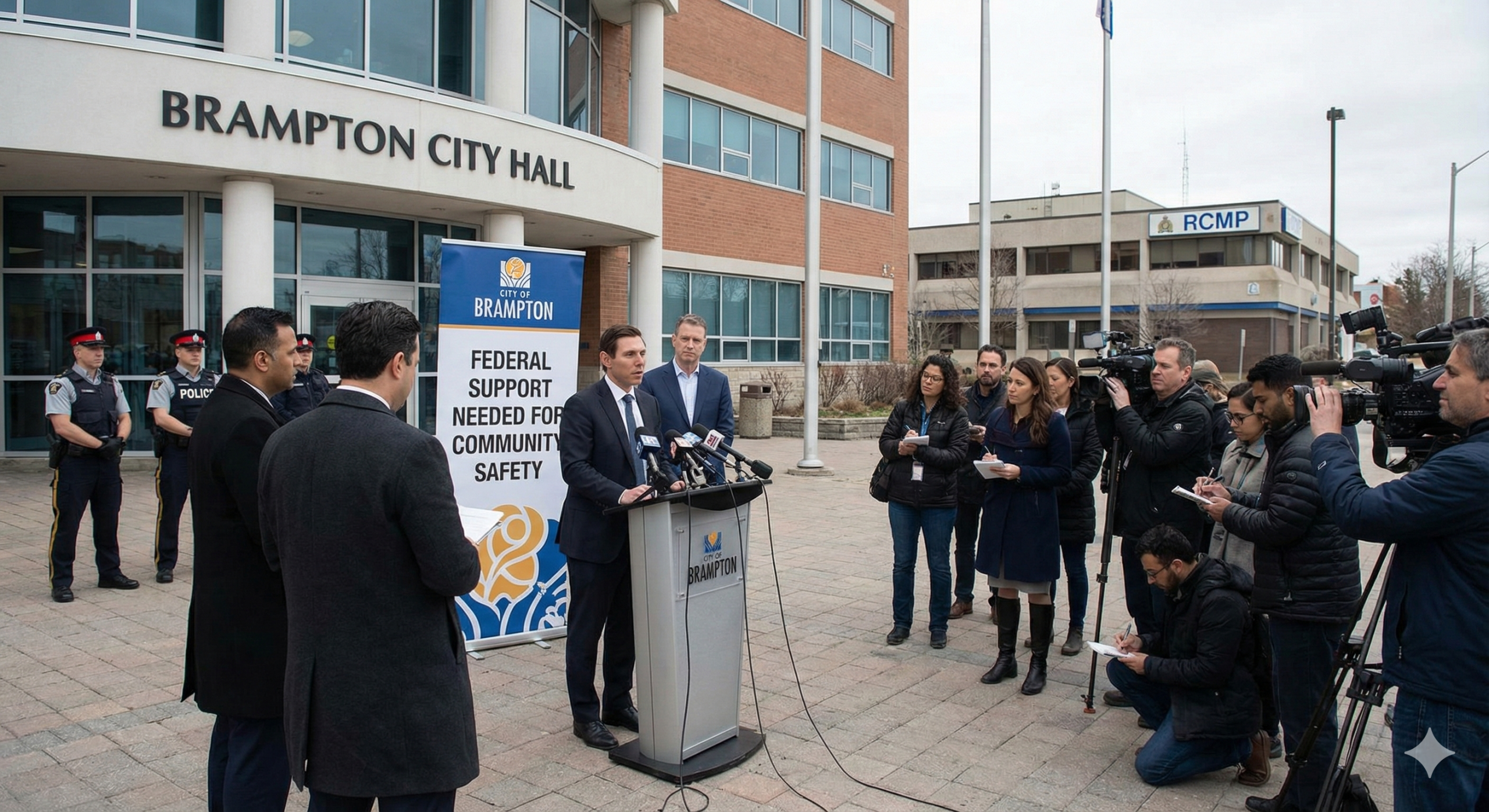
Brampton Mayor Patrick Brown Calls for Federal Support to Combat Extortion and Organized Crime

Brampton, Ontario — Brampton Mayor Patrick Brown is urging the federal government to provide additional support to combat extortion and transnational organized crime in the Region of Peel, citing a surge in criminal activity targeting local businesses and vulnerable community members.

In a letter dated December 16, 2025, addressed to Prime Minister Mark Carney and Public Safety Minister Gary Anandasangaree, Mayor Brown highlighted the increasing sophistication and cross-border nature of these crimes, noting that municipal resources alone are insufficient to effectively address the threat.

“The scale, sophistication and cross-border nature of these crimes place them well beyond what municipal resources alone can sustainably address,” Brown wrote.

The call for federal intervention mirrors recent actions taken in British Columbia, where the federal government allocated dedicated funding for integrated enforcement teams targeting organized crime, alongside investments in victim support, outreach, and safety planning.


Escalating Extortion Rates in Peel

Brampton’s plea for federal assistance comes amid alarming statistics showing a sharp rise in extortion cases across Peel. According to Peel Regional Police, business-related extortion incidents in Brampton and Mississauga jumped from 50 cases in 2023 to 153 in 2024, and 172 cases recorded so far in 2025.

Mayor Brown emphasized that these numbers meet or exceed the levels that justified federal intervention in British Columbia.

“As such, equitable treatment demands that federal support follow crime severity rather than geography,” Brown wrote. “Without comparable federal investment, communities such as Brampton are left exposed to criminal networks that operate internationally, exploit digital platforms and rely on intimidation to silence victims.”


Community Impact: Small Businesses and Vulnerable Residents Targeted

The surge in criminal activity has disproportionately affected small businesses, community organizations, and individuals from the South Asian diaspora. Extortion methods have ranged from threats of violence and arson to intimidation tactics designed to silence victims.

On December 7, several Sikh organizations hosted a town hall meeting in Brampton to address what they described as an unprecedented wave of extortion crimes. The event brought together community leaders, law enforcement, and politicians to discuss the growing threats.

“We have a national crisis where hundreds of members of my community have been targeted with extortions, shootings, threats, and intimidation, and the source of these threats are all Indian-based,” said Balpreet Singh, legal counsel and spokesperson for the World Sikh Organization of Canada.


The Bishnoi Gang: A Transnational Threat

Much of the concern in Brampton centers on the Bishnoi Gang, led by Lawrence Bishnoi, currently incarcerated in India. The gang has been linked to a series of murders, extortion schemes, and intimidation campaigns across Canada, particularly targeting members of the South Asian community.

In September 2025, the federal government officially designated the Bishnoi Gang as a terrorist entity, a move praised by both Mayor Brown and Peel police. This designation allows for greater federal resources and intelligence-sharing capabilities in tackling organized crime networks operating internationally.

“Designation as a terrorist entity strengthens law enforcement’s ability to disrupt the gang’s activities and protect vulnerable communities,” a City of Brampton news release stated.


Recommendations for Federal Action

Mayor Brown’s letter to the federal government outlined several key recommendations to address the growing crisis in Peel:

  1. Extend Federal Task Force Funding:
    Brown urges the federal government to expand funding for dedicated extortion and organized crime task forces to the Region of Peel, following the operational model established in British Columbia.

  2. Enhance Victim Support and Community Outreach:
    Funding should be allocated for culturally informed victim services, safety planning initiatives, and programs encouraging reporting while protecting those who come forward.

  3. Improve Intelligence-Sharing and Coordination:
    Mayor Brown called for formalized frameworks enabling collaboration between federal, provincial, and municipal law enforcement agencies to disrupt transnational criminal networks effectively.

“These actions would significantly strengthen public safety, protect vulnerable communities, and ensure a coordinated national response to a threat that is neither local nor isolated,” Brown stated.


Municipal Backing and Council Support

The push for federal intervention has received unanimous support from Brampton city council. In a motion passed on December 10, council formally requested the federal government to replicate the British Columbia model of integrated enforcement teams and victim support funding in Peel.

Peel police officials highlighted during the council meeting that extortion is increasingly sophisticated and digitally coordinated, often spanning multiple jurisdictions.

“The organized crime networks targeting Peel businesses are operating on a level that requires federal expertise and resources,” a police spokesperson said.


Growing Concern Over Public Safety

Community members, business owners, and advocacy groups have voiced deep concern over the impact of extortion on local safety and economic stability. Small businesses report feeling intimidated and fearful, while families, particularly within the South Asian community, have expressed distress over the threats targeting their homes and livelihoods.

“Without federal intervention, our community remains vulnerable to criminals who are not deterred by local enforcement alone,” said Brown.

The mayor’s office emphasized that the current municipal resources are overstretched and that federal support is necessary to effectively dismantle transnational criminal operations and protect residents.


Federal Response and Next Steps

While no official response from the federal government had been issued at the time of publication, officials in British Columbia cited federal task force funding and integrated law enforcement teams as a successful model for reducing organized crime activity.

Experts suggest that a similar investment in Peel could include:

  • Joint operations between municipal and federal authorities targeting extortion networks

  • Enhanced monitoring of digital platforms used to facilitate criminal activity

  • Training and resources for culturally informed community outreach

  • Expansion of legal and victim support services


Community Calls for Action

The recent town hall hosted by Sikh organizations highlighted the need for community-driven solutions alongside law enforcement intervention. Attendees emphasized the importance of reporting extortion incidents, protecting victims, and fostering collaboration between government agencies and affected communities.

“The community must feel empowered to speak up,” said Balpreet Singh. “Combined with federal support, this can help break the cycle of intimidation and criminal control.”


Conclusion

Brampton Mayor Patrick Brown’s call to action reflects a growing national concern over organized crime networks operating across borders and exploiting vulnerable communities. With extortion cases rising sharply and transnational gangs like the Bishnoi Gang actively targeting residents, Brown is advocating for federal intervention modeled on British Columbia’s success.

By extending funding for task forces, enhancing victim services, and improving intelligence-sharing frameworks, Peel could see a coordinated approach to combat organized crime, ultimately protecting residents, businesses, and the broader community from escalating threats.

“The severity of the problem in Peel demands a response proportional to the threat. Communities deserve the same protection as others facing similar criminal challenges,” Brown concluded in his letter.

Inside a Defining Era for Canada Basketball: Controversy, Cultural Shifts, and the Road to Reinvention

Introduction: A Program at a Crossroads

Canada Basketball did not become a global basketball force overnight. Its rise was shaped by moments of triumph, missteps, cultural tensions, institutional decisions, and an evolving national identity. The mid-1990s, often remembered for the arrival of the Toronto Raptors and the blossoming of Steve Nash, also represented one of the most turbulent eras in the program’s history.

That period—marked by allegations of racial bias, internal fractures, and a rapidly changing basketball landscape—formed the backbone of a transformation that would ultimately reshape the sport in Canada. This rewritten report traces the events described in The Golden Generation: How Canada Became a Basketball Powerhouse, offering an in-depth look at the turning points that pushed the program toward accountability and change.

A Tournament That Changed Everything

Hosting the 1994 FIBA World Championship

The 1994 FIBA World Championship was never meant to be held in Canada. Belgrade, Serbia, had originally secured hosting rights, but Yugoslavia’s civil war forced FIBA to reopen the bidding process. That’s when Canadian businessman John Bitove received a call from FIBA head Boris Stankovic asking whether Canada might step in.

Bitove agreed on one condition: NBA players had to be allowed to participate. That decision was directly inspired by the enormous success of the 1992 Barcelona Olympics, which introduced the world to the U.S. Dream Team—Michael Jordan, Magic Johnson, Larry Bird, and other NBA stars who redefined basketball as a global spectacle.

To make his case, Bitove contacted NBA commissioner David Stern. Stern’s response was clear: professional players would participate only if the tournament were held in North America. With that, Bitove joined forces with Canada Basketball CEO Rick Traer, raising $13 million to win the hosting bid.

Their gamble paid off. More than 330,000 tickets were sold—an event record—and the gold-medal game at Toronto’s SkyDome attracted 32,000 fans. Canada Basketball even secured 40 per cent of the profits, revenue that kept the financially strained organization afloat.

The Raptors Connection

The success of the tournament gave Bitove the credibility he needed to pursue an NBA expansion franchise. One year later, in 1993, he became the founding owner of the Toronto Raptors. As he later acknowledged, “Without the ’94 worlds, I wouldn’t have had the NBA team.”

The Arrival of Steve Nash

A Young Guard Steals the Spotlight

The tournament also marked the international debut of a rising star: 20-year-old Steve Nash. Though the team’s focus had initially been on showcasing Rick Fox, then Canada’s only NBA player, Nash’s playmaking quickly became the talk of the competition. His average of seven points, three assists, three rebounds, and two steals in 23 minutes per game hinted at the potential of a future MVP.

But even Nash’s emergence could not mask the team’s struggles. Canada finished seventh in the 16-team field, falling short of expectations in front of a home crowd hungry for a breakthrough. Journalists called the performance disappointing, and missing the quarterfinals amplified the criticism.

Fan Disengagement and Cultural Realities

Cheering for the Opposition

Despite strong attendance numbers, something unusual happened throughout Canada’s games: the cheers were louder for opposing teams. A notable matchup against Greece drew far more Greek flags than Canadian ones, prompting broadcaster Don Cherry to deliver one of his trademark rants about Canadian crowd loyalty.

For many players, however, the phenomenon made sense. Toronto, Hamilton, and Montreal were home to large immigrant communities with deep basketball traditions. Supporters turned out in droves to cheer for their countries of origin, a reflection of Canadian multiculturalism. Yet for national team veterans like Doug Smith, it was jarring. He called it “one of the most embarrassing sports events I’ve ever been at.”

Basketball’s Fight for Respect

The lack of mainstream support was not new. Before the Raptors and Vancouver Grizzlies arrived in 1995, basketball remained fringe in many parts of the country. Players like Jay Triano and Eli Pasquale often said they were recognized internationally but ignored at home. During the 1986 world championship in Madrid, they were chased into stores by fans seeking autographs. Weeks earlier in Ottawa, a bar bouncer refused them entry—unaware they were national team athletes.

Coaching Philosophy and a Brewing Divide

Ken Shields and the Victoria-Centred System

Beneath the surface, deeper tensions were forming around head coach Ken Shields’ approach. When Shields took over in 1989, he centralized the national program in Victoria, British Columbia, relying heavily on his network and the training infrastructure he built there. Players lived year-round in Victoria, trained full-time, and adopted a methodical, half-court style inspired by John Wooden.

This system produced disciplined teams but clashed with the evolving demographics of Canadian basketball. A surge of talent was emerging from Toronto and Montreal—players influenced by outdoor court culture, fast-paced streetball, and a more improvisational style. Many of these athletes believed Shields’ system not only failed to highlight their strengths but created barriers to making the national team.

Allegations of Racial Bias

By the mid-1990s, frustration reached a boiling point. In 1994, the Globe and Mail published an explosive article titled Toronto Blacks Assail Basketball Canada, featuring allegations that Shields’ roster decisions were influenced by racial bias.

Two standout players—Cordell Llewellyn and Wayne Yearwood—claimed they were cut not for performance reasons but because of preconceived notions about Black athletes. Llewellyn argued that the national team appeared to associate “Canada” with whiteness, while Yearwood criticized Shields’ inability to understand or fully utilize the talent available.

The article triggered public outrage and prompted Canada Basketball to request an external review led by diplomat Cal Best and overseen by Sport Canada.

The Review and Its Aftermath

Findings and Recommendations

The investigation interviewed more than 60 people. Ultimately, the report concluded that race did not play a role in team selection. However, it issued 11 significant recommendations aimed at modernizing the program, including:

  • separating the roles of coach and program director

  • recruiting more minority coaches

  • creating broader open tryouts across Canada

Shields later sued the Globe and Mail, which settled and issued a retraction. He described the ordeal as deeply painful.

Long-Term Impact

Although the review cleared Shields of racism, it highlighted structural deficiencies within Canada Basketball—deficiencies many players felt disproportionately affected Black athletes. These concerns resurfaced repeatedly into the 21st century, revealing a lingering distrust rooted not in one individual’s actions but in decades of institutional culture.

Conclusion: A Complicated Legacy

The turbulent era of the early 1990s left a lasting imprint on Canada Basketball. The hosting of the 1994 FIBA World Championship sparked national interest, helped launch the Raptors, and introduced Steve Nash to a global audience. Yet behind the scenes, cultural divides, allegations of systemic bias, and shifting demographic realities forced the organization to confront its shortcomings.

Today, the program features diverse leadership, transparent selection processes, and rosters built purely on merit. But the legacy of that difficult chapter remains part of the sport’s history—an essential reminder of how far Canada Basketball has come and how much was learned along the way.

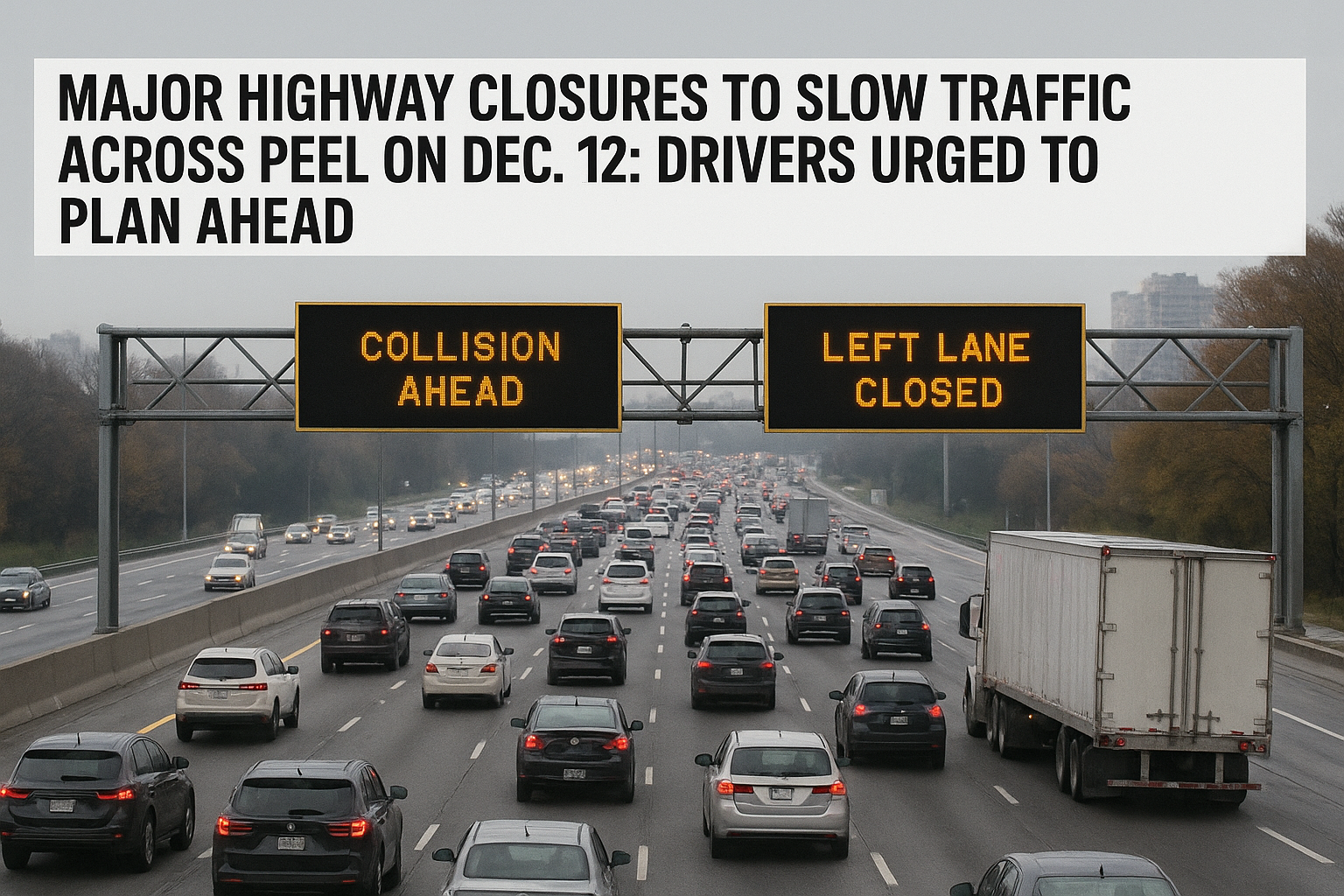
Major Highway Closures to Slow Traffic Across Peel on Dec. 12: Drivers Urged to Plan Ahead

As winter weather, seasonal maintenance and infrastructure upgrades converge across the Greater Toronto Area, Peel Region drivers are being advised to brace for a full slate of highway disruptions on Thursday, Dec. 12, 2025. A total of 16 scheduled closures will affect key routes in Mississauga, Caledon and surrounding communities—potentially impacting commuters, commercial drivers and holiday travellers alike.

The Ministry of Transportation of Ontario (MTO) has confirmed that these closures are part of ongoing repair, rehabilitation and safety-enhancement projects across several of the busiest highways in the region. While most of the restrictions involve alternating lane closures during overnight or off-peak hours, transportation officials warn that motorists should expect delays and plan alternate routes wherever possible.


A Busy Week for Road Maintenance Across Peel

Why These Closures Matter

Peel Region’s highways form some of the most heavily travelled corridors in Ontario, carrying significant volumes of passenger and commercial traffic daily. December is also a period when routine maintenance intersects with weather-related repairs, forcing the province to accelerate work before winter conditions worsen.

The combination of lane reductions, ramp closures and overnight restrictions is designed to minimize daytime disruption. However, with multiple closures overlapping across Highway 401, Highway 403, Highway 10 and the Queen Elizabeth Way (QEW), the cumulative impact is expected to be noticeable throughout the week.


Breakdown of Major Highway Restrictions

Below is a detailed look at the scheduled Dec. 12 closures, including timelines, affected stretches and what drivers should anticipate.

Highway 403 Closures

Highway 403—one of Mississauga’s most critical east–west arteries—will experience repeated lane impacts this week.

Eastbound Between Highway 407 and Mavis Road

  • Three alternating lanes closed

  • Dec. 15 at 9 p.m. – Dec. 20 at 5 a.m.

This extensive eastbound lane reduction could cause delays extending toward the 401/403 interchange, one of the GTA’s well-known congestion points.

Multiple Eastbound Off-Ramp Restrictions Near Highway 401

Three separate closures will affect the eastbound off-ramp south of Highway 401 in Mississauga:

  • Dec. 10 at 10 p.m. – Dec. 13 at 6 a.m.

  • Dec. 11 at 10 p.m. – Dec. 13 at 6 a.m.

  • Dec. 15 at 10 p.m. – Dec. 20 at 6 a.m.

Alternating lane closures on this busy connector ramp may slow overnight traffic and impede access to nearby commercial and industrial districts.

Additional Eastbound Lane Closure

  • Dec. 6 at 9 p.m. – Dec. 14 at 5 a.m.

  • Three alternating lanes closed

With multiple closures overlapping along Highway 403, drivers using the route this week are encouraged to allow extra travel time and watch for sudden slowdowns.


Highway 10 Closures in Caledon

Motorists travelling north–south through Caledon will encounter several closures along Highway 10, which serves as a major rural and commuter corridor.

Southbound Between Forks of the Credit Rd. and Old School Rd.

  • One alternating lane closed

  • Dec. 8 at 9 a.m. – Dec. 15 at 5 a.m.

A second, extended closure follows:

  • Dec. 15 at 9 a.m. – Dec. 22 at 5 a.m.

These daytime and overnight closures may create bottlenecks in an area where alternate routes are limited.

Northbound Between Old School Rd. and Forks of the Credit Rd.

Two separate northbound restrictions will also be active:

  • Dec. 8 at 6 p.m. – Dec. 15 at 3 p.m.

  • Dec. 15 at 6 p.m. – Dec. 22 at 3 p.m.

These alternating lane closures may impact commuters heading toward Orangeville and surrounding rural areas.


Queen Elizabeth Way (QEW) Closures

The QEW—linking Toronto, Mississauga and the Halton region—will see some of the longest-lasting lane restrictions this month.

Toronto-Bound Between Cawthra Rd. (Mississauga) and West Mall/Evans Ave. (Toronto)

  • Two alternating lanes closed

  • Nov. 23 at 10 p.m. – Dec. 14 at 5 a.m.

  • A second closure from Dec. 3 at 9 p.m. – Dec. 14 at 5 a.m.

These overlapping restrictions, approaching one of the GTA’s most heavily travelled QEW stretches, may generate traffic backups especially near downtown Toronto commuters.

Toronto-Bound Between Winston Churchill Blvd. (Oakville) and Highway 10/Hurontario (Mississauga)

  • Two alternating lanes closed

  • Dec. 7 at 10 p.m. – Dec. 13 at 5 a.m.

This section often experiences nighttime construction due to ongoing rehabilitation work on bridges and pavement structures.

Toronto-Bound Between Erin Mills Pkwy./Southdown Rd. and Highway 10/Hurontario

  • Two alternating lanes closed

  • Dec. 17 at 10 p.m. – Dec. 19 at 5 a.m.

These closures are expected to cause delays near Mississauga Road and areas with active interchange construction.

Fort Erie-Bound Between Highway 10/Hurontario and Mississauga Rd.

  • Two alternating lanes closed

  • Dec. 7 at 11 p.m. – Dec. 12 at 6 a.m.

Southbound travellers heading toward Burlington or Niagara should exercise caution during overnight hours.

Fort Erie-Bound Between Erin Mills Pkwy./Southdown Rd. and Erin Mills Pkwy./Southdown Rd.

  • Right lane closed

  • Dec. 9 at 10 p.m. – Dec. 12 at 5 a.m.

This short but frequently travelled segment will experience reduced capacity during late evening and early-morning intervals.


Highway 401 Closure

Highway 401—Canada’s busiest highway—will see one scheduled closure affecting westbound drivers.

Westbound Between Dixie Rd. and Highway 410

  • One alternating lane closed

  • Dec. 15 at 11 p.m. – Dec. 18 at 5 a.m.

While the closure is limited to overnight hours, congestion may still build due to high truck traffic volumes.


How These Closures Are Managed

Coordination Between MTO and Municipal Partners

Transportation officials note that work schedules are carefully selected to balance construction needs with the region’s substantial daily traffic. Overnight windows are typically chosen to minimize disruption, but winter weather and emergency repairs may force last-minute changes.

Potential for Weather-Related Adjustments

As with all winter-season maintenance, the Ministry of Transportation warns that closure timelines may shift due to:

  • Snowfall and ice conditions

  • Emergency repair requirements

  • Equipment delays

  • Safety considerations for on-site crews

Motorists are strongly encouraged to regularly check updates through Ontario 511, local traffic media and navigation apps that provide real-time construction alerts.


Tips for Drivers Navigating the Closures

Plan Ahead to Reduce Delays

With closures spread across multiple major highways, drivers can take several steps to minimize travel disruption:

  • Check live traffic information before leaving home

  • Allow extra time, especially for morning or evening travel

  • Use alternate routes where available

  • Drive cautiously near construction zones and obey reduced speed limits

Even if lane closures appear short, the cumulative effect across Peel’s major corridors may contribute to heavier congestion, particularly for commuters heading into Toronto or across Halton Region.


Understanding the Broader Purpose

This round of scheduled lane closures is part of Ontario’s ongoing strategy to maintain and modernize critical highway infrastructure. With aging bridges, high traffic volumes and expanding communities placing greater pressure on the road network, proactive repairs remain essential to keep routes safe and efficient.

The Ministry notes that while closures are inconvenient in the short term, they are vital to preventing deterioration that could require longer-term shutdowns in the future.


Conclusion: Expect a Slower Commute and Stay Informed

With 16 separate highway closures scheduled across Peel Region on Dec. 12, drivers can expect slower travel and shifting traffic patterns throughout the week. While most restrictions target overnight hours, the ripple effects may still touch both rush periods and commercial routes. Motorists are encouraged to prepare accordingly, make use of real-time traffic tools and stay aware of evolving conditions as winter repairs continue.

If your travel takes you beyond Peel, additional closures are listed through Ontario 511 to help drivers plan longer trips across the province.

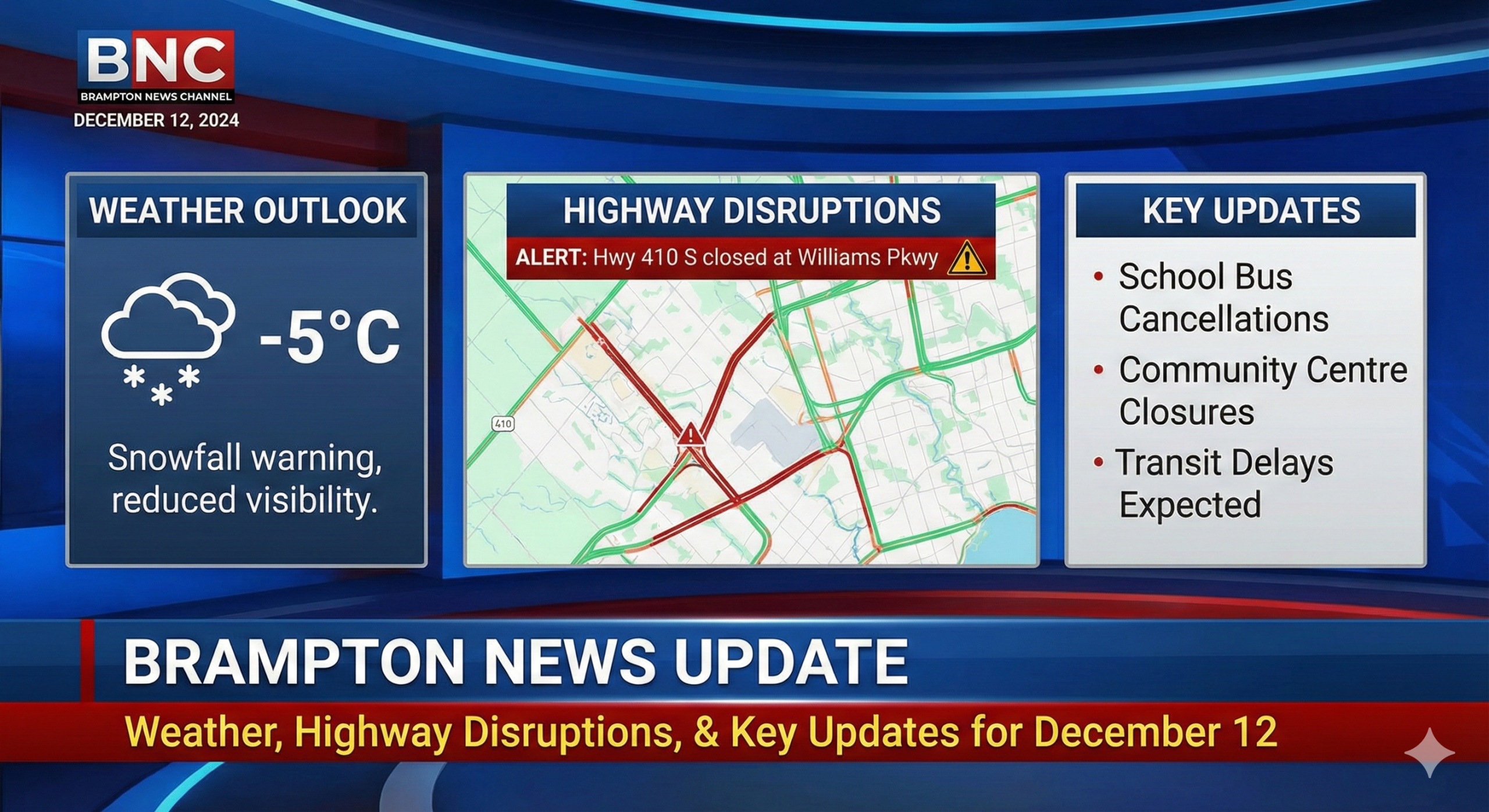
Brampton Weather Outlook, Highway Disruptions, and Key Updates for December 12

As Brampton residents start their Friday morning, a mix of early-winter weather conditions, ongoing highway closures, and developing local news stories are shaping the day ahead. With temperatures hovering around the freezing mark and a blanket of cloud cover settling over the region, commuters and residents are being advised to stay alert to both road conditions and expected evening flurries.

This comprehensive update provides a detailed look at today’s weather forecast, the latest traffic disruptions across major highways, and the essential information residents need to begin their day well-informed.


A Cloudy and Cold Start to the Day

Morning Temperatures Hovering Around Freezing

Environment Canada is forecasting a mainly cloudy sky across Brampton this morning, creating a cold but typically seasonal December atmosphere. Daytime temperatures are expected to reach a high of 0°C, offering little opportunity for melting on surfaces that froze overnight.

The thick cloud cover is expected to persist through the afternoon, creating a dull, grey backdrop across the city as residents head to work, school, and early weekend errands. While no significant precipitation is anticipated during daytime hours, the cold temperatures continue to pose the risk of slick roads, especially in shaded or elevated areas.

Evening Flurries Expected Across the Region

As the day transitions into night, Brampton will see a shift in conditions with light flurries forecasted after sunset. Temperatures are projected to drop to –6°C, creating ideal conditions for snow to accumulate on untreated roads and sidewalks.

Drivers are advised to proceed with caution, particularly during late-evening commutes, as visibility may fluctuate due to intermittent flurries. With temperatures expected to stay below freezing overnight, icy patches may develop and persist into the next morning.


Major Highway Disruptions Impacting Commuters

Closures on Highway 10 and Surrounding Routes

Several major highways in and around Brampton are experiencing closures and traffic disruptions today. Authorities have confirmed that sections of Highway 10 remain closed due to ongoing maintenance operations and weather-related safety concerns. Commuters relying on this corridor should anticipate delays and consider alternative routes where available.

Highway 401: Delays Expected Through Key Sections

One of the region’s busiest roadways, Highway 401, is also facing closures along select stretches. These disruptions are expected to significantly affect travel times during both the morning and afternoon rush hours. With temperatures at or below freezing, crews are monitoring road conditions closely to address icy buildup and ensure driver safety.

Highway 403 and QEW: Ongoing Restrictions

In addition to the 401 and Highway 10, both Highway 403 and the Queen Elizabeth Way (QEW) are experiencing partial closures. These restrictions stem from a combination of scheduled maintenance, collision cleanup, and precautionary weather-related measures.

Motorists should monitor real-time traffic updates and plan trips accordingly, particularly those who travel between Brampton, Mississauga, Oakville, and surrounding areas. Transit riders may also experience delays if buses are rerouted due to closures or reduced traffic flow.


Weather and Traffic Conditions Shape the Day Ahead

Impact on Schools, Workplaces, and Local Travel

With temperatures remaining low and evening flurries in the forecast, today’s conditions may affect school schedules, workplace planning, and local travel routines. Residents are advised to dress in warm, layered clothing and allow extra time for their commute, especially during peak periods.

School transportation services are operating normally but are encouraging families to be prepared for potential delays, particularly on rural routes or those passing through construction zones and affected highways.

Tips for Staying Safe During Winter Travel

Given the combination of cold temperatures, cloud cover, and the likelihood of nighttime flurries, safety experts are reminding residents to:

  • Check weather and traffic apps before leaving home.

  • Give yourself additional time for travel.

  • Keep vehicle fuel tanks at least half full during winter.

  • Ensure winter tires are properly inflated and in good condition.

  • Use headlights during cloudy or low-visibility conditions.

  • Maintain a safe following distance on potentially icy roads.

These simple precautions can significantly reduce the risk of collisions and improve road safety for both drivers and pedestrians.


Community Updates and Headlines to Watch Today

Local News Highlights

While weather and traffic dominate the morning headlines, Brampton residents can also expect updates on several developing local stories throughout the day. City officials are expected to release new information related to ongoing municipal projects, community programs, and public safety initiatives. More updates will be published as details become available.

Role of Public Data in Daily Briefings

Today’s daily briefing is compiled using open-source data, weather forecasts from Environment Canada, and real-time updates from provincial transportation authorities. This seamless integration of data helps provide residents with reliable, timely information to support safer travel and better planning throughout the day.


Looking Ahead: Weekend Weather Expectations

As Brampton moves closer to the weekend, residents should prepare for continued cold temperatures and the possibility of additional precipitation. Meteorologists are watching a weak system that may bring light snow or mixed precipitation early next week, though conditions remain subject to change.

The next 48 hours will see below-seasonal temperatures, making winter jackets, scarves, and gloves essential for anyone spending extended time outdoors.


Conclusion: Staying Prepared During Early Winter Conditions

This Friday brings a combination of cloudy skies, near-freezing temperatures, and significant highway closures that will influence the day’s flow across Brampton. With flurries expected tonight and a nighttime low of –6°C, residents should take steps to stay warm, remain aware of changing road conditions, and plan ahead for potential travel delays.

Whether heading out for work, school, or weekend preparations, staying informed remains the most effective way to navigate early winter weather safely. Continue to monitor updates from Environment Canada, provincial highway authorities, and local news sources for the latest information throughout the day.

Brampton Advances Citywide Traffic Overhaul with New ATMS and Future AI Integration

Introduction: A Major Step Toward Smarter Urban Mobility

The City of Brampton is entering a pivotal phase in its long-term transportation strategy as it rolls out a new Advanced Traffic Management System (ATMS) designed to modernize how traffic signals operate across the growing municipality. The system, expected to be fully operational by the end of the second quarter of 2026, aims to improve traffic flow, reduce congestion, and enhance road safety for motorists, cyclists, and pedestrians alike.

Alongside this upgrade, Brampton is also preparing to revisit the potential of adaptive artificial intelligence (AI) technologies—tools that can automatically adjust traffic signals based on real-time conditions. Although early trials of AI-based signal management were halted due to technical challenges, city officials say they remain optimistic about future implementation once the technology matures.

This major upgrade comes at a time when Brampton continues to expand rapidly and requires modern infrastructure capable of handling its increasing transportation demands.


Modernizing Brampton’s Traffic Infrastructure

Replacing an Outdated System

During a detailed presentation to Brampton City Council on November 26, Shane Loftus from the Public Works and Engineering Department emphasized that the city’s current traffic light system has reached the end of its functional lifespan.

According to Loftus, the ATMS being installed will serve as the “nervous system” of Brampton’s traffic operations—connecting sensors, communication hubs, and intersection controllers across the entire city.

Key Functions of the New ATMS

The upcoming system will introduce several capabilities absent from Brampton’s existing infrastructure:

  • Real-time monitoring of intersections

  • Remote signal adjustments by city staff

  • Centralized connectivity across all signalized intersections

  • Improved data accuracy for traffic analysis

  • Prebuilt capacity for future adaptive technologies

Loftus explained that once the system is established, traffic signals will be able to respond more intelligently to data inputs—from vehicle counts to pedestrian activity—enabling dynamic decision-making that can ease congestion and improve flow on major corridors.


Citywide Deployment Timeline

Phase 1: Priority Intersections and LRT Route

Brampton staff anticipate that initial installations will be completed throughout 2025, beginning with 16 intersections located along the future Hurontario LRT route. In addition, 292 high-priority intersections across the city will transition to the ATMS by the end of the first quarter of 2026.

These locations were selected based on traffic volume, transit use, safety considerations, and the need for advanced monitoring.

Phase 2: Full Network Integration

The remaining 292 intersections—many situated along major transit corridors—are expected to migrate to the system by the end of the second quarter of 2026.

Once completed, every signalized intersection in Brampton will operate within a unified digital environment, laying the foundation for potential AI-powered optimizations in the years to come.


Brampton’s Experience with Adaptive AI Technology

Early Pilots Show Promise but Face Limitations

Brampton was among the Canadian municipalities that began experimenting early with adaptive AI to determine whether such technology could automatically optimize traffic signal timings based on real-time conditions. Two pilot programs launched in 2023 and 2024 showcased both intriguing potential and significant technological challenges.

The 2023 Pilot: Williams Parkway and Graymar Road

The city installed cloud-based adaptive signal detection hardware and software to enhance pedestrian and cyclist safety at a busy trail crossing. The goal was to determine whether AI could accurately detect vulnerable road users and adjust signal timing accordingly.

The 2024 Pilot: Sandalwood Parkway and Chinguacousy Road

A second pilot introduced AI-powered video analytics and light detection technology for improved traffic flow and collision prevention. This intersection is historically busy, making it an ideal testing ground for advanced data collection systems.

Weather Challenges Lead to Cancellation

Despite promising early results, both pilot projects were ultimately discontinued. Loftus explained that factors such as heavy rain, snow, low visibility, and sun glare interfered with the technology’s accuracy—particularly in detecting and categorizing pedestrians, cyclists, and vehicles.

Because of these weather-related obstacles and limitations in existing AI models, the city concluded that it could not safely expand the pilot programs at that time.


Looking Ahead: Future of AI in Brampton’s Traffic Network

Renewed Interest Once Technology Evolves

City officials stress that the cancellation of earlier pilots does not indicate a lack of interest in AI-enhanced traffic management. Instead, Brampton is choosing a cautious approach, waiting for more reliable models and better hardware to emerge.

Loftus reaffirmed that once the new ATMS is deployed across a significant number of intersections—expected by mid-2026—the city will be positioned to revisit adaptive AI solutions.

Evaluating New Opportunities

Over the next year, Brampton will work closely with its technology vendors to:

  • Identify intersections most suitable for future AI pilots

  • Test newly developed adaptive algorithms

  • Assess improvements in detection accuracy and weather resilience

  • Explore cloud-based versus edge-based processing options

  • Prepare the network for advanced analytics and automation tools

With the foundational infrastructure nearly in place, the next generation of AI advancements may finally align with Brampton’s long-term traffic strategy.


Why ATMS and AI Matter for Brampton Residents

Making Roads Safer and More Efficient

As one of Canada’s fastest-growing cities, Brampton faces significant pressure on its transportation network. The new ATMS is expected to:

  • Reduce travel times on major corridors

  • Improve pedestrian and cyclist safety

  • Enhance emergency response coordination

  • Provide data to guide future infrastructure planning

  • Reduce emissions from idling vehicles

Supporting Transit Expansion

With major investments such as the Hurontario LRT underway, an upgraded traffic management system will ensure signals can integrate seamlessly with transit priorities, bus rapid transit corridors, and future mobility initiatives.


Conclusion: A Forward-Looking Vision for Traffic Management

Brampton’s decision to overhaul its traffic management infrastructure marks an important milestone in the city’s commitment to creating a safer, smarter, and more efficient transportation network. While early attempts to incorporate adaptive AI faced setbacks, city officials remain confident that continued advances in technology will eventually make these tools effective and reliable.

By mid-2026, with a citywide ATMS fully operational, Brampton will be well-positioned to launch new AI trials, gather high-quality data, and gradually move toward a future where traffic signals respond intelligently to real-time conditions. The transformation may be phased, but the direction is clear: Brampton is building a modern transportation system designed for a rapidly growing urban centre and the decades ahead.

Peel Region Sounds Alarm Over Deepening Social Services Funding Gap

Introduction: A Growing Region, A Shrinking Support System

Peel Region—home to Brampton, Mississauga, and Caledon—has long been known for its fast-paced growth, cultural diversity, and economic ambition. Yet beneath that upward trajectory lies a nagging question: Why are three of Ontario’s most dynamic cities receiving significantly less provincial support for essential community services than their counterparts?

That question took centre stage during Peel Region’s 2026 budget meeting on Dec. 4, where Metamorphosis, an umbrella advocacy group representing more than 100 local non-profits, warned of a staggering funding shortfall. Their message was clear and pointed: Peel residents are being underfunded by hundreds of millions of dollars each year, jeopardizing social services that many rely on daily.

As Mark Twain once joked, “Facts are stubborn things, but statistics are pliable.” In Peel’s case, however, the statistics are uncomfortably rigid—and impossible to ignore.

A Comprehensive Study Reveals the Depth of the Disparity

Findings Presented to Regional Council

Sean Meagher, co-ordinator of Metamorphosis, delivered a sobering briefing to council, outlining a $868-million gap between what Peel receives for social services and what similarly sized Ontario municipalities receive on a per-resident basis.

He stressed that the number should shock policymakers—but not surprise them. Rapid population growth has pushed demand for everything from youth programs to senior support services to unprecedented levels.

How the Numbers Were Calculated

In May 2024, Metamorphosis commissioned Blueprint ADE—an independent research and consulting firm—to analyze provincial per-capita funding comparisons across major Ontario municipalities. The study examined multiple service categories:

  • Housing supports

  • Childcare access

  • School capacity

  • Seniors’ programs

  • Non-profit-delivered mental health and youth services

Notably, health care funding was excluded to keep the analysis focused on community-based infrastructure.

Blueprint ADE found Peel receives $578 less per resident for community services than cities such as Ottawa, Toronto, York, Durham, Halton, Hamilton, and Waterloo. In a region of nearly two million people, that per-person gap compounds quickly into hundreds of millions in lost support.

Population Growth Outpacing Provincial Investment

Anyone who has lived in Peel over the last decade can feel the pace of expansion. One local social worker once laughed, “If population growth were a sport, Peel would be competing at the Olympic level.” And with growth comes pressure—pressure on schools, shelters, transit, childcare, and countless programs that knit a community together.

Meagher emphasized that Peel’s funding inequity isn’t a recent phenomenon. It’s a structural issue that has quietly accumulated over decades. As a result, even the provincial increases of recent years barely scratch the surface of what is needed to restore balance.

He put it simply: “Peel grows faster than funding formulas have ever been designed to handle.”

His point resonates widely. In a fictional conversation shared by a youth outreach worker in Brampton, a teenager joked, “I think our community centre is older than my grandma’s fridge.” It was a humorous line, but it captured a real frustration—outdated facilities and overextended services are struggling to keep pace with demand.

Housing: Peel’s Most Urgent Pressure Point

A Startling Gap in Affordable Units

Among all the categories studied, housing emerged as one of the most critically underserviced areas. Metamorphosis previewed findings from an upcoming report showing the depth of Peel’s housing shortfall.

Current estimates indicate 101,516 households in Peel face core housing need—nearly 10,000 more than just three years ago. Yet Peel has only 16,476 social housing units, leaving one unit available for every six households that need one.

To put that into perspective:

  • Toronto and Ottawa each face only one-third of Peel’s proportional housing gap.

  • Even Hamilton—another fast-growing city—faces only half the need-to-unit ratio that Peel faces.

To match the municipality with the second worst ratio, Peel would require 22,000 additional affordable housing units.

Think about that number for a moment. Twenty-two thousand units is not a modest deficit. It’s a canyon.

As the late George Carlin once quipped, “It’s never just a little problem; it’s always an issue.” For Peel, housing is not an issue—it’s a full-blown crisis.

Engagement With Provincial Leaders

Metamorphosis has taken steps to ensure the province cannot claim ignorance about the methodology behind these figures. The group has met with provincial officials to walk them through every detail of the study, its calculations, and its implications.

Whether those conversations will translate into action remains to be seen. But Meagher was clear in his message: the need is climbing, the gap is widening, and the longer the wait, the bigger the bill becomes.

A Call for Stronger Regional Advocacy

Coordinating Local Voices

Meagher urged regional and city councils across Brampton, Mississauga, and Caledon to unify their advocacy efforts. The idea is simple: a coordinated front involving municipal officials, local MPPs, and frontline community groups would present a stronger, clearer case to the premier and the finance minister.

He argued that collaboration would help pinpoint the most urgent service gaps and convey a shared sense of urgency. After all, the numbers are important—but stories of lived experience often carry the most weight.

A Fictional Anecdote Illustrates the Strain

One community volunteer in Mississauga described a fictional but relatable moment: a newcomer family arrived at a local food program only to discover the line stretched around the building. The father joked, “This line is longer than the one at Pearson on a long weekend.”
Everyone laughed, but the truth stung. The demand for social programs now routinely exceeds capacity, mirroring the study’s findings.

Public Participation: A Rare Opportunity

Metamorphosis Launches Resident Survey

In anticipation of submitting its next major report early in the new year, Metamorphosis has opened a public survey on its website. The organization is inviting residents to weigh in on how they would allocate funds if the province were to bridge the $868-million gap.

“It’s not every day that residents get the chance to manage public funds,” the survey reads, framing it as an unusual opportunity for communities to express their priorities directly.

The survey asks residents to reflect on which supports—youth programs, senior care, housing, childcare, mental health services—they believe most urgently need attention.

It’s an exercise that not only gathers feedback but also sparks civic engagement. After all, when people imagine managing such a large sum, they start thinking critically about what their community truly lacks.

What Comes Next for Peel?

Peel Region now faces a pivotal moment. The data is comprehensive. The advocacy is strong. The needs are visible in everyday life—from families on housing waitlists to seniors waiting for community programs that are already full.

But the question lingers: Will provincial funding formulas evolve to match the scale of Peel’s growth and the reality on the ground?

The region can lobby, community groups can advocate, and residents can voice their priorities. Yet meaningful change depends on political will.

Conclusion: A Region Ready for Renewal

Peel’s story is not one of despair but of determination. The challenges outlined by Metamorphosis highlight a community that is growing, diversifying, and striving to build a support system worthy of its people.

As one councillor remarked during the meeting, “Peel isn’t asking for special treatment. We’re asking for equal footing.”

The stakes are high, the numbers are daunting, and the gaps are visible—but so is the potential. With coordinated advocacy, public engagement, and renewed provincial attention, Peel could finally receive the resources required to meet the needs of a thriving, rapidly expanding population.

Brampton Shooting Leaves 25-Year-Old Man Dead as Peel Police Probe Targeted Attack

Introduction: A Community Shocked by a Deadly Evening Incident

A tragic shooting in Brampton on Monday evening has left a 25-year-old man dead, prompting an intensive homicide investigation by Peel Regional Police. The incident, which unfolded near the busy intersection of Hurontario Street and Bartley Bull Parkway on December 8, has rattled residents and renewed concerns about targeted violence in the area.

Police say they are working around the clock to uncover what led to the deadly encounter and to identify the suspects who fled the scene before officers arrived. The investigation remains active, and authorities are urging the public to come forward with any information that may help bring justice to the victim and his family.


The Incident: Shots Fired in a Commercial Parking Lot

Timeline of the Shooting

According to Peel Regional Police, the shooting occurred around 7 p.m. on Monday evening. Officers were dispatched to a parking lot near Hurontario Street and Bartley Bull Parkway—a high-traffic node adjacent to the Shopper’s World plaza—after reports of gunfire directed at a vehicle.

When officers arrived, they discovered a man inside a car who appeared to be unresponsive. Const. Mandeep Khatra confirmed that the victim had sustained fatal injuries consistent with the reports of shots being fired at the vehicle.

Immediate Police Response

Recognizing the urgency of the situation, officers broke one of the vehicle’s windows in an attempt to access the victim and administer life-saving measures. Despite these efforts, the 25-year-old man was pronounced dead at the scene.

Police say the victim was a resident of Brampton, but his identity has not yet been released pending notification of next of kin.


A Targeted Attack: Investigators Share Early Insights

Police Confirm No Random Act

Speaking to media at the scene, Const. Khatra stated that early evidence suggests the shooting was targeted. While investigators have not yet disclosed the motive, the confirmation that the violence was not random offers some reassurance to the broader community.

“What’s happened here is terrible,” Khatra said. “But at the same time, we’re glad that nobody else was hurt in this incident. I can assure you that investigators are going to be working on this non-stop until they can figure out further leads.”

Suspects Flee Before Police Arrival

Peel police confirmed that the suspects left the area before officers arrived. No arrests have been made, and as of Tuesday morning, investigators had not released any suspect descriptions. Police say they are reviewing surveillance footage and gathering eyewitness accounts to piece together the events leading up to the shooting.


Investigation Efforts Intensify

Homicide Unit Takes Over

Given the fatal outcome, Peel Regional Police have categorized the case as a homicide investigation. Specialized officers from the Homicide and Missing Persons Bureau are now leading the case, working with divisional units, forensic specialists, and video analytics teams to track potential suspects.

Crime Scene Containment at Shopper’s World Parking Lot

On Tuesday morning, police confirmed that a portion of the Shopper’s World parking lot remained cordoned off as officers scoured the area for evidence. Investigators are believed to be collecting shell casings, analyzing vehicle damage, and retrieving security recordings from nearby businesses.

The busy commercial hub contains numerous retail stores, transit terminals, and walkways, which police say increases both the complexity of the investigation and the likelihood of accessing useful surveillance footage.


Community Concerns and Safety Reassurances

Impact on Local Residents and Businesses

The incident has unsettled residents living near Brampton’s central corridor. Hurontario Street, a major arterial route lined with businesses, residential complexes, and transit stops, is frequented daily by thousands of commuters and families.

Although police have emphasized that the attack appears targeted, some community members remain anxious about the potential for further violence, especially given recent concerns about gun-related incidents in the region.

Police Urge Public Cooperation

Peel Regional Police are urging anyone with information—including dashcam footage or eyewitness testimony—to contact investigators. Even small details, officers say, could prove crucial in identifying suspects or understanding the circumstances that led to the shooting.

Residents can also anonymously submit information through Crime Stoppers, a move authorities say often plays a key role in major investigations.


Context: Understanding Targeted Violence in Peel Region

Trends in Targeted Shootings

The Peel region has witnessed several targeted acts of violence over recent years, many of which have stemmed from disputes, personal conflicts, or organized criminal activity. Authorities frequently stress that while such incidents are troubling, they are not indicative of random threats to the general public.

Importance of Early Community Reporting

Police have repeatedly highlighted the importance of proactive community involvement in preventing violent crime. Quick reporting, compliance with investigations, and public vigilance all contribute to safer outcomes—both in emergencies and long-term prevention efforts.


What Happens Next: The Road Ahead for Investigators

Evidence Collection and Forensic Analysis

As the investigation progresses, forensic teams will continue to analyze ballistic evidence, vehicle damage, and any potential physical traces left behind by the suspects. Digital forensics experts will review hours of surveillance footage from commercial buildings, transit areas, and nearby streets.

Establishing Timeline and Motive

A key focus moving forward will be establishing a clear timeline of the victim’s movements prior to the shooting. Investigators will attempt to determine:

  • Whether the victim knew the suspects

  • Whether the suspects followed the vehicle

  • Whether there were any altercations before the attack

  • The motive behind the shooting

These factors will shape the next steps of the investigation and may eventually lead to arrests.


Conclusion: A Community Seeking Answers

Monday night’s fatal shooting in Brampton has cast a shadow over a busy commercial district and left a family mourning the loss of a young man whose life ended violently and abruptly. As Peel police continue their intensive investigation, the community waits for answers—hoping for clarity, accountability, and ultimately justice.

Police say they remain committed to pursuing every available lead and encourage anyone with knowledge of the incident to step forward. While the loss is profound, authorities emphasize that community cooperation plays a defining role in helping investigators uncover the truth behind this tragic event.