
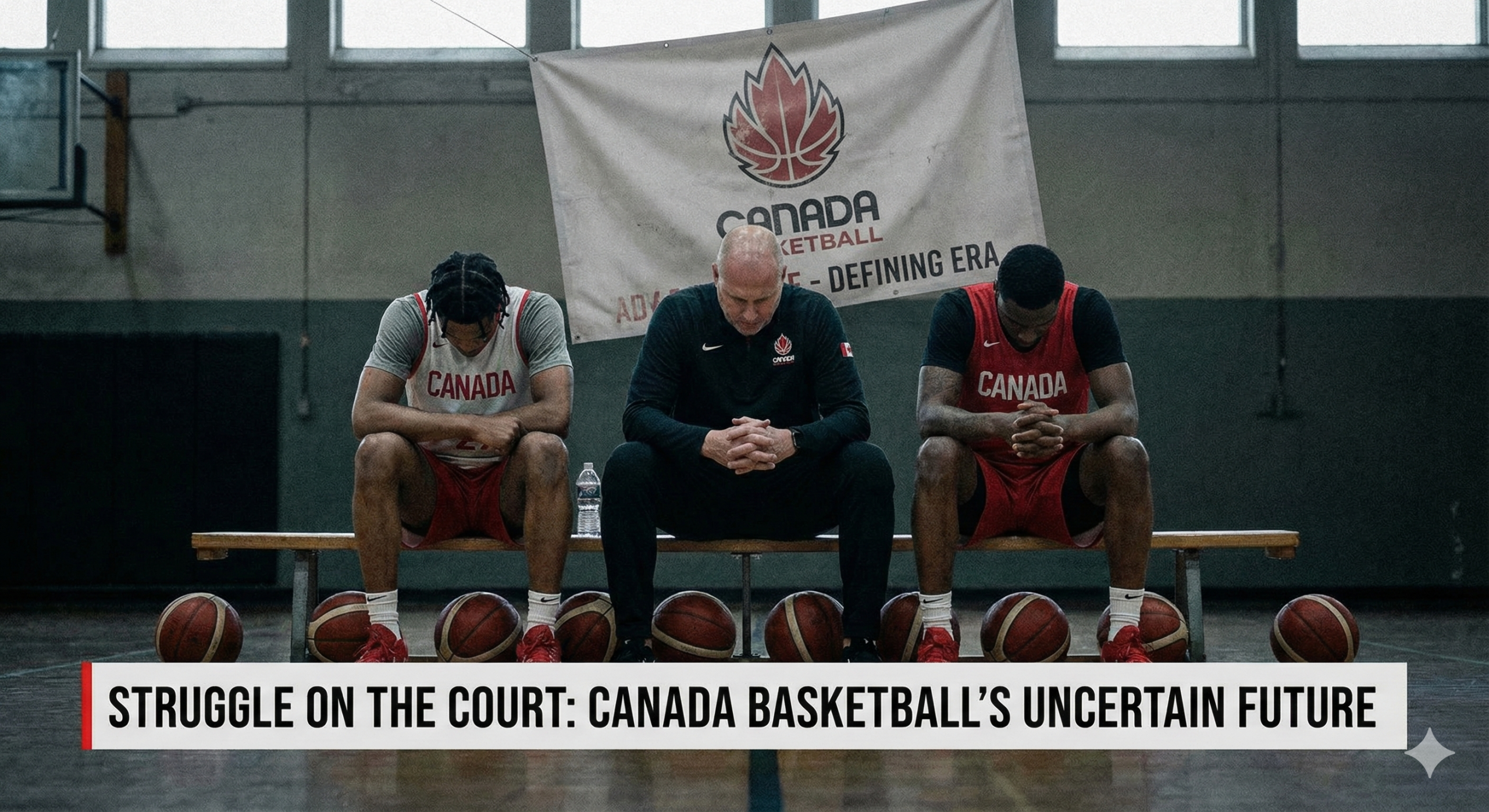

Inside a Defining and Difficult Era for Canada Basketball
Long before packed NBA arenas, global superstars, and Olympic medal dreams became part of Canada’s basketball identity, the sport in this country existed on the margins—underfunded, overlooked, and deeply divided. The early 1990s represented both a turning point and a painful reckoning for Canada Basketball, as ambition collided with reality during a period marked by growth, missteps, and uncomfortable truths.
At the centre of this turbulent era was the 1994 FIBA World Championship, an event that was supposed to announce Canada’s arrival on the global basketball stage. Instead, it exposed structural weaknesses, cultural fractures, and longstanding issues that would take decades to confront.
How Canada Ended Up Hosting the World
The tournament was never meant to come to Canada. Originally scheduled for Belgrade, the championship was relocated after war broke out in Yugoslavia in the early 1990s. With limited options available, FIBA reached out to Canadian businessman John Bitove, asking whether Canada could step in.
Bitove saw opportunity—but only if the event carried global relevance. The success of the 1992 Barcelona Olympics, where NBA professionals formed the iconic U.S. Dream Team, had transformed basketball’s international appeal. Bitove believed Canada could not attract fans, sponsors, or legitimacy without NBA participation.
After securing approval from NBA commissioner David Stern, Canada won the bid. A committee raised roughly $13 million to stage the tournament across Toronto and Hamilton, using massive venues like SkyDome and Maple Leaf Gardens.
Against the odds, the event was a commercial success. Hundreds of thousands of tickets were sold, and Canada Basketball—an organization on the brink of financial collapse—received a share of the profits that ensured its survival.
The ripple effects were historic. Within a year, Bitove leveraged those relationships to help bring the Toronto Raptors into existence. In many ways, the world championship laid the foundation for Canada’s NBA future.
A Young Star Emerges
On the court, the tournament marked the first major international moment for a 20-year-old Steve Nash. Playing in his first senior event, Nash showed flashes of creativity and confidence that hinted at what was to come.
Though he was not yet a star, his style stood out. While much of the roster focused on structure and discipline, Nash brought flair, vision, and unpredictability—qualities that would later define Canadian basketball’s modern identity.
Despite that promise, Canada’s performance disappointed. The team finished seventh, failing to reach the quarterfinals on home soil. Losses to teams like Russia and Greece fueled criticism and amplified scrutiny.
For many observers, the problem was not effort, but identity.
An Embarrassing Atmosphere at Home
One of the most uncomfortable moments of the tournament had little to do with the scoreboard.
In several games, Canadian fans were visibly outnumbered by supporters of opposing teams. Flags from Greece, Russia, and other nations filled the stands, creating a jarring scene for a host country. The lack of home support became a national talking point.
For longtime basketball observers, it symbolized how disconnected Canada was from its own national program. Basketball simply did not command the attention hockey did, and without an NBA presence, the sport struggled to capture mainstream interest.
Players noticed the difference immediately. Some recalled being recognized and celebrated overseas, only to be virtually anonymous at home. The contrast was stark—and demoralizing.
A System Built on Control, Not Creativity
Behind the scenes, deeper issues were unfolding.
Head coach Ken Shields ran a centralized national team program based in Victoria, heavily influenced by his success coaching university basketball. His philosophy prioritized discipline, fitness, and execution. It worked in a limited context, producing solid teams and professional opportunities for some players.
But it also narrowed the pipeline.
The roster was dominated by athletes from Western Canada and university programs, while emerging talent from Toronto and Montreal—cities experiencing explosive growth in Black and immigrant communities—was often overlooked.
Former coaches and players later described the teams of that era as overwhelmingly white, reflecting not just demographics but selection bias. While basketball culture was evolving rapidly in urban centres, the national program remained rooted in an older model.
East vs. West: A Cultural Divide
By the early 1990s, basketball power in Canada was shifting eastward.
Toronto and Montreal high schools were producing athletes with speed, creativity, and an improvisational style influenced by streetball and outdoor courts. These players played above the rim, thrived in chaos, and brought flair to the game.
It was a sharp contrast to the structured, methodical approach favoured by the national program.
The divide wasn’t just tactical—it was cultural. Urban players often felt misunderstood or undervalued, while selectors viewed their style as risky or undisciplined. This disconnect prevented Canada from fully tapping into its growing talent base at a critical moment.
Allegations and Uncomfortable Questions
As years passed, former players and coaches became more vocal about the racial dynamics of that era.
Some described systemic barriers that limited opportunities for Black athletes, not through overt exclusion, but through preferences that favoured certain backgrounds, coaching trees, and playing styles. Others pointed to a lack of diversity in leadership roles and decision-making positions.
These conversations were largely absent from public discourse at the time. Basketball did not yet command enough national attention to force accountability. But the consequences were clear: Canada lagged behind countries that embraced change faster.
Seeds of the Golden Generation
Ironically, the very failures of the early 1990s planted the seeds for future success.
The arrival of the Raptors and Vancouver Grizzlies in 1995 transformed basketball’s visibility. Young players finally had role models wearing Canadian jerseys in the NBA. Urban courts became incubators of talent rather than afterthoughts.
Steve Nash’s eventual rise to MVP status reframed what Canadian basketball could be. His success challenged old assumptions and proved that creativity and intelligence could coexist at the highest level.
Over time, Canada Basketball began to modernize—slowly expanding its talent identification, diversifying leadership, and embracing the country’s changing demographics.
A Necessary Reckoning
Looking back, the 1994 FIBA World Championship stands as both a triumph and a cautionary tale.
It saved an organization financially, sparked the birth of an NBA franchise, and introduced a generation to international basketball. But it also revealed how unprepared Canada was to fully support, represent, and understand its own players.
The embarrassment, the criticism, and the internal conflicts forced a long-overdue reckoning—one that would eventually shape the inclusive, globally respected program Canada boasts today.
The golden generation did not emerge overnight. It was forged through missteps, missed opportunities, and difficult conversations that began during one of the most turbulent periods in the sport’s history.