
Inside a Turbulent Time for Canada Basketball: A Raptors Connection, an “Embarrassing” Event — and Allegations of Racism

The story of Canadian basketball is often told as a tale of steady growth. But behind the success lies a fraught history of controversy — from rejected bids to host world championships, sudden relocations, racial bias, and internal strife. Journalist Oren Weisfeld, in his forthcoming book The Golden Generation: How Canada Became a Basketball Powerhouse, dives into a turbulent chapter that shaped the sport’s evolution in Canada.

An essential moment in that history was the dramatic relocation of the 1994 world championship — a shift that would briefly raise Canada’s international basketball profile, while spotlighting deep-rooted issues within the national program.


The 1994 World Championship — From Belgrade to Toronto

War in Yugoslavia Forces a Change in Plans

The 1994 1994 FIBA World Championship was originally awarded to Belgrade, in what was then Yugoslavia. However, by 1991, the region was engulfed in civil war. Amid the escalating conflict and consequent political instability, international bodies began imposing sanctions. As a result, the hosting rights—once confidently granted to Belgrade—were revoked.

Faced with a sudden need for a new host, the FIBA reopened the bidding process. In 1992, Canadian businessman John Bitove was approached by then-FIBA secretary general Boris Stanković with an unusual request: would Canada step in to host on short notice? The answer would reshape Canadian basketball history.

Toronto Steps Up — A Tournament with High Stakes

Canada accepted the challenge. The tournament was shifted to take place from August 4–14, 1994, with games played at venues including SkyDome, Maple Leaf Gardens in Toronto, and Copps Coliseum in Hamilton.

This was a landmark moment: the first time the FIBA men’s world championship would be held in North America, and the first time that current NBA players — those who had already appeared in a regular NBA season game — were allowed to compete.

The tournament culminated in dominance by the U.S. “Dream Team II,” which humiliated Russia 137–91 in the final, with legendary center Shaquille O’Neal earning MVP honours.

For Canada, the results were modest — finishing 7th — but the event sparked renewed interest in basketball nationwide.

Yet beyond the glitz and global spotlight, behind-the-scenes tensions simmered — tensions rooted not in performance, but in race, identity, and institutional bias.


The Racism Allegations: A Dark Underbelly

An Overlooked History Comes to Light

In his reporting, Weisfeld uncovered stories and testimonies that suggest systemic racism within the governing body of Canadian basketball (then known as Canada Basketball). According to many former players — especially Black Canadians from urban centres — talent and performance were often overshadowed by prejudice and stereotypical views about their “backgrounds” and playing style.

One of the most controversial episodes occurred in the lead-up to the 1994 World Championship. Two Black players, Cordell Llewellyn and Wayne Yearwood, claimed to have been unfairly cut from the senior men’s team — not due to lack of skill, but because they weren’t seen as the “type” of players Canada wanted.

Interviews with 10 to 15 individuals — including former players and coaches — revealed a recurring pattern: Black players had to work twice as hard as others to secure half as much recognition. The bias, according to these accounts, was institutional, not anecdotal.

A Hidden Legacy

Although these stories were known in some circles, they were largely absent from mainstream discourse. Weisfeld said that during his initial research, he “had no idea” how pervasive these issues were. It was only after speaking to several former players and coaches that the scale of the problem became clear.

By documenting this painful history, The Golden Generation aims to bring to light “the forgotten chapters” — not to shame individuals, but to provoke a reckoning about how systemic bias shaped Canadian basketball for decades.


The Aftermath: Success, Neglect — and a New Generation

Mixed Legacy of the 1994 Championship

Holding the 1994 FIBA World Championship in Canada proved a double-edged sword. On one hand, it exposed Canadian basketball to global attention, brought international stars and media, and energized a generation of young players. On the other hand, the internal biases and the mishandling of player selection cast a long shadow.

Some critics argue that despite the exposure, Canada failed to fully leverage the momentum. For decades after 1994, the senior men’s national team seldom advanced deep in major tournaments. Part of the blame lies with inconsistent participation of top-tier players in international competition — an issue that still triggers debate today.

“The Golden Generation” — Finally Getting its Due

According to Weisfeld, the story of that generation — and the injustices many of its players faced — had mostly been lost to time. With so much focus on the “NBA lens,” the institutional problems within Canada Basketball seldom received attention. The Golden Generation seeks to change that.

The book traces how a combination of immigrant communities, inner-city athletic talent, and growing grassroots basketball slowly overcame decades of marginalization. That determination eventually helped Canada produce a wave of NBA-calibre players — making it one of the most prolific countries outside the U.S. in terms of NBA representation.

Weisfeld hopes that by shining a light on the past, Canadians can better appreciate how far the sport has come — and recognize the obstacles early players had to overcome. “People can read the book and decide for themselves what they think it actually is — whether they think it was systemic racism or not,” he said. “But to me, it was kind of alarming that this just didn’t exist in the public sphere.”


Why This Story Matters — Far Beyond 1994

Basketball, Identity, and Inclusion in Canada

The controversy surrounding Canada’s 1994 World Championship team serves as a microcosm of broader social and institutional issues. It forces the country to confront the intersection of race, sport, and national identity. The exclusion of talented players based on perception rather than performance reflects a legacy of inequality — one that many in Canada may prefer to forget, but which has shaped generations of athletes.

By bringing these stories forward, The Golden Generation invites a national conversation — on fairness, representation, and what it means to build a truly inclusive sports culture.

A Legacy That Shapes Today’s Canada Basketball

The ripple effects of those early controversies still influence how Canadian basketball operates and how its players are perceived. Today’s success — with dozens of Canadian players in the NBA and rising global respect — did not come easily. It built on the resilience of overlooked athletes, and the quiet determination of communities that refused to accept marginalization.

Weisfeld’s book argues that real progress comes not just from wins on the court, but from confronting the sport’s history honestly. For Canada to truly claim a place among the basketball elite — not merely in talent, but in values — it must reconcile with its past.


Conclusion

The 1994 FIBA World Championship stands as a landmark event in the history of Canadian basketball. But behind its immediate success lay deep-rooted problems: systemic bias, racial exclusion, and institutional neglect.

Through The Golden Generation, Oren Weisfeld aims to lift the veil on this turbulent era — giving voice to players who were sidelined not for lack of talent, but because of prejudice. His work reminds us that progress isn’t just about trophies or global exposure — it’s about fairness, recognition, and giving every athlete a shot, regardless of background.

As Canada continues to rise on the world basketball stage, the stories of the past — painful, controversial, but critical — deserve to be heard. Only then can the sport grow in strength, unity, and integrity.

Investing is an Emotional Roller-Coaster — Patience Pays Off

Investing can stir up strong emotions, especially during times of volatility. However, history shows that the greatest gains usually come to those who remain patient and committed for the long term.

Many investors are tempted to time the market — trying to buy at the lowest point and sell at the highest. This urge often comes from negative news, troubling research, or simply a gut feeling that something is about to go wrong.

But timing the market can prove to be a costly mistake.

The stock market is influenced by millions of investors around the world making independent buy-and-sell decisions based on their own perspectives and information. These collective actions determine where the market moves each day.

To illustrate the power of staying invested:
If an investor had placed $1,000 into the U.S. Russell 3000 Index in 1999, that investment would have grown to approximately $6,449 by 2023 — over a 25-year period, or roughly 1,300 weeks.

However, missing just one of the market’s best-performing weeks during that time would have reduced the total value to around $5,382 — a loss of more than $1,000 simply for being out of the market too long.

Leaving the market, especially as a long-term investor, carries significant risk.

Over the past century, the U.S. stock market — as measured by the S&P 500 — has delivered positive returns in about three out of every four years. Even when markets decline, they have historically rebounded relatively quickly, giving investors the opportunity to recover temporary losses.

That said, this trend applies to the overall market, not to individual stocks. Some companies decline and never recover — in extreme cases, their value can drop to zero. This is why diversification and research are essential.

There are situations where selling makes sense: for example, if your personal circumstances change, or your financial goals shift. Outside of such cases, history suggests that staying invested is usually the wiser decision.

In the end, successful investing is less about perfect timing and more about time in the market.

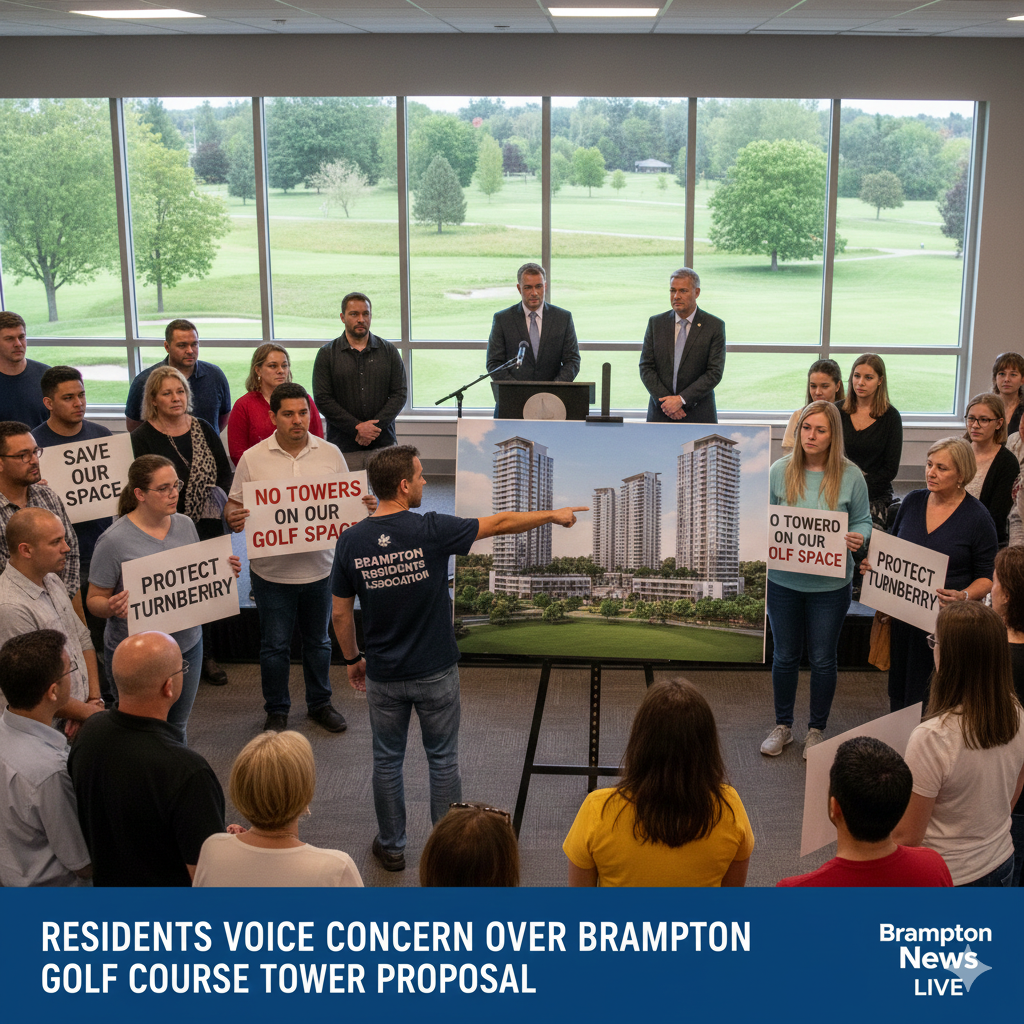
Residents Raise Concerns Over Proposed Towers at Brampton’s Turnberry Golf Course

Residents living near Turnberry Golf Course in Brampton are voicing strong concerns over a proposed redevelopment plan that would introduce residential towers and commercial buildings to the area.

The project would keep the golf course at 10100 Heart Lake Road, near Bovaird Drive and Highway 410, but reduce it from 18 holes to 12 holes. In addition to four residential towers, the proposal includes four commercial buildings, a public park and a stormwater management pond.

‘A direct threat to our quality of life,’ residents say

Michael O’Neill, representing the Cheviot Neighbourhood Association, described the proposal as a “direct threat to the quality of life” for residents during a statutory public meeting at the city’s Dec. 1 planning and development committee session.

He stated that the community was originally planned and zoned for single-family homes, and the addition of four high-rise towers would fundamentally change the character of the neighbourhood.

“Four towers jammed beside a stable low-rise neighbourhood represents an extreme density shock. It would permanently and irreversibly damage the character, privacy and liveability of our community,” O’Neill said.

O’Neill and other residents also expressed concern that the surrounding streets are already congested and cannot handle increased traffic.

Local resident Suresh Anandham echoed the concerns, warning that the development would put additional strain on roads, schools, utilities and healthcare services, which he says are already stretched.

“We don’t have enough school or hospital facilities to manage the existing population. This would create havoc in the area.”

Longtime resident Raul Ortiz Romero suggested that if the development proceeds, it should include affordable childcare, medical offices, family-sized units, and a transit terminal.

“If high-density housing is going to be included, it should provide livable space for families and include vital community services,” he said.

Details of the proposed development

The application, submitted by KLM Planning Partners Inc. on behalf of Vardon Flyer Inc. and York Major Holdings Inc., is currently under review by city staff. The proposal requires amendments to Brampton’s official plan and zoning bylaw.

According to the city:

  • Four residential towers are proposed at the southwest portion of the seven-hectare site

  • Total residential units: 945

  • Tower heights: Two at 22 storeys, one at 29 storeys, and one at 8 storeys

  • Four commercial buildings would be constructed along Heart Lake Road

  • Combined commercial floor space: 11,320 square metres

  • Additional features: Public park and stormwater management pond

A draft subdivision plan is also currently under city review.

Change.org petition gains support

A Change.org petition started by Michael O’Neill has gathered 490 signatures as of Dec. 2, opposing the project.

The petition calls the proposal a “monstrosity”, claiming it would bring:

  • Increased traffic congestion

  • Overcrowded schools

  • Noise and safety concerns

  • Permanent loss of neighbourhood character

The petition urges Brampton City Council to reject the development outright.

Developer says project will ‘bring new life’ to the site

Despite opposition, Ryan Mino-Leahan of KLM Planning Partners defended the proposal, stating that the golf course is no longer operating at full capacity, especially during winter months.

“The site is slowing down. We’re looking for ways to bring new life there and introduce new opportunities,” he said.

Mino-Leahan noted that the surrounding area lacks retail and medical services, which the proposed commercial buildings aim to provide.

He also highlighted that there are currently no apartment buildings in the area, and the residential component would offer a wider range of housing options.

“We understand the concerns and we are working with city staff through our consulting team to address the feedback we’ve heard.”

What happens next?

City planners will continue reviewing the application and collecting public feedback before making formal recommendations to council.

For now, the proposal remains under consideration, with strong opinions on both sides — residents pushing to protect the existing community character, and developers arguing the project is a necessary step toward revitalization and modernization.

Two Brampton Restaurants Receive Conditional Passes Following Food Safety Inspections

Peel Public Health has issued conditional passes to two Brampton restaurants following routine inspections, highlighting areas requiring immediate corrective action to meet provincial food safety standards.

Inspectors regularly evaluate restaurants, cocktail bars, bakeries, takeout establishments, and other food service businesses across Peel Region to ensure compliance with operational and health regulations.

Hakkalicious Receives Conditional Pass

Hakkalicious, located at 20 Brisdale Drive, Unit 3, underwent inspection on December 1, 2025. According to Peel Public Health, several areas were found not in compliance with food safety regulations:

  • Non-food contact surfaces: Not maintained in a clean, sanitary, and good condition.

  • Washroom supplies: Required supplies not provided for every washroom.

  • Mechanical ventilation: Systems inadequately maintained to remove odours, fumes, smoke, vapours, and excessive heat.

  • Pest control (Critical Risk): Premises did not fully prevent the harbourage or breeding of pests.

The inspection highlighted critical areas needing immediate attention to protect staff and patrons.

Zimidar Bar & Grill Corrects Violations After Inspection

Zimidar Bar & Grill, at 50 Lacoste Boulevard, Unit 121, was inspected on November 27, 2025. Initial inspection results identified several significant and critical risks:

  • Temperature control of hazardous food: Corrected during inspection.

  • Thermometers: Inaccurate or unreadable, not in compliance.

  • Food storage practices (Significant Risk): Corrected during inspection.

  • Handwashing stations: Inadequate number and accessibility.

  • Housekeeping practices: Did not meet required standards.

A reinspection conducted on November 28 confirmed that the restaurant had corrected critical violations, allowing it to receive a pass.

Understanding Peel Public Health Inspection Ratings

Peel Public Health uses a colour-coded system to inform the public about food establishment safety:

  • Green Pass: Establishment complies with the Health Protection and Promotion Act and operational standards.

  • Yellow (Conditional Pass): Some requirements are not met, and items posing a risk to public health must be corrected immediately.

  • Red (Closed): Significant health risks identified, and the establishment must close until issues are resolved.

The inspection program is designed to provide transparency and ensure the safety of food services for residents and visitors in Peel Region.

Importance of Compliance

Food safety inspections are a critical component of public health, helping to prevent foodborne illnesses and maintain hygienic conditions in food establishments. Businesses receiving conditional passes are expected to promptly address deficiencies to protect public health and maintain operational licenses.

Both Hakkalicious and Zimidar Bar & Grill now fall under ongoing monitoring by Peel Public Health, ensuring that corrective measures remain effective and that high standards of food safety are upheld.

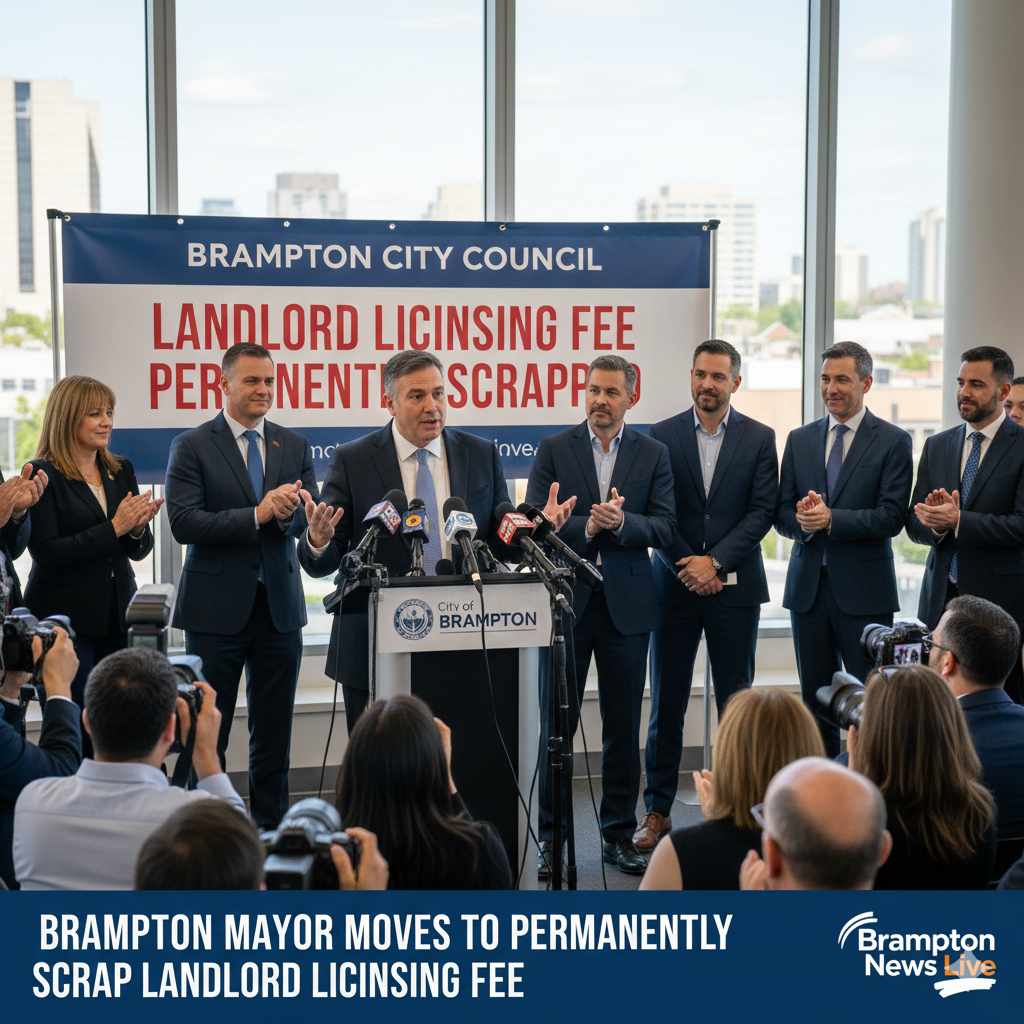
Brampton Mayor Patrick Brown Moves to Permanently Scrap Landlord Licensing Fee

Brampton Mayor Patrick Brown has pledged to permanently eliminate the $300 application fee for landlords participating in the city’s mandatory Residential Rental Licensing (RRL) program, citing his strong-mayor powers and commitment to removing financial barriers for property owners.

The move comes as the city expands the RRL program citywide, aiming to ensure rental properties meet basic health, safety, and maintenance standards.

Background: The Residential Rental Licensing Program

The RRL program currently applies to landlords managing four or fewer residential rental units in Wards 1, 3, 4, 5, and 7. These property owners are required to obtain a special license and register their units with the city.

During the Nov. 26 general committee meeting, council unanimously approved staff recommendations to phase the program into Wards 2 and 8 first, followed by the remaining three wards in 2026, thereby extending the RRL’s reach across Brampton.

Pilot Program Timeline

Initially launched as a two-year pilot in January 2024, the RRL program was set to expire on Dec. 31, 2025. Earlier this year, council extended the pilot through the end of 2028 to allow for program evaluation and gradual citywide implementation.

In March 2025, council waived the $300 application fee for the remainder of the year to encourage compliance and higher registration rates. By June, council considered whether to extend the waiver as part of the pilot’s long-term budget planning.

Mayor Brown’s Commitment to Removing the Fee

City staff had recommended reinstating the fee in 2027 to help offset program costs and maintain service levels. However, Mayor Brown, leveraging his strong-mayor powers as budget chair, has indicated he will not allow the fee to be reinstated in 2026 or subsequent years.

A city statement clarified:

“While the November council report outlines potential cost-recovery options, property owners are not required to pay licence application fees for the Residential Rental Licensing (RRL) Program. As the budget is presented by the mayor, the mayor has made clear to staff that the city will not include a licence application fee for participation in the program.”

The statement emphasized that the city remains committed to ensuring safe and well-maintained rental housing without imposing financial barriers on landlords.

Landlord Concerns and Opposition

The application fee has been a key concern among landlords since the program’s inception. The Brampton Housing Providers Association (BHPA), a landlord advocacy group, has held multiple protests opposing the RRL program, describing the fee as an unfair financial burden.

BHPA President Azad Goyat welcomed the mayor’s commitment to removing the fee but criticized the program’s expansion and ongoing compliance requirements.

Inspections and Property Rights

Landlords participating in the RRL program are subject to random inspections to ensure compliance with building, fire, and safety codes. BHPA has argued that this requirement infringes on property owner rights, particularly for units that have already passed inspections and received occupancy permits.

“We are the legal house owners. Our units are compliant,” Goyat said. “How can someone enter into a dwelling without permission of the landlord?”

The group also expressed concern that fees could be reinstated or increased in the future, noting that Mayor Brown is up for re-election in 2026.

Enforcement and Compliance

Landlords operating without a license or failing to meet basic health and safety standards face escalating fines:

  • $600 for a first offence

  • $900 for a second offence

  • $1,200 for subsequent offences

Mayor Brown and council have consistently emphasized that the RRL program is not intended as a revenue generator but as a means to protect tenants and maintain safe rental housing stock.

Mayor Brown’s Statement to Council

At the Nov. 26 committee meeting, Brown addressed misconceptions about the program:

“There were some myths about the RRL initially. We had protests here earlier this year saying that … ‘this is a cash cow for the city.’ There is no fee for the RRL.”

He added:

“The RRL simply says to landlords: it’s your responsibility to meet building code and fire codes. It’s a basic level of safety that we believe is the responsibility of the landlord.”

Moving Forward: Program Expansion

As the city phases the RRL program into additional wards, the mayor’s commitment to a fee-free model will apply across all newly incorporated areas. The program’s expansion is intended to ensure all rental housing in Brampton meets consistent safety and maintenance standards, while minimizing administrative and financial burdens for property owners.

The permanent removal of the licensing fee aligns with Brampton’s broader goals of supporting landlords, encouraging compliance, and maintaining high-quality rental housing across the city.

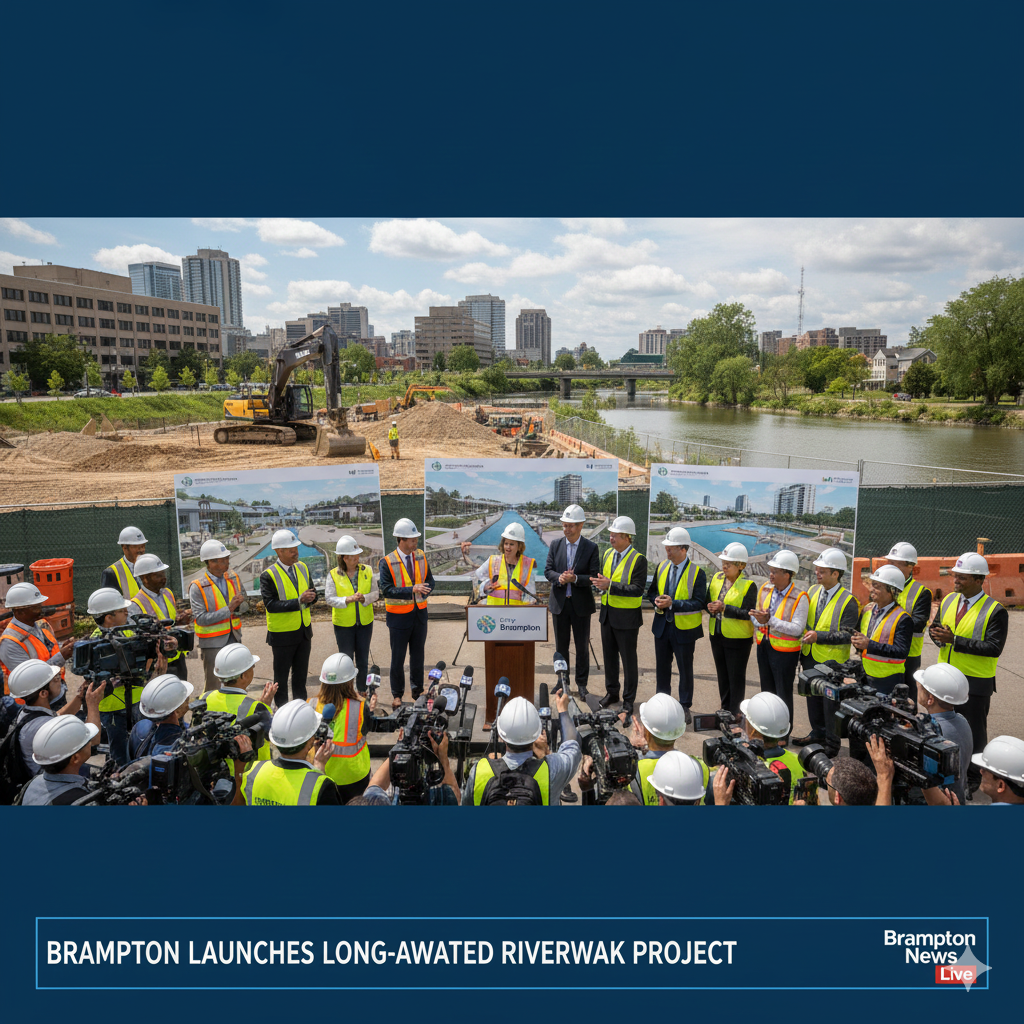
Brampton Launches Long-Awaited Riverwalk Flood Mitigation Project to Transform Downtown

Brampton has officially broken ground on a landmark downtown flood mitigation initiative, nearly 14 years after the project was first proposed. The Riverwalk project aims to provide enhanced protection against flooding while unlocking development opportunities in the city’s floodplain-designated downtown core.

Mayor Patrick Brown, alongside local officials, marked the official start of construction at a ceremonial groundbreaking on November 21, emphasizing the project’s transformative potential for Brampton’s urban landscape.

Addressing Downtown’s Floodplain Challenges

Brampton’s downtown area sits within a provincially regulated floodplain, formally designated as a Special Policy Area (SPA). This designation, while acknowledging the area’s regulatory constraints, also recognizes the downtown core as the city’s economic and civic heart, meriting careful investment and development.

According to the city, Riverwalk is a “once-in-a-generation” infrastructure project that will not only mitigate flooding risks but also enable sustainable urban growth. “Feasibility studies have shown that it is possible to eliminate the flood hazard, which would, in turn, allow for the removal of the SPA designation,” city officials noted.

Historical Flooding in Brampton

Although major flooding incidents in downtown Brampton have been rare for decades, the region has a long history of flood challenges. The catastrophic flood of March 1948 led to the diversion of the Etobicoke Creek via a concrete channel in 1952, protecting the downtown core from future overflow.

“While this channel has safeguarded the area from flooding, strict provincial regulations still limit development in the downtown,” the city explained. Riverwalk aims to modernize this protection system, reducing the risk of flooding during extreme storms and providing comprehensive safeguards for residents and businesses alike.

Project Goals and Urban Benefits

The Riverwalk project is designed to achieve multiple objectives:

  • Enhanced Flood Protection: Deepening and widening the Etobicoke Creek diversion channel to manage extreme rainfall and storm events.

  • Urban Development: Removing regulatory constraints to allow residential and commercial growth within downtown Brampton.

  • Public Spaces and Recreation: Creating parks, greenways, and trails to provide residents with access to nature and vibrant communal areas.

Mayor Brown emphasized the project’s broader impact: “The Riverwalk Flood Protection Project is a once-in-a-generation investment that will protect our community, unlock our downtown’s full potential, and help drive new housing, jobs, and economic growth.”

From Planning to Implementation

The Riverwalk initiative was first proposed under former Mayor Susan Fennel in January 2011. Between 2013 and 2018, the city, in collaboration with the Toronto and Region Conservation Authority (TRCA), conducted provincial and federally funded feasibility studies to assess the technical and environmental requirements of the project.

In 2014, the provincial government approved an SPA amendment permitting limited revitalization and redevelopment across approximately 30 hectares of downtown Brampton. However, full-scale development remained constrained until a comprehensive flood mitigation strategy could be implemented.

Phase 1: Flood Infrastructure Construction

The first phase of Riverwalk focuses on strengthening flood defenses by modifying the Etobicoke Creek diversion channel. City engineers will deepen and widen the channel, enhancing its capacity to handle high water volumes during severe weather events.

This phase prioritizes safety and infrastructure resilience, forming the foundation for subsequent development and public space initiatives.

Phase 2: Parks, Housing, and Commercial Development

While no official timeline has been released for the second phase, the city anticipates it will focus on creating vibrant urban spaces. Planned features include:

  • New parks and green spaces

  • Walking and cycling trails

  • Residential housing projects

  • Commercial and retail developments

By integrating flood protection with urban revitalization, Riverwalk is expected to transform downtown Brampton into a safer, more attractive, and economically dynamic hub.

Funding and Partnerships

Riverwalk is backed by significant federal and provincial investment, totaling nearly $90 million.

  • Federal Contribution: $38.8 million through Canada’s Disaster Mitigation and Adaptation Fund.

  • Provincial Contribution: Nearly $50 million from Ontario’s Municipal Housing Infrastructure Program.

Mayor Brown expressed gratitude for the multi-level governmental support. “This project will safeguard Brampton from flooding and will welcome thousands of new residents and businesses into a vibrant reimagined downtown. We are grateful to our partners in the governments of Canada and Ontario, and the Toronto and Region Conservation Authority, for their collaboration and investment in Brampton’s future.”

Collaboration with Conservation Authorities

The Toronto and Region Conservation Authority (TRCA) continues to play a critical role, providing technical expertise and environmental oversight. This partnership ensures that Riverwalk’s design meets stringent safety, ecological, and sustainability standards while enhancing community access to natural spaces.

Economic and Social Impacts

Riverwalk is not merely a flood mitigation initiative—it represents a strategic urban renewal effort. By reducing the risk of flooding and lifting provincial restrictions on development, the project is expected to:

  • Attract private investment and development

  • Increase downtown housing options

  • Create new jobs in construction, retail, and services

  • Enhance public amenities and recreational opportunities

City planners note that integrating green infrastructure and recreational spaces will also improve the quality of life for residents, creating a downtown that balances growth with environmental stewardship.

A Long-Awaited Investment

Mayor Brown characterized Riverwalk as a generational investment in Brampton’s future. “This is more than infrastructure; it’s about shaping the city for the next decades. We are creating a safer, more vibrant downtown that will serve residents, businesses, and visitors for generations to come.”

The project’s phased approach allows Brampton to simultaneously address flood mitigation while planning for long-term urban growth, ensuring that the downtown core remains both safe and economically viable.

Looking Ahead

With construction underway, Brampton is poised to witness a transformation in its urban landscape. Riverwalk is expected to become a model for integrating environmental resilience with urban planning, demonstrating how flood mitigation projects can serve as catalysts for economic development and community revitalization.

As the city moves forward, continued collaboration with provincial and federal partners, combined with strategic urban planning, will be crucial in realizing Riverwalk’s full potential. By safeguarding the downtown from flooding and creating new development opportunities, Brampton is laying the groundwork for a thriving, resilient, and dynamic city core.

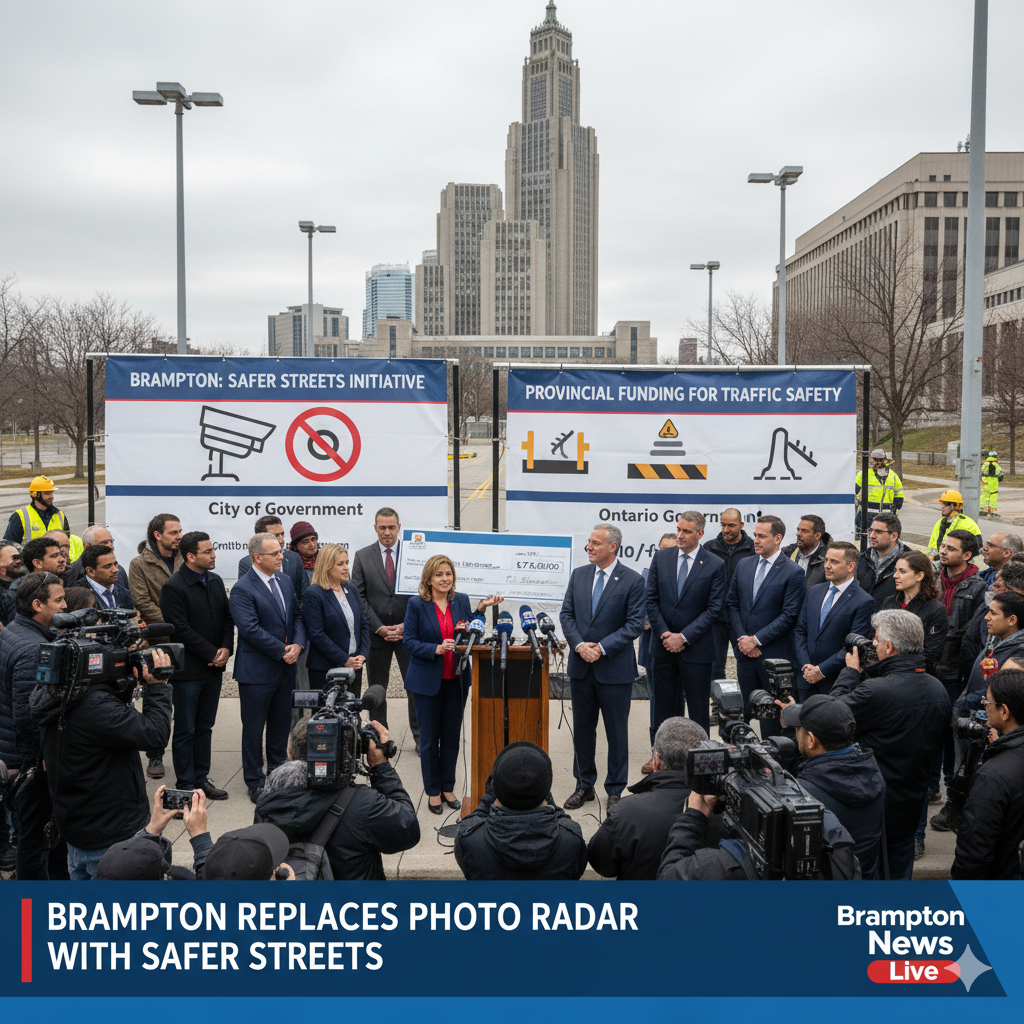
Brampton Receives Nearly $7 Million from Ontario Government to Replace Photo Radar Cameras with Traffic Safety Measures

The City of Brampton will receive close to $7 million from the provincial government to replace 185 decommissioned photo radar cameras with alternative traffic safety measures, following Ontario’s recent legislative changes. The funding, announced after the passage of Bill 56, is intended to support the city in implementing more traditional road safety initiatives, including signage, speed bumps, and other traffic-calming interventions.

Provincial Changes Prompt Funding Support

In early November, Ontario’s Bill 56 received royal assent, effectively banning municipal use of automated speed enforcement (ASE) cameras across the province. The legislation marked a significant policy shift, as municipalities had previously been permitted to operate speed cameras in community safety zones, a measure first authorized in 2019.

Ontario Premier Doug Ford framed the move as a response to concerns over the effectiveness and fairness of ASE cameras, labeling them as a potential “municipal cash grab.” Alongside the ban, Ford committed to providing municipalities with provincial funding to offset the costs of replacing the cameras with conventional traffic-calming solutions.

Brampton’s ASE Program: A Local Perspective

Brampton was among the earliest adopters of ASE technology in Ontario. Following the provincial approval in 2019, the city invested heavily in speed enforcement cameras within school and community safety zones. The city even opened a dedicated ticket processing centre in 2024 to handle the growing volume of automated traffic fines.

According to city officials, the provincial government has allocated immediate access to $6,997,000 through the fund established under Bill 56. This funding is intended to support the city in transitioning from automated cameras to alternative measures aimed at maintaining road safety.

Council Response to Provincial Funding

During the Nov. 26 general committee meeting, Councillor Michael Palleschi, representing Wards 2 and 6, acknowledged that while the provincial funding is a welcome start, additional resources will likely be required to fully replace the city’s ASE infrastructure.

The committee approved a staff recommendation to use $1.5 million of the $6.9 million allocation for initial planning and early implementation of alternative traffic-calming measures, prioritizing school zones.

“A lot of work has to be done, but we need to look at the number of schools in Brampton and start somewhere,” Palleschi said. “We can use the $1.5 million now, then allocate the remaining funds to fully understand the true cost and send the province the remainder of the bill.”

Effectiveness of ASE Cameras

City staff emphasized the effectiveness of ASE cameras in improving road safety. Data collected by the cameras demonstrated substantial reductions in speeding across Brampton, particularly in school and community safety zones.

“The loss of ASE as an automated deterrent is expected to result in a return to increased speeds within community safety zones, reversing several of the safety gains achieved through the program,” staff reported. They noted that while the cameras are no longer authorized for enforcement, many continue to monitor traffic for data collection purposes.

According to municipal data, ASE cameras contributed to a reduction in average vehicle speeds by 9.3 km/h across all monitored locations. Compliance with speed limits increased by an average of 38%, with some locations reporting reductions exceeding 20 km/h and sustained compliance rates above 90%.

Concerns Over Road Safety

City officials have expressed concern that the removal of automated speed enforcement may result in higher rates of speeding in critical zones. “ASE delivered measurable road safety improvements across Brampton,” the city’s report concluded.

Despite the evidence provided by Brampton, Premier Ford maintained that municipal speed cameras were ineffective in deterring speeding. The province’s position contrasted with Brampton’s data-driven approach, highlighting the ongoing debate between automated enforcement and traditional traffic measures.

Moving Forward: Brampton’s Road Safety Strategy

Mayor Patrick Brown stressed that the city must move forward in prioritizing road safety, despite the provincial ban.

“We can’t go backwards; we can only move forward. While we advocated for speed cameras as a life-saving initiative, we now need to explore other cost-effective traffic-calming measures,” Brown said during the committee meeting.

Early Implementation Plans

The city has already begun receiving new signage from the province, which will be installed in school zones as part of the funding conditions. Mayor Brown emphasized that the nearly $7 million in funding is only an initial allocation. Brampton will be able to apply for additional funds for other road safety initiatives beyond the initial support.

“There are two funding streams,” Brown explained. “The first is the $6.9 million to get started, and the second is an additional fund for any other innovative ideas we propose.”

Alternative Uses for Existing Infrastructure

Although ASE cameras can no longer be used to issue speeding tickets, the city is exploring other applications for the technology. This includes installing additional red-light cameras and using existing units to detect vehicles with modified or excessively noisy exhaust systems, in violation of municipal noise bylaws. Mayor Brown confirmed that the province has approved these alternative uses.

Financial Considerations

Implementing alternative traffic-calming measures such as speed bumps, signage, and roundabouts comes with significant costs. City officials have noted that equipping every school zone with full signage or constructing new roundabouts is a financially demanding endeavor. Nonetheless, the city is committed to maximizing the impact of provincial funding while ensuring public safety.

Collaboration with Provincial Authorities

Brampton officials have indicated that ongoing discussions with the provincial Ministry of Transportation aim to identify practical and cost-effective solutions. “We’re having very collaborative conversations with the minister’s office on how we proceed,” Mayor Brown said.

Conclusion

Brampton’s road safety landscape is undergoing a significant transformation following the provincial ban on ASE cameras. With nearly $7 million in funding, the city is poised to implement a combination of signage, speed bumps, and other traffic-calming measures, focusing initially on school zones.

While challenges remain, including the high cost of alternative infrastructure and the potential for increased speeding, city leaders are committed to maintaining and improving road safety. Brampton’s approach underscores the importance of data-driven planning and collaboration with provincial authorities to ensure that public safety remains a priority in the wake of legislative changes.

As Brampton moves forward, the city will continue to explore innovative strategies to protect residents, adapting to new provincial regulations while building on the success of its former ASE program.