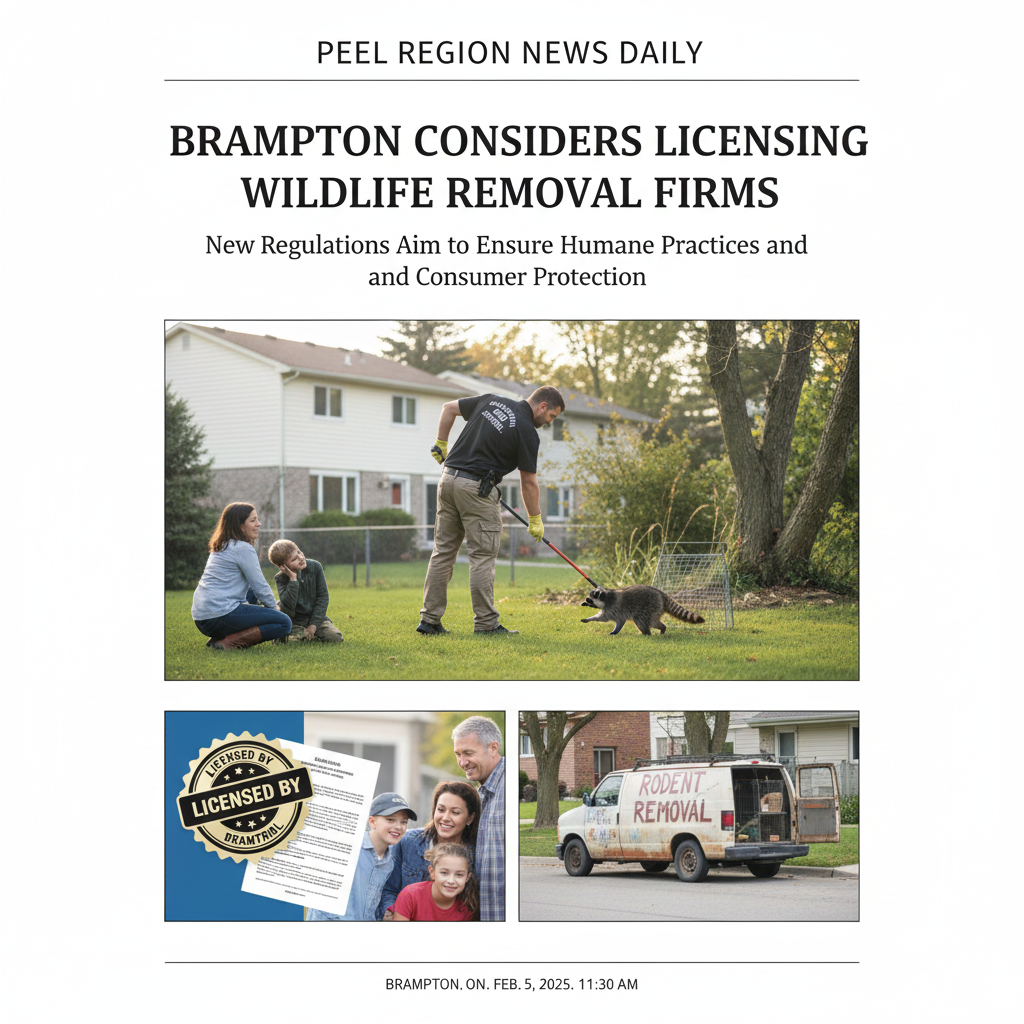
Brampton Considers Licensing Wildlife Removal Firms to Ensure Humane Practices

City Moves Toward Regulating a “Wild West” Industry

Brampton council is exploring changes to the city’s bylaws that would require wildlife removal operators to obtain municipal licenses, a move aimed at establishing consistent, humane, and accountable standards across the industry. The proposed changes were introduced through a city staff report presented at the November 12 Committee of Council meeting.

City staff recommended that council approve a licensing framework that would allow the city to set minimum standards for training, require insurance, enforce record-keeping, and prohibit inhumane or unlawful methods. The report highlighted complaints regarding inconsistent practices among wildlife removal service providers, which the proposed licensing schedule aims to address.

“A new licensing schedule would mandate humane exclusion as the default, restrict inhumane methods, and require operators to provide residents with written service plans and close-out reports,” the staff report noted.


Current Landscape of Wildlife Removal in Brampton

According to city staff, there are currently 18 active wildlife removal businesses operating in Brampton. If the bylaw changes are approved, these operators would be required to obtain a city-issued license at an annual fee of $239.

The licensing initiative is intended to reduce incidents of improper wildlife handling that have led to orphaned animals and increased pressure on municipal services.


Community and Industry Support

Wildlife Experts Advocate for Regulation

Sandy Donald, director of Ontario Wildlife Rescue, which collaborates with over 50 wildlife rescue centers across the province, addressed council in support of the proposed licensing changes.

“Currently, most wildlife removal companies are unlicensed in Ontario. Anyone can set up a wildlife removal company. It’s a wild west that’s completely unregulated,” Donald told council. He explained that improper removal often leaves young animals behind after the mother is captured, leading to a significant number of orphaned animals.

“Anywhere from 20 to 40 per cent of orphaned wild animals — skunks, raccoons, rabbits — end up in wildlife rescue centres because of this problem,” Donald added. He noted that in Brampton, these orphaned animals are typically picked up by Animal Services before being transferred to wildlife rescue centers.

Donald praised Brampton Animal Services as “one of the best in Ontario when it comes to wildlife,” but stressed that municipal licensing would help ease the burden on taxpayer-funded services by imposing stricter standards on wildlife removal operators.


Industry Voices Call for Oversight

Brad Gates, president of Gates Wildlife Control, a Greater Toronto Area company operating since 1984, also voiced support for the licensing initiative. In a letter to council, Gates acknowledged improvements in ethical standards in recent years but emphasized that a lack of regulatory oversight continues to create problems in the industry.

“Without licensing or enforcement, unethical practices continue. Many operators still define ‘humane’ according to convenience rather than animal welfare. Young are still being left behind in attics, exposed outdoors without heat, or separated from their mothers,” Gates wrote. He also cited concerns about a growing pattern of fraudulent conduct among some wildlife removal companies.

Gates highlighted the inconsistency in municipal licensing requirements, noting that Brampton already mandates licenses for taxis, contractors, and pet groomers, yet wildlife removal businesses — which handle live animals and enter private property — remain largely unregulated.


Next Steps for Council

Council has decided to refer the staff report and proposed bylaw changes back to city staff for additional consultation and review. The proposal will return to council for further consideration at a later date, allowing for public input and continued engagement with stakeholders in the wildlife removal industry.

If approved, the licensing framework would establish clear expectations for wildlife removal operators, strengthen enforcement against unethical practices, and ensure that humane treatment becomes the standard for handling wild animals in Brampton.
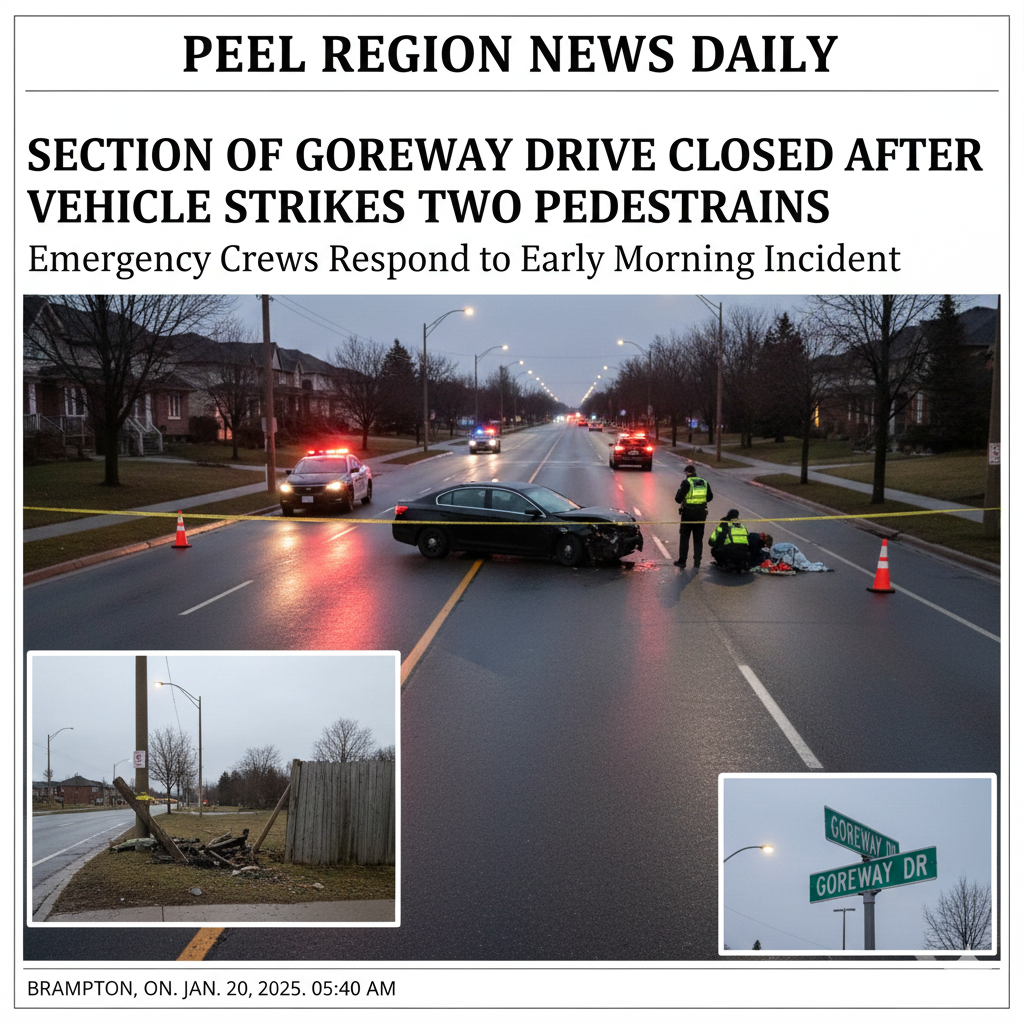
Section of Goreway Drive Closed After Vehicle Strikes Two Pedestrians in Brampton

Morning Collision Shuts Down Southbound Lanes

A portion of Goreway Drive in Brampton was closed Monday morning after a vehicle struck two pedestrians, according to Peel Regional Police. The incident occurred near Cottrelle Boulevard, where the southbound lanes remain blocked as authorities continue to investigate.

The pedestrians involved in the collision were transported to a local hospital. Peel police have confirmed that their injuries are serious but not considered life-threatening.

Police Response and Road Closure

Peel Regional Police responded quickly to the scene to provide assistance and secure the area. Traffic has been redirected, and drivers are advised to avoid the section of Goreway Drive near Cottrelle Boulevard until the investigation and cleanup are complete.

Authorities have not released additional details about the vehicle or the circumstances leading up to the collision. The investigation is ongoing, and officers are urging anyone with information or dashcam footage to come forward to assist in their inquiries.

Safety Reminder for Motorists and Pedestrians

Incidents like this highlight the importance of road safety for both drivers and pedestrians. Police are reminding motorists to remain vigilant, obey speed limits, and watch for pedestrians, especially in areas with high foot traffic. Pedestrians are also encouraged to use crosswalks, follow traffic signals, and stay alert while crossing streets.

No further updates on the condition of the victims have been released at this time. Residents and commuters are encouraged to check local traffic advisories before traveling in the affected area.

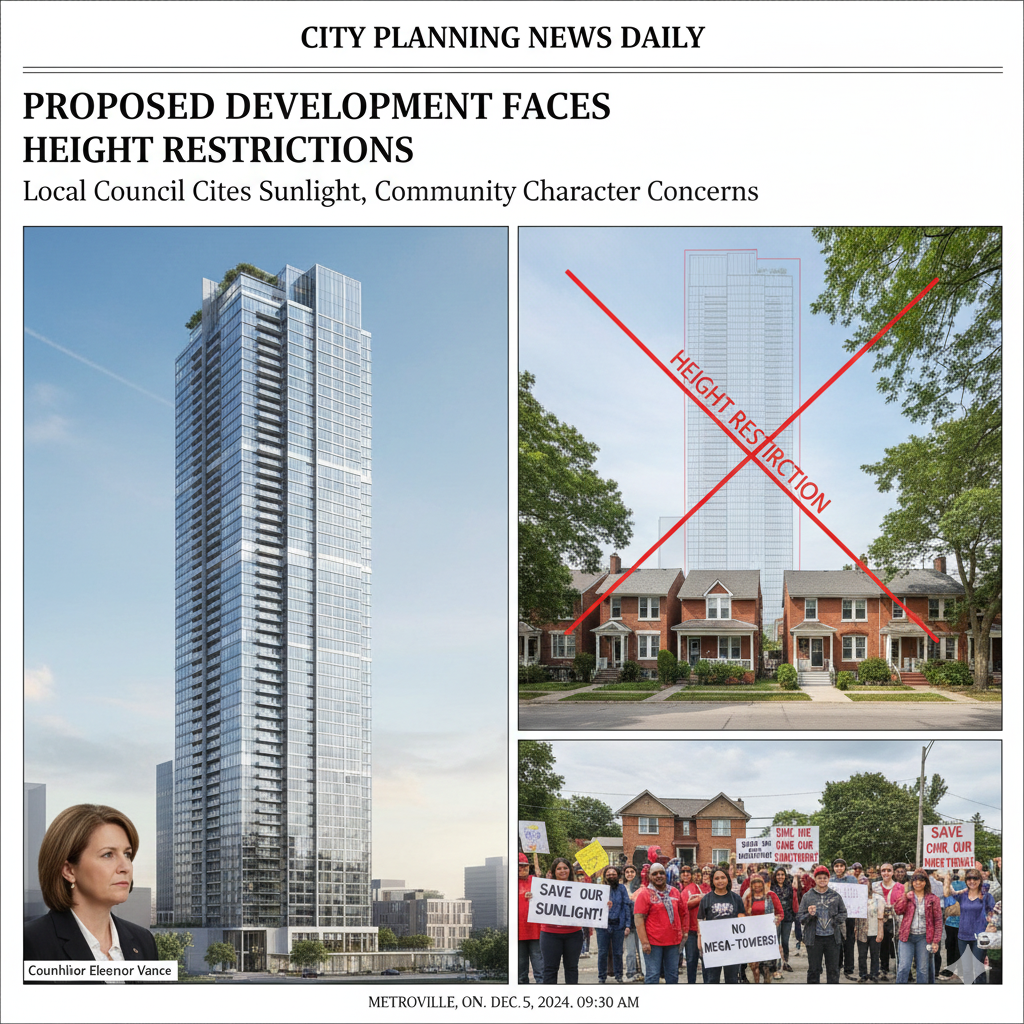
Proposed Development Faces Height Restrictions

A major high-rise residential project in Brampton has been significantly scaled back after city officials confirmed it falls within the flight path of Toronto Pearson International Airport. The proposed development, located at 507 Balmoral Drive, was initially envisioned as a transformative addition to the city’s skyline, consisting of three buildings ranging from 10 to 45 storeys and containing a total of 1,020 residential units.

However, in response to regulations enforced by the Greater Toronto Airports Authority (GTAA) and Nav Canada, which oversees civil air traffic across Canada, the tallest building in the plan has been reduced to 19 storeys.

Revised Development Plans

According to the City of Brampton, the amended proposal now consists of two 19-storey buildings and a 15-storey building. The project would include:

  • 932 residential units, including 13 bachelor suites, 453 one-bedroom, 367 two-bedroom, and 99 three-bedroom units.

  • Ground-floor commercial space for retail or service uses.

  • Three levels of underground parking to accommodate residents.

  • 918 square metres of indoor amenity space and 897 square metres of outdoor amenity space for residents.

City staff have recommended that an application to amend the official plan and zoning bylaw to permit this development be approved, citing its alignment with the city’s planning objectives.


Project Background

The application, submitted by Gagnon Walker Domes Ltd. (GWD) on behalf of Balmoral Inc., is scheduled to appear before Brampton’s Planning and Development Committee on Dec. 1 at 7 p.m..

Councillor Pat Fortini, representing the area, expressed opposition to the proposal, arguing that it does not suit the character of the surrounding neighbourhood.

“The only reason I’m not going to vote in favour is it’s not the right location to put 19 storeys,” Fortini said in an interview. “Homes are right around the corner. They’re right behind there. Let’s face it — we need homes, but this is not the right fit for this site.”

Despite Fortini’s objections, he anticipates that the application will ultimately receive council approval.


Community Concerns

A statutory public meeting was held on June 9, 2025, to discuss the original proposal, which at that time included a 45-storey building. Residents voiced concerns regarding the scale of the development, potential impacts on neighbourhood character, traffic congestion, and infrastructure capacity.

Marc De Nardis, a GWD planning associate, noted during the June meeting that no final decision had been made regarding whether the proposed buildings would operate as rental units, condominiums, or a combination of both.

Residents have consistently highlighted that the current low-rise neighbourhood, consisting of primarily four-storey apartment buildings, may not be suited for high-rise development of the scale initially proposed.


City Staff Support the Proposal

Despite local concerns, city staff have indicated that the project represents a strategic opportunity to support Brampton’s broader planning objectives. A report prepared by Alex Sepe on November 4, 2025, emphasizes that the development contributes to:

  • Compact, transit-oriented growth.

  • Increased housing supply to meet city demand.

  • Efficient use of existing transit infrastructure and community amenities.

The report suggests that the development aligns with the city’s long-term vision for sustainable urban growth while making effective use of a 1.36-hectare parcel of land at the southwest corner of Balmoral Drive and Bramalea Road.


Existing Site Details

The site currently contains a four-storey rental apartment building with 55 units, primarily one- and two-bedroom layouts. The building, estimated to be nearly 65 years old, has 73 parking spaces located at the rear.

Jan Salaya, the city planner overseeing the application, clarified that the existing building at 507 Balmoral will not be demolished immediately. Any demolition will occur after site plan approval, and nearby properties at 501 and 503 Balmoral Drive are not included in redevelopment plans at this time.


Transit and Infrastructure Considerations

City planning staff have highlighted that the amended proposal is consistent with transit-oriented development principles. The site is accessible to public transit, which could help reduce traffic congestion and promote sustainable mobility for future residents.

By integrating commercial space at the ground level, the development is also intended to create a more vibrant, pedestrian-friendly streetscape, providing amenities for both residents and the surrounding community.


Airport Flight Path Restrictions

The most significant factor influencing the scaling back of the project is its location under a Toronto Pearson International Airport flight path. Height restrictions imposed by the GTAA and Nav Canada are designed to ensure aircraft safety, requiring developers to limit building heights in certain zones.

This adjustment has necessitated a reduction of the tallest building from 45 storeys to 19 storeys, while the other buildings were modified to 19 and 15 storeys, respectively.

“Compliance with air traffic safety regulations is non-negotiable,” a city spokesperson said. “All proposed developments in designated flight paths must adhere strictly to GTAA and Nav Canada height restrictions.”


Housing Mix and Amenities

The revised proposal maintains a diverse housing mix to meet the needs of various households. Of the 932 units, the majority are one- and two-bedroom apartments, with a smaller number of bachelor and three-bedroom suites.

In addition, the development will feature:

  • Indoor amenities such as fitness centres, lounges, or community rooms totaling 918 square metres.

  • Outdoor amenity spaces spanning 897 square metres, which may include gardens, terraces, or recreational areas.

These amenities are designed to enhance the quality of life for residents while complementing the surrounding neighbourhood.


Looking Ahead

The application for 507 Balmoral Drive reflects the ongoing tension in Brampton between urban densification and preserving neighbourhood character. While city staff see the project as an opportunity to support transit-oriented growth and housing supply, some councillors and residents continue to raise concerns about scale, fit, and community impact.

The Planning and Development Committee meeting on December 1 will provide the next opportunity for discussion and potential approval. Should the application move forward, it will mark a significant change for the site, transitioning from a modest four-storey apartment building to a modern high-rise residential complex.

Councillor Fortini summarized the dilemma facing the city:

“We need homes, and this development provides them. But it’s about finding the right balance — the right location, the right scale, and ensuring it works for the community.”


Conclusion

The 507 Balmoral Drive development demonstrates the challenges of urban planning in high-demand areas, particularly near major infrastructure such as Toronto Pearson International Airport. While the proposal has been scaled back to meet flight path requirements, it still represents a substantial addition to Brampton’s housing stock.

With approvals pending, the project highlights the ongoing debate between meeting the city’s growing housing needs and maintaining neighbourhood character, illustrating the complexities faced by planners, developers, and residents alike.

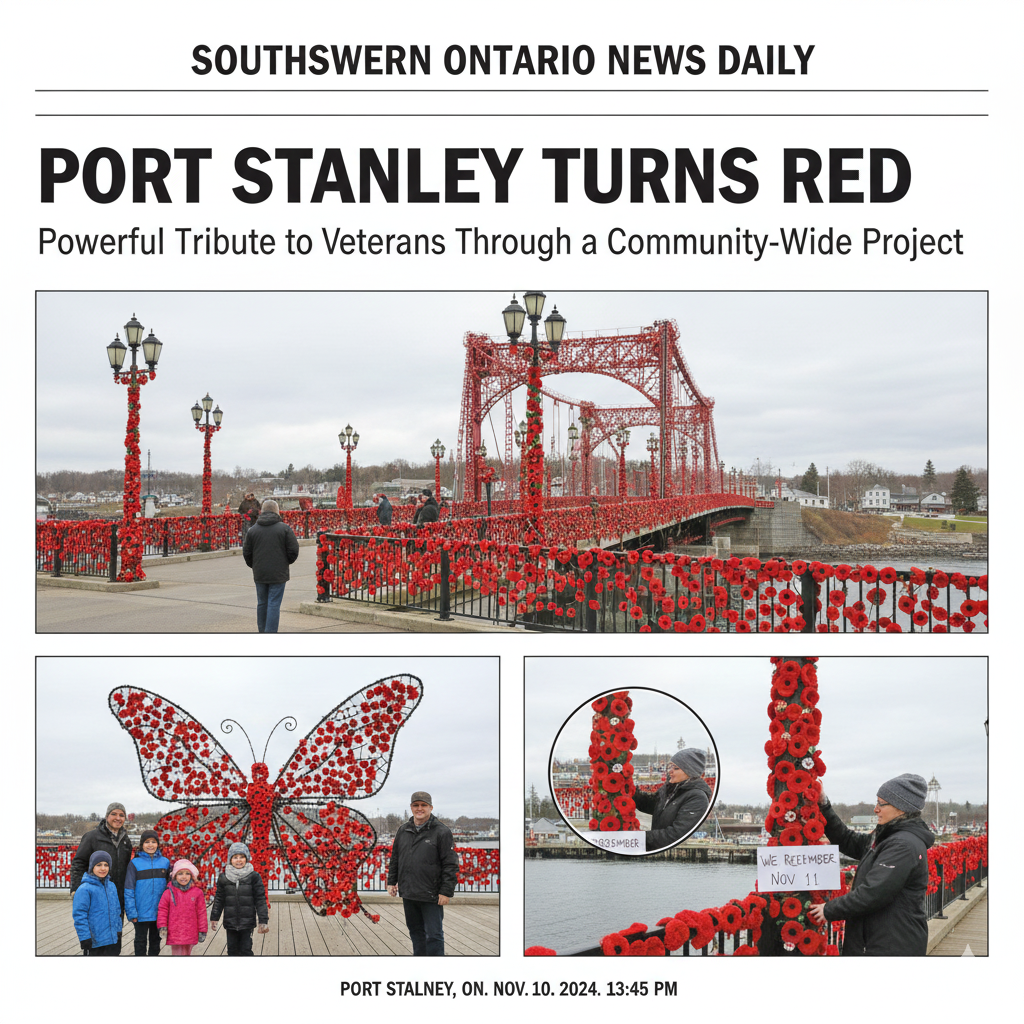
Port Stanley Turns Red in a Powerful Tribute to Veterans Through a Community-Wide Poppy Project

Introduction: A Town United by Remembrance and Creativity

In the heart of Port Stanley, Ontario, a remarkable and deeply moving transformation is unfolding. Streets, storefronts, railings, signs, and public spaces have been adorned with thousands of handmade knitted and crocheted poppies, creating a sea of red across the lakeside town. This extraordinary effort, known as the Port Stanley Poppy Project, is more than a visually striking display — it is a heartfelt tribute to fallen soldiers and veterans, woven together by the hands of an inspired and dedicated community.

Led by local coordinator Kathy Howarth and supported by more than a hundred volunteers, the project has become a symbol of remembrance, unity, and artistic expression. Far from being just a decorative initiative, the Poppy Project reflects a shared commitment to honouring military service while strengthening the bonds between residents and drawing visitors from far and wide.

As Remembrance Day approaches, Port Stanley is not quietly reflecting — it is speaking loudly through colour, craft, and collective effort.


The Vision Behind the Poppy Project

Honouring Veterans Through Art

Kathy Howarth, the driving force behind the Port Stanley Poppy Project, found her inspiration in personal history and deep respect for those who served in wartime. With family roots in Belgium and vivid memories shared by her parents, who lived through the Second World War as children, the significance of honouring veterans runs deep for her.

Howarth envisioned something that went beyond a ceremonial moment or a single event. She wanted to create an experience that would touch both residents and visitors, immersing them in reflection and appreciation for the sacrifices made by soldiers. Her idea was simple but powerful: cover the town in poppies — the universally recognized symbol of remembrance.

“Port Stanley is such a vibrant, creative community,” she explained. “I wanted to add an extra layer to that, something that was meaningful and connected us all to history.”

What began as a personal thought in January quickly transformed into a full-scale town-wide undertaking.


From an Idea to a Community Mission

At first, Howarth doubted whether such an ambitious project could be achieved. But her next thought was decisive: if someone was going to make it happen, it might as well be her.

She began reaching out through local networks, community boards, and word-of-mouth, asking if anyone would be willing to knit or crochet poppies in their own time. The response was overwhelming. People of all ages and backgrounds volunteered — experienced crafters, complete beginners, students, retirees, business owners, and families.

What started as a handful of participants grew into a collective of 106 dedicated volunteers, all spending countless hours transforming yarn into a powerful symbol of remembrance.

The goal was not a few hundred poppies. It quickly became thousands.


Thousands of Handmade Poppies Across the Town

A Labour of Love

Each poppy is handcrafted, requiring focus, care, and nearly 30 minutes to complete. That means the more than 15,000 poppies now lining Port Stanley’s streets represent over 7,500 hours of volunteer work — time given freely in honour of others.

From lamp posts and park fences to storefront windows and railings, the town has been carefully decorated without losing its natural charm. The handmade flowers stand as both an artistic statement and a profound reminder of sacrifice.

Walking through Port Stanley now is a unique experience: every step is surrounded by symbols of remembrance. The town itself has become a living memorial.

Despite the sheer scale, the work was carried out in a quiet, respectful, and collaborative spirit. Volunteers met to exchange patterns, deliver bundles of poppies, and share stories about personal connections to the military. In many ways, the project became just as important for the living as it was for remembering the fallen.


A Small Town, A Big Impact

Port Stanley is home to just over 3,000 residents, making the creation and display of more than 15,000 poppies even more remarkable. The number of poppies far exceeds the population size, turning the project into a significant artistic and cultural accomplishment.

For a small town, organizing and executing something of this magnitude required commitment, coordination, and community pride. That pride is now visible everywhere, forming a striking contrast between the quiet lakeside setting and the bold red poppy displays.

Visitors who come to see the poppies don’t just encounter art — they experience the heart of a community determined to remember and respect.


Community Reaction and Emotional Impact

A Movement That Brought People Together

Jackie Valotaire, another coordinator involved in the project, says the response has been nothing short of extraordinary. From messages on social media to conversations with visitors who walk the streets in awe, the project has touched far more people than its organizers ever imagined.

“The reaction and response that we’ve seen within this community and beyond has been incredible,” she said. “It’s brought the whole community closer together.”

In a world where daily life often feels rushed and disconnected, the Poppy Project has offered a reason to slow down and reflect. It has sparked conversations about history, family, and sacrifice. Children have asked about the meaning of poppies. Elders have shared stories of relatives who served. Neighbours who had rarely spoken before now exchange smiles and stories while passing one another under strings of red flowers.

The project has strengthened relationships, created new friendships, and reminded residents of the power of unity.


Drawing Visitors While Preserving Meaning

Howarth also hoped the Poppy Project would encourage people to visit Port Stanley — and that goal has been achieved as well. The unique display has captured the attention of people from surrounding areas, bringing an increase in foot traffic and curious visitors eager to witness the red-covered town.

However, the project has not lost its respect or sincerity. At its core, it is not about tourism; it is about honour. Visitors are reminded to move through the town with reverence, understanding that the poppies are not simply decoration but a collective thank-you to those who have served and sacrificed.

In this way, the project balances beauty with meaning, art with respect.


The Symbolism of the Poppy Reimagined

For generations, the poppy has been a symbol of remembrance, inspired by the fields of Flanders that bloomed after the devastation of World War I. In Port Stanley, that symbol has been reimagined through handmade craftsmanship, bringing a deeply traditional emblem into a modern community setting.

Each poppy tells its own story — not just of fallen soldiers, but of the hands that made it, the memory that inspired it, and the love that shaped it. Unlike factory-made decorations, these flowers carry warmth, intention, and humanity.

They serve as a reminder that remembrance isn’t only expressed through ceremonies and speeches. It can be expressed through time, effort, and quiet devotion — one stitch at a time.


Conclusion: A Lasting Tribute That Will Be Remembered

The Port Stanley Poppy Project stands as a powerful example of what can happen when a community unites around a shared purpose. What began as one woman’s simple idea in January has blossomed into a breathtaking town-wide tribute, filled with colour, emotion, and respect.

Through more than 15,000 handcrafted poppies created by 106 committed volunteers, Port Stanley has transformed itself into a living memorial — one that honours the past while strengthening the present.

As people walk its streets, gaze at its buildings, and admire the sea of red, one message is clear: remembrance is not just about looking back. It is about carrying forward gratitude, unity, and the determination to never forget.

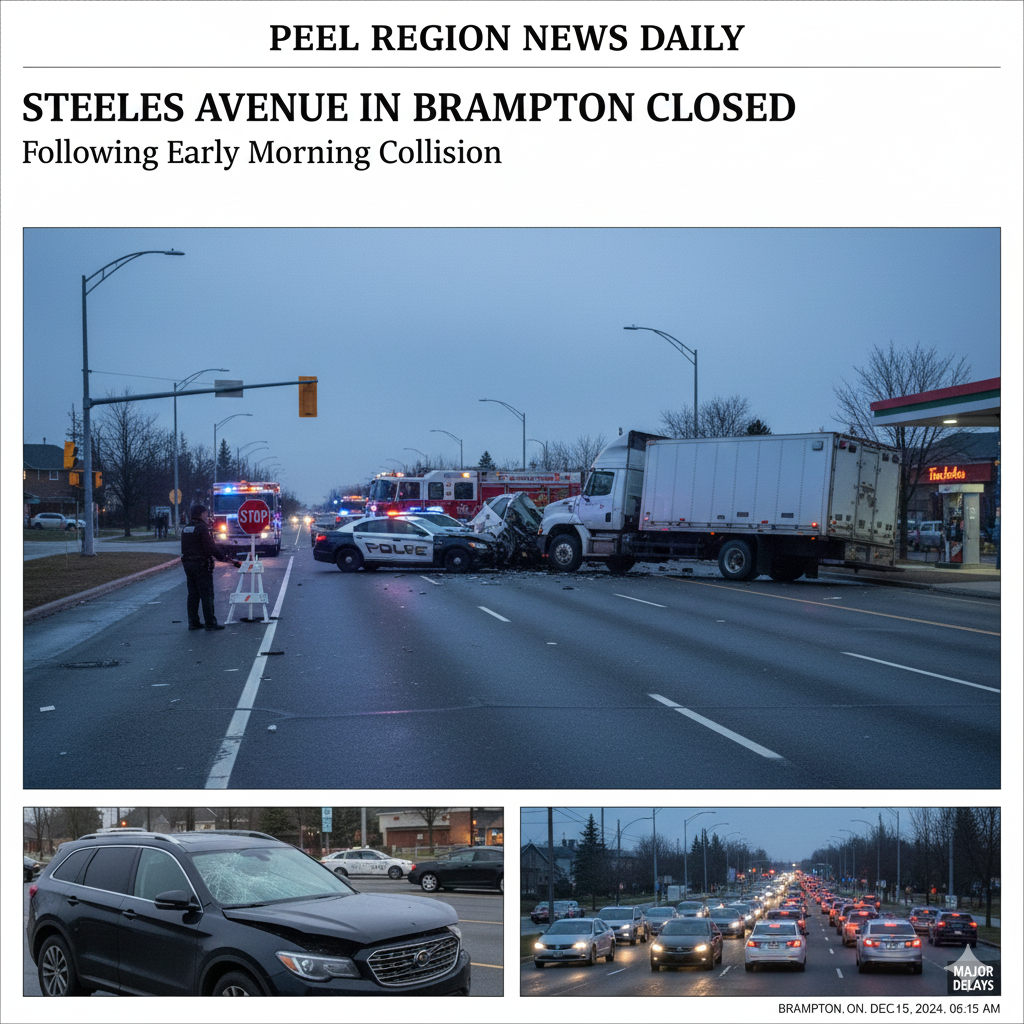
Steeles Avenue in Brampton Closed Following Early Morning Collision

Two-Vehicle Crash Shuts Down Eastbound Lanes

Brampton residents faced traffic delays on Monday morning as a section of Steeles Avenue was temporarily closed following a two-vehicle collision.

According to Peel Regional Police, the crash occurred at approximately 7 a.m. on December 1 at Castleview Drive. The incident prompted the closure of the eastbound lanes of Steeles Avenue at Goreway Drive to allow officers to investigate the scene safely.

Police Investigation Underway

Peel police confirmed that emergency services responded promptly to the collision. Drivers are advised to avoid the area and seek alternate routes while the investigation and clean-up are ongoing.

No further details regarding injuries or the condition of those involved have been released at this time. Authorities continue to assess the scene, and lane reopenings are expected once the investigation concludes.

Traffic Disruptions in the Area

Motorists traveling through the area during morning commute hours experienced delays due to the partial road closure. Police continue to monitor traffic flow and are urging drivers to exercise caution near the site.

Residents and commuters are encouraged to stay updated via local traffic advisories or follow Peel Regional Police for further information on road conditions.

Peel Parents Struggle as Before and After School Program Waitlists Surge, Advocacy Groups Call for Action

Shortage of BASP Spaces Leaves Hundreds of Parents in a Bind

For many parents in Peel Region, securing before and after school care has become a critical challenge, forcing them to reconsider career plans and rely on unlicensed child care providers. The ongoing shortage of licensed spaces in the region’s Before and After School Programs (BASP) has left families navigating long waitlists, uncertain availability, and rising costs.

Registered nurse Nicola Montgomery, who went on maternity leave last year, said she never imagined her career might be disrupted by child care availability.

“As it stands right now, I can’t go back,” Montgomery said. “I took an 18-month leave because I wasn’t sure I’d get child care. I would love to go back to the operating room, but I have to find something that works around school hours.”

Montgomery’s experience is not unique. Hundreds of families in Peel rely on BASP to bridge the gap between the school day and work, but demand continues to outpace supply.


Current Waitlist Situation in Peel Region

Peel Region began validating waitlist data for BASP in May 2024. According to the most recent data for the 2024–25 school year, 1,470 children are currently waiting for placement in licensed programs. Families often register their children on multiple program waitlists in hopes of securing a spot, making it difficult to determine the precise number of children affected.

While the region has 342 licensed BASP sites, the lack of a centralized waitlist means the full scope of the problem remains uncertain. The main providers in Peel include:

  • PLASP Child Care Services: Approximately 890 children on its waitlist.

  • Family Day Care: Around 290 children waiting.

  • YMCA of Greater Toronto: 124 children on waitlists.

Mississauga mother Anjali Rego highlighted the challenge firsthand when her older daughter lost her PLASP spot after changing schools.

“We needed to shift her spot to the new school, but PLASP didn’t allow that,” Rego explained. “We’ve had to rely on an unlicensed home child care provider for her while our younger daughter remains in the program. Families need safe, on-site care instead of depending on unlicensed options.”


Rising Demand Amid Limited Supply

The demand for school-age child care has surged as parents return to in-person work, yet the availability of BASP spaces is shrinking. Carolyn Ferns, public policy co-ordinator at the Ontario Coalition for Better Child Care (OCBCC), described the situation as a “perfect storm.”

“Parents are being asked to return to offices, but school-age child care spaces are going down while fees continue to rise,” Ferns said.

Federal and provincial initiatives such as the Canada-Wide Early Learning and Child Care (CWELCC) program have successfully capped preschool fees at $22 a day, providing relief for younger children. However, school-age children were excluded from this funding model, leaving families struggling with high BASP costs despite lower preschool fees.

The financial pressure has forced many parents to turn to unlicensed care providers or manage pickups themselves rather than enroll their children in formal programs. Providers are also facing economic constraints; programs for school-age children are increasingly financially unviable, and spaces continue to close.


Staffing Shortages Complicate Expansion Efforts

According to a PLASP spokesperson, expanding BASP programs involves balancing waitlists, staffing, licensing, and regulatory requirements. Staffing shortages remain a key challenge. Early childhood educators (ECEs) often earn around $23.86 an hour while working split shifts with unpaid gaps, making recruitment and retention difficult.

“It’s hard to staff programs where educators work mornings and afternoons with hours in between,” Ferns said, noting that Ontario’s lack of a provincial wage grid worsens the issue.

The YMCA of Greater Toronto has increased licensed BASP spaces at 21 locations but is constrained by staffing ratios and licensing limits. While the region provides funding, school boards are legally responsible for ensuring BASP spaces are available where there is “sufficient demand,” though the term is undefined and no mandatory number of spots exists.


School Boards’ Role and Limitations

David Green, chair of the Peel District School Board (PDSB), acknowledged parental frustration but emphasized the board’s limited role.

“Our responsibility is to provide space in schools, but staffing, funding, and licensing remain the provider’s responsibility,” Green said.

Similarly, the Dufferin-Peel Catholic District School Board (DPCDSB), which partners with PLASP, YMCA, and Family Day, reported waitlists at multiple sites. A spokesperson confirmed the board is monitoring demand and working with the region to open new programs when staffing and enrolment permit.


Advocacy Calls for Policy Change

Advocates argue that the fragmented approach to child care has contributed to inequities, particularly for school-age children. The OCBCC’s September 2025 report, Roadmap to Universal Child Care in Ontario, highlights the gap in CWELCC coverage and urges integration of school-age programs into the provincial framework.

“Leaving school-age care out of CWELCC was a policy mistake,” Ferns said. “Families need a system that’s affordable, equitable, and available when they need it.”

The coalition recommends a provincial wage grid of $35–$45 per hour with benefits and pensions to retain qualified ECEs, alongside dedicated funding for school-age child care.


Provincial Funding and Programs

The Ontario Ministry of Education emphasized record investments in affordable child care and recently launched a Workforce Strategy aimed at improving wages and working conditions. The Ministry of Sport, responsible for BASP, announced a $43.9 million investment over three years to support after-school programs for 13,000 children provincewide.

Non-profits such as the YMCA and Boys and Girls Clubs will receive funding for recreation and tutoring programs, but PLASP has not been allocated any provincial funding, leaving questions unanswered about eligibility criteria and distribution.


Families Turn to Unlicensed Care

For many parents, the lack of accessible, licensed BASP options has meant turning to unlicensed home daycare providers. Mississauga mother Leah Rosalak described the stress of navigating this system:

“We waited more than a year to enrol our daughter, only to be put back on the waitlist on registration day. We eventually had to turn to an unlicensed provider. Even though she was trustworthy, not every family is so fortunate. It’s a difficult position to be in — leaving children with someone unknown and unlicensed.”

Rosalak’s daughter feels excluded seeing classmates in the school program, highlighting the emotional as well as logistical impact of the BASP shortage.


Conclusion: Urgent Need for Reform

The BASP waitlists in Peel Region underscore a broader systemic challenge in Ontario’s child care framework. While preschool programs have benefited from CWELCC funding, school-age care remains under-supported, leaving families facing high costs, limited availability, and uncertain staffing.

Advocates stress that treating child care as essential infrastructure, rather than a patchwork of programs, is crucial for equity, affordability, and accessibility. Integrating school-age programs into provincial funding, improving wages for educators, and expanding licensed spaces could help ensure that families no longer have to compromise their careers or children’s well-being due to a shortage of care.

It Sold for WHAT?!” Ontario Real Estate Expert Explains the Secrets to Successful Home Pricing

Real estate agent Lindsay Smith, with nearly 40 years of experience in the Ontario market, explains why overpricing a home is the silent killer in today’s real estate environment—and how strategic pricing can make all the difference.

The Three Realities of Every Real Estate Market

Every month, three scenarios play out in housing markets:

  1. Homes come on the market.

  2. Homes sell successfully.

  3. Homes quietly expire because the asking price is disconnected from reality.

While some listings fail due to personal circumstances, most unsold homes suffer from one root cause: an unrealistic asking price.

Half the street nods approvingly when a home sells; the other half erupts in disbelief: “It sold for WHAT?!”

Over decades, Smith has observed one universal truth: underpricing rarely hurts, but overpricing can doom a listing.

Why Overpricing Is the “Silent Assassin”

Homes listed significantly above market value fail to attract buyers. They sit idle, age, and become “stale,” prompting potential buyers to ask, “What’s wrong with this house?” The market quickly punishes overconfidence.

In contrast, underpriced homes attract crowds, spark competition, and often sell for—or above—their true market value within hours.

How Smart Pricing Works

Accurate pricing is straightforward, though it requires discipline:

  1. Analyze recent sales of similar homes—not wishful thinking, but real, completed transactions.

  2. Evaluate current competition, because buyers compare listings constantly.

  3. Adjust for market shifts since those sales closed, ensuring the price reflects today’s reality.

Using outdated data or guessing high is a fast track to expired listings and wasted time.

Durham Region Case Study

Recent numbers in Durham Region highlight the current market dynamics:

  • 715 homes sold last month.

  • Average time on market: 47 days; final successful listing period: 29 days.

  • Homes sold for about 98% of the asking price, showing buyers still negotiate but the market is not overheated.

Agents often price with a strategic cushion—for instance, if a home’s market value is $850,000, it might be listed at $890,000 to allow for a natural reduction to the final sale price. But this only works if the baseline value is accurate and realistic.

Example: Townhome Pricing

Consider a Durham Region townhome:

  • 1,060 sq. ft., freehold, two bedrooms, 1.5 baths, single garage, good but not renovated.

  • Nearby three-bed/three-bath homes sold for $670,000–$679,000.

  • Another upgraded three-bed/three-bath sold for $662,000.

The subject townhome lacks the third bedroom, third bathroom, and renovations. Its realistic market value: $620,000–$630,000.

Human Nature and Market Realities

Many failed listings stem from psychology:

  • Agents quote high to win a listing.

  • Sellers “try higher” based on anecdotal advice.

In last month alone, 180+ Durham listings expired unsold, mostly due to overinflated asking prices rather than bad luck.

Today’s market is balanced, not the hypercompetitive seller’s market of 2021. Using old pricing strategies now can backfire quickly.


Bottom Line:
To sell successfully, price with realism, consider market conditions, and resist the temptation to chase a number that doesn’t match your home’s true value. Overpricing is the quiet killer; smart, strategic pricing is the key to attracting buyers and closing the sale.

Community Raises $2.45 Million at Gala to Support Brampton’s New Peel Memorial Hospital

Brampton’s Peel Memorial Centre received a $2.45-million gift to support its transformation into a full-fledged hospital, celebrating the facility’s 100th anniversary.

Gala Celebration Marks Centennial Milestone

The funds were raised at the Next 100 Gala on November 22, hosted by the William Osler Health System Foundation. Canadian comedian Jessica Holmes emceed the black-tie event, which featured performances by iconic ‘80s bands Naked Eyes and Men Without Hats.

As part of the centennial celebrations, members of the Centenary Circle program collectively contributed $1.8 million throughout the year, further boosting Peel Memorial’s fundraising efforts.

Supporting the Next-Generation Hospital

The new Peel Memorial Hospital will include inpatient beds, a 24-hour emergency department, and expanded outpatient services, according to a news release from William Osler Health System.

“Together, we are transforming Peel Memorial into a next-generation hospital that will serve our community with excellence for years to come,” said Dr. Frank Martino, president and CEO of William Osler Health System.
“These funds will help expand programs, address the significant need for more specialized care, and support a growing population, ensuring patients receive the care they need, when and where they need it most.”

Major Development Milestone

The gala follows a major project announcement made last month. The Ontario government, through Infrastructure Ontario, and William Osler Health System signed a development phase agreement with Bird Design-Build Construction to advance the design, scheduling, and pricing for the new Peel Memorial Hospital.

Peel Memorial’s Legacy

Peel Memorial originally opened in 1925 as a 12-bed hospital serving a community of just 3,000 residents. Today, it is part of the William Osler Health System, which also includes Brampton Civic Hospital and Etobicoke General Hospital, serving thousands of patients across the region.

Coroner’s Inquest Announced for 2020 Death of Jamal Francique in Mississauga

The Coroner’s Office has confirmed that an inquest will be held into the death of 28-year-old Jamal Francique, who was fatally shot by Peel Regional Police in Mississauga in 2020. The inquest will examine the circumstances surrounding his death.

Background of the Case

Jamal Francique was shot and killed on January 7, 2020, during an attempted arrest near Southampton Drive and Aquinas Avenue. Officers were responding to breach-related offences connected to drug investigations, according to the Special Investigations Unit (SIU) report.

Following the incident, Francique’s family filed a $101-million lawsuit. After a year-long investigation, the SIU concluded that there were no grounds to charge the subject officer involved in the shooting.

Details About the Inquest

The Coroner’s Office has not yet announced the exact date or location of the inquest. A spokesperson stated that:

“The inquest team is currently working to determine dates that can accommodate all parties and witnesses. In general, inquests are held in the jurisdiction where the death occurred, although many of our inquests are now held virtually.”

The inquest is mandatory under the Coroners Act and will allow a jury to examine the circumstances of Francique’s death. The jury may also make recommendations aimed at preventing further deaths in similar situations.

Purpose of the Inquest

Inquests are designed to provide transparency and accountability in cases of deaths involving police and other public authorities. While they do not assign criminal or civil liability, they aim to identify systemic issues and suggest measures to prevent future incidents.

Nominations Now Open for Brampton’s 2025 Citizen Awards

Brampton residents are encouraged to nominate outstanding athletes, artists, volunteers, and local heroes for the 2025 Citizen Awards. Submissions are open until January 9, 2026, recognizing those who have made a significant impact on the community throughout 2025.

Celebrating Brampton’s Community Spirit

The Citizen Awards honor individuals who have demonstrated excellence across sports, arts, and community service. According to a city news release, the awards reflect the spirit and values that make Brampton a vibrant and connected community.

“Brampton’s greatest strength has always been its people,” said Mayor Patrick Brown. “Every day, residents across our city give their time, talent, and heart to help others—from our young athletes and emerging artists to our dedicated volunteers and community champions.”

Award Categories

Brampton’s 2025 Citizen Awards feature several distinct categories, each recognizing exceptional contributions:

Sports Achievement Award — Individual and Team

This award recognizes Brampton athletes or sports teams who have excelled at the provincial, national, or international level.

Ken Giles Amateur Athlete of the Year Award

Presented in partnership with the Brampton Guardian, this accolade honors an amateur athlete whose dedication, excellence, and sportsmanship have made a lasting impact on the community.

Arts Acclaim Award

Celebrates artists and creators whose work has achieved local, provincial, national, or international recognition.

Long-term Service Award

Recognizes individuals whose volunteer efforts have strengthened Brampton’s recreational, artistic, or social programs over many years.

Inspirational Award

Honors residents whose compassion, advocacy, or leadership has positively affected the lives of others.

Emergency Services Award of Valour

Selected by Brampton Fire and Emergency Services, Peel Regional Police, and Peel Paramedics, this award recognizes heroic individuals who risked their lives to save others.

Citizen of the Year Awards

Presented to a youth, adult, and older adult, these awards celebrate individuals who demonstrate exceptional civic spirit and all-around community involvement.

How to Submit Nominations

Residents can nominate deserving candidates by January 9, 2026, through the City of Brampton’s official website. These awards offer a platform to acknowledge those who make Brampton stronger, safer, and more inclusive.