
How a British Innovator and His Folding Bicycle Are Transforming Urban Travel in New York

A Vision to Redefine City Mobility Amid a Worsening Climate Crisis

As cities around the world grapple with rising emissions and an urgent need to adopt sustainable transportation, a folding bicycle — and the British engineer behind it — is quietly reshaping how New Yorkers move. Will Butler-Adams, the dynamic head of Brompton Bicycle, believes that compact, easily portable bikes are not merely a convenience but a crucial tool in the global push to cut greenhouse gas emissions. And in a sprawling metropolis like New York, his vision is gaining momentum.

Urban environments produce a significant share of global emissions, with a large portion tied to everyday, short-distance trips. Transportation experts have long emphasized that replacing these “A-to-B” journeys with cleaner alternatives could dramatically reduce pollution. Yet for millions of commuters, rigid schedules, crowded streets, and space constraints present barriers to adopting cycling as a regular mode of travel. Butler-Adams argues that the solution lies in simplicity, convenience, and smart engineering — values embodied in every Brompton bicycle.

The Moment a Bike Disappears: A Simple Trick With Big Implications

A Commuter Demonstration on the East River

One recent scene illustrates just how transformative the concept can be. Aboard the East River Ferry, surrounded by hurried commuters and tourists, Butler-Adams casually demonstrated what he calls a “simple piece of magic.” With a series of quick, origami-like motions, the full-sized bike he had wheeled on moments earlier shrank to roughly one-third of its original size. Within thirty seconds, it was tucked neatly behind a bench, out of everyone’s way.

To the untrained eye, it may have looked like a clever party trick. But for advocates of micromobility — and for urban planners struggling to ease congestion — it symbolized something far more significant: the possibility of seamlessly blending cycling with ferries, trains, buses, and even office spaces, without inconvenience or compromise.

A British Engineering Success Story With Global Ambitions

The Brompton Legacy

Founded in London nearly half a century ago, Brompton has evolved from a small workshop operation into the United Kingdom’s largest bicycle manufacturer. Under Butler-Adams’s leadership, the company has embraced electric technology, widened its international reach, and refined its mission to focus on healthier, cleaner cities.

The folding mechanism that makes a Brompton so distinctive is not a mere novelty. It is the foundation of a design philosophy that prioritizes compactness and efficiency, allowing riders to bring their bikes indoors, store them under desks, or carry them through public transit hubs. This blend of portability and durability has made Brompton especially appealing in dense cities, where space is limited and theft remains a concern.

Engineering Built for Cities, Not Suburbs

“Most bicycles are designed for sport or leisure,” Butler-Adams has often argued. “We build bikes for real life — short trips, quick errands, daily commutes.”
This approach resonates strongly in New York, where many residents rely on public transit but still need flexible first- and last-mile transport options. With subway stations sometimes blocks apart, and with growing concerns about the reliability of taxis and ride-hailing services, the folding bike offers a predictable, affordable alternative.

New York’s Transportation Challenge in a Changing Climate

Short Trips, Huge Impact

While long-distance travel captures much of the climate conversation, the majority of daily city trips measure less than five kilometres. These small journeys add up, contributing heavily to congestion and air pollution.

Replacing even a fraction of car-based short trips with bicycles — especially electric-assist models like Brompton’s — could greatly reduce emissions. For New York, where traffic delays cost billions annually and trigger high levels of stress among commuters, such a shift could be transformative.

A City Ready for Change

In recent years, New York has invested significantly in building protected cycling lanes, converting street space into pedestrian-friendly zones, and expanding ferry routes. These improvements align perfectly with Butler-Adams’s vision.

Yet infrastructure alone cannot drive behavioral change. Many potential cyclists feel intimidated by traffic, unsure about storage options, or reluctant to commit to a traditional bike they cannot easily bring indoors. This is where the folding bike enters as a practical, confidence-boosting alternative.

Inside the Brompton Factory: Where Innovation Meets Craftsmanship

A Marriage of Tradition and Technology

At Brompton’s London factory, where Butler-Adams often showcases the latest electric models, rows of craftspeople hand-braze the steel frames — a time-honored process rarely used in mass-production environments. The combination of artisanal manufacturing and modern design allows Brompton to maintain strict quality control while still innovating.

The electric version of the folding bike, which Butler-Adams demonstrated on the ferry, embodies this blend. Equipped with a compact motor and battery pack, it offers riders an effortless boost on hills and long stretches, making it ideal for commuters who want to arrive at work without sweating through their clothes.

Designed for Portability, Efficiency and Style

Every detail — from the placement of the battery to the weight distribution — is engineered for functionality. Even the color options and sleek silhouette reflect the company’s goal of creating a product that appeals to both practical commuters and design-conscious urban professionals.

Human-Centered Mobility: More Than Just a Bike

Encouraging Healthier, Happier Cities

Butler-Adams frequently stresses that the folding bike revolution is not only about transportation but also about well-being. Cycling encourages daily physical activity, reduces stress, and brings an element of freedom that no subway or bus can replicate.

In a city where many residents spend hours confined to indoor spaces and screen-heavy environments, a compact, go-anywhere bicycle offers a refreshing alternative.

A Tool Against Urban Inequality

Flexible, affordable mobility also supports social equity. Not everyone can buy a car, afford frequent taxi rides, or live near convenient transit stops. A folding bike can bridge those gaps, enabling access to jobs, education, and community resources without financial strain.

Looking Ahead: Can Folding Bikes Help Cities Meet Climate Goals?

A Scalable, Immediate Solution

While large-scale infrastructure projects and policy changes require years of planning, folding bicycles offer an immediate, low-cost intervention. They demand no major urban redesign, operate without emissions, and adapt easily to existing travel patterns.

For climate-conscious cities — and for New Yorkers navigating the challenges of a rapidly warming planet — such ready-to-roll solutions could play an indispensable role in the transition to cleaner transportation.

A Vision Built on Practicality

Butler-Adams’s mission is grounded in the belief that people will choose sustainable options when they are made easy, convenient, and enjoyable. By fitting seamlessly into daily life, the folding bike removes many of the barriers that discourage cycling in traditional forms.

Conclusion: A Small Fold With a Big Future

From a quick demonstration on the East River Ferry to broader efforts across global cities, the Brompton folding bike represents a compelling vision for the future of urban travel. In a world urgently seeking practical climate solutions, its blend of portability, innovation, and human-centered design positions it as more than just a bicycle — it becomes a key part of a cleaner, more connected urban ecosystem.

As New Yorkers embrace new ways to navigate their city, the simple act of folding a bike may prove to be one of the most powerful tools in reshaping everyday mobility and improving the planet’s trajectory.


Peel Police Honour Beloved K9 Qaybre After His Passing at Age 13

A Community Reflects on the Legacy of a Dedicated Service Dog

The Peel Regional Police Service is paying tribute to one of its most respected retired working dogs, Qaybre — affectionately known across the region as “Q” — following his death at 13 years old. The news has prompted an outpouring of respect from officers, community members, and those who had followed his remarkable career in Brampton and Mississauga. His passing marks the end of a chapter for a K9 who served nearly a decade on the front lines, assisting in thousands of calls and helping protect countless residents.

A Distinguished Career Shaped by Service

Nearly Nine Years of Frontline Contributions

Qaybre, designated under the call-sign K9-3, served with the Peel Regional Police K9 Unit for close to nine years, working side-by-side with his handler and partner, Sgt. Jennifer Dagg. Throughout his career, he played a critical role in supporting officers across a wide range of investigations, from break-and-enters to robberies to missing-persons cases. According to the police service, Qaybre was involved in thousands of operational calls and contributed to hundreds of arrests.

For officers who worked alongside him, Qaybre was more than a police dog. He was a trusted partner — one who acted with instinct, discipline, and unwavering loyalty. The service noted in a formal release that Qaybre “took handler protection to heart and always had his partner’s back,” a sentiment echoed widely by those familiar with his work. His reliability in high-pressure situations earned him respect within the unit, while his calm demeanor in public engagements made him a favourite during community demonstrations.

A Memorable Final Operation

In the months leading up to his retirement in July 2021, Qaybre participated in one last operation that would come to define the spirit of his service. Responding to a call about a missing elderly man, Qaybre and Sgt. Dagg began an extensive search that stretched over a challenging terrain. After tracking tirelessly, Qaybre located the individual, ultimately saving the man’s life. It was a final act of dedication that symbolized his entire career: determined, focused, and life-preserving.

For many within the service, that rescue remains one of the clearest examples of why police dogs like Qaybre are considered indispensable members of law enforcement teams. His actions demonstrated the critical role trained K9s play in time-sensitive, high-risk incidents — often serving as the difference between tragedy and relief.

Life After Retirement

A Well-Earned Rest With Family

When Qaybre officially retired from active duty in 2021, he transitioned from police life to a peaceful home environment, living with Sgt. Dagg and her family. Retirement for a working dog often requires adjustment, but Q embraced it fully. Police described him as a dog who enjoyed the simple pleasures of his newfound freedom: swimming, playing fetch, and indulging in the occasional steak dinner — a luxury befitting a dog with such an accomplished career.

Those who knew him often remarked on his gentle yet energetic personality. While he was fearless on duty, he transformed into an affectionate, easygoing companion at home. His retirement, though shorter than many had hoped, offered him years filled with comfort and companionship.

A Legacy Etched in the K9 Unit’s History

The Peel Regional Police emphasized that although Qaybre’s retirement was cut short, his impact on the service and the broader community would not fade. In their words, his “exemplary service and significant contributions” will be remembered with “deep respect and heartfelt gratitude.” His legacy now stands alongside the many K9s who have shaped the reputation and effectiveness of the unit across the years.

The Second Loss for the K9 Unit This Year

Remembering Max, Another Honoured Retiree

Qaybre’s passing marks the second loss for the Peel police K9 unit in 2025. Earlier in August, the service announced the death of Max, another retired police dog who lived to 15 years old. Max had concluded his career only a year before his passing and, like Qaybre, had left a meaningful mark on the service.

The close timing of these losses has resonated deeply within the K9 community. Retired dogs, much like retired officers, continue to hold an important place in the hearts of those who served with them. Their departures underscore the bond between handlers and their canine partners — a connection forged through high-stakes situations, rigorous training, and constant teamwork.

Understanding the Role of the Peel Police K9 Unit

A Vital Resource in Investigations

Peel Regional Police maintain a specialized K9 unit consisting of 15 officer–canine teams. These teams undergo extensive training to handle diverse and demanding tasks, including tracking suspects, detecting narcotics or explosives, searching for missing individuals, and supporting tactical operations.

The service regularly highlights the importance of these teams, noting that they are “a vital resource in investigations.” Their expertise allows officers to respond to situations that require specific detection skills or rapid tracking abilities — capabilities that human officers cannot replicate.

New Teams Strengthen the Unit’s Future

In early November, Peel police introduced six new K9 teams, marking one of the largest expansions in recent years. These new teams completed two years of specialized training before joining active duty. Their addition ensures continuity within the unit and reinforces its operational strength following the retirement and loss of long-standing members like Qaybre and Max.

Integrating new K9s into the service also allows experienced handlers to mentor upcoming teams, ensuring that the knowledge gained from years of operations — including the examples set by dogs like Q — continues shaping future training standards.

A Community Remembers

Public Response to the Announcement

News of Qaybre’s passing has prompted reflections across the community, with many residents recalling public demonstrations where Q and his fellow K9s showcased their skills. Social media posts from Peel Regional Police honour his memory, with numerous comments expressing gratitude for his service.

In many ways, Qaybre represented the broader connection between residents and the police service — a visible reminder of the dedication invested in protecting the region. His presence at community events, school visits, and open houses helped build trust and familiarity, especially among children who were often fascinated by the confidence and discipline of police dogs.

The Human Side of Policing

While statistics and achievements illustrate Qaybre’s contributions, his story also highlights the personal dimension of policing. Relationships between handlers and K9s are built on trust, constant training, and shared experiences in often-dangerous environments. Losing a retired service dog can feel, to many within the unit, like losing a fellow officer.

Sgt. Dagg’s partnership with Qaybre spanned the entirety of his career and retirement, making his loss deeply personal. Yet the tributes offered by colleagues and community members alike affirm the lasting value of their teamwork and the admiration it earned.

Looking Ahead While Honouring the Past

A Legacy Carried Forward

As Peel police continue to evolve their K9 program, the legacy of dogs like Qaybre serves as a guidepost. His discipline, instincts, and commitment reflect the standards the unit strives to maintain. With new teams now entering service, the model Qaybre set remains influential — a testament to the importance of seasoned working dogs in shaping training methods and operational expectations.

Final Reflections

Qaybre’s life and career encapsulate the profound impact a police dog can have on a community. From saving lives to solving crimes to strengthening the connection between officers and residents, his contributions were both measurable and meaningful. As the Peel Regional Police Service and the broader community honour his memory, they also celebrate the enduring role K9s play in keeping the region safe.

Peel District School Board Elects Chair and Vice-Chair Amid Contested Races

The Peel District School Board (PDSB) has officially re-elected David Green as chair and elected Lucas Alves as vice-chair, following a competitive voting process at the board’s organizational meeting on November 19. Both positions were contested, reflecting the active engagement of trustees in guiding Canada’s second-largest school board.

Leadership Elections

David Green Re-Elected Chair

David Green, representing Brampton Wards 1 and 5, will continue his tenure as PDSB chair. He successfully defeated challenger Will Davies, who represents Brampton Wards 2 and 6, in a closely watched contest.

“I am honoured to continue serving Peel students, staff, and families in this capacity,” Green said in a press statement.
He added that he looks forward to collaborating with trustees, staff, and community members to advance the board’s Multi-Year Strategic Plan, and to further strengthen safe, equitable, and inclusive learning environments across the district.

Green’s continued leadership underscores the board’s commitment to continuity and stability, particularly as it navigates challenges in education and implements strategic initiatives to improve student outcomes.

Lucas Alves Elected Vice-Chair

Lucas Alves, a trustee representing Mississauga Wards 3 and 4, was elected vice-chair for his first term in board leadership. Alves won the position over outgoing vice-chair Satpaul Singh Johal, who represents Brampton Wards 9 and 10.

“I am grateful for the confidence my fellow trustees have placed in me,” Alves said.
He emphasized his dedication to supporting innovative, responsive, and student-centred practices throughout the Peel District School Board.

The election of Alves marks a significant step for new leadership within the board, signaling a focus on collaboration and advancing initiatives that prioritize student engagement and learning outcomes.

Roles and Responsibilities

Chair of the Board

The chair of the board holds a pivotal role in guiding PDSB’s operations. Responsibilities include presiding over board meetings, leading discussions around the multi-year strategic plan, and acting as the official spokesperson for the board and trustees.

Under Green’s leadership, the chair has also focused on promoting inclusive policies, equity in education, and safe learning environments for all students across the district’s 262 schools.

Vice-Chair of the Board

The vice-chair supports the chair in all leadership duties and assumes responsibilities when the chair is unavailable. The position involves assisting in strategic planning, policy review, and stakeholder engagement, ensuring that board operations run smoothly and efficiently.

By electing Alves, the board gains a trustee dedicated to fostering innovation and responsiveness in its educational practices, complementing Green’s established leadership.

Overview of Peel District School Board

Scale and Scope

The Peel District School Board serves approximately 148,000 students across 262 schools in Brampton, Caledon, and Mississauga. This makes it Canada’s second-largest school board and the largest employer in Peel Region, reflecting its central role in the community.

The board is governed by trustees elected during municipal elections under Ontario’s Education Act. Trustees are responsible for setting policy, advocating for local communities, and overseeing educational programs to ensure quality learning experiences for all students.

Strategic Priorities

PDSB’s Multi-Year Strategic Plan guides its priorities and initiatives, including:

  • Promoting safe, equitable, and inclusive learning environments

  • Implementing innovative educational practices

  • Strengthening community engagement and partnerships

  • Supporting student well-being and mental health

  • Ensuring efficient use of resources to meet evolving educational needs

The leadership of the chair and vice-chair is essential to advancing these strategic goals while maintaining transparency and accountability within the board.

Context and Significance

Contested Elections Reflect Engagement

Both leadership elections were contested, highlighting active participation by trustees in shaping the board’s future. The outcomes signal the board’s ongoing commitment to collaboration, innovation, and accountability in serving the diverse Peel community.

Continuity and Change

Green’s re-election provides continuity in leadership, essential for executing long-term strategic initiatives and maintaining stability during periods of educational reform. Alves’ election as vice-chair introduces new perspectives and ideas, ensuring that the board remains adaptive and responsive to emerging challenges and opportunities.

Community Impact

Effective board leadership directly affects students, families, and staff throughout the district. Decisions made by the chair and vice-chair influence curriculum development, resource allocation, policy implementation, and student support programs, impacting the day-to-day experience of learners in Peel schools.

Statements from Trustees

David Green

Green emphasized the importance of collaboration with trustees, staff, and the broader community, noting that the board’s strength lies in its shared commitment to student success. He reiterated his focus on equity, safety, and inclusivity, key pillars of the Multi-Year Strategic Plan.

Lucas Alves

Alves highlighted his commitment to supporting student-centred practices, enhancing learning opportunities, and fostering innovation across schools. His leadership is expected to complement Green’s experience, combining stability with fresh perspectives for the benefit of the Peel District School Board community.

Looking Ahead

Strategic Planning

With Green and Alves in leadership roles, the Peel District School Board is poised to continue advancing its multi-year strategic initiatives, focusing on educational excellence, student well-being, and equitable access to learning opportunities.

Trustee Collaboration

The collaborative work between chair, vice-chair, and trustees is crucial in addressing emerging challenges in education, including adapting to technology-driven learning, promoting mental health supports, and ensuring all students have opportunities to succeed academically and socially.

Community Engagement

PDSB leadership remains committed to engaging families, educators, and local stakeholders, ensuring decisions reflect the needs and priorities of the communities it serves. By maintaining open communication and transparency, the board seeks to foster trust and strengthen relationships across Peel Region.

Conclusion

The recent elections for chair and vice-chair of the Peel District School Board reaffirm the board’s dedication to student success, strategic planning, and community engagement. With David Green continuing as chair and Lucas Alves beginning his term as vice-chair, PDSB is positioned to advance its mission of providing safe, equitable, and innovative educational environments for over 148,000 students.

As trustees work together to implement the Multi-Year Strategic Plan, students, families, and staff across Brampton, Caledon, and Mississauga can expect continuity in leadership, fresh perspectives, and a continued commitment to excellence in education.

Brampton Readers’ Choice 2025: Has Your Favourite Local Business Made the Finalists?

Brampton residents have spoken! The results for the 2025 Readers’ Choice Awards are officially in, highlighting the city’s most beloved businesses, services, and professionals. This annual celebration provides a platform for the community to recognize and support the local establishments that make a real difference in the city.

Celebrating Local Excellence

The Importance of Readers’ Choice Awards

The Readers’ Choice Awards are more than just a popularity contest—they are a reflection of the quality, dedication, and community impact of local businesses and service providers. Each year, residents are encouraged to cast their votes across a wide range of categories, from restaurants and retail shops to professional services such as healthcare providers, legal offices, and financial advisors.

By participating, Brampton residents play a direct role in shining a spotlight on businesses that go above and beyond to deliver exceptional products and services. For many establishments, being recognized as a finalist—or winning outright—is a mark of prestige and a testament to their ongoing commitment to customers.

2025 Finalists Announced

The ballots for the 2025 awards have now been tallied, and the finalists in each category have been revealed. These businesses and professionals stood out among the competition for their quality, consistency, and customer satisfaction.

Whether it’s a neighbourhood café that serves the city’s best coffee, a retail store known for its friendly service, or a professional whose expertise has earned the trust of clients, the 2025 finalists represent the best of Brampton.

Categories and Recognition

Diverse Categories for Every Need

The Readers’ Choice Awards cover a wide array of categories to ensure that all sectors of the local economy are represented. Categories typically include:

  • Food and Beverage – restaurants, cafés, bakeries, and takeout options

  • Retail – clothing stores, boutiques, grocery outlets, and specialty shops

  • Health and Wellness – clinics, fitness studios, and wellness professionals

  • Professional Services – legal, financial, real estate, and consulting services

  • Entertainment and Leisure – event venues, recreational facilities, and local attractions

This comprehensive approach ensures that every corner of Brampton’s vibrant business landscape is acknowledged, providing both recognition and encouragement to local entrepreneurs.

Highlighting Exceptional Service

A common thread among all finalists is their commitment to exceptional customer service. Many of the businesses recognized this year have been praised by residents for their personalized attention, professionalism, and dedication to going above and beyond expectations.

In addition to product quality, these businesses often engage with the community, sponsoring local events, supporting charitable initiatives, and creating welcoming spaces for residents to connect and interact.

Community Engagement

Voting and Participation

One of the most important aspects of the Readers’ Choice Awards is the active participation of the Brampton community. Each year, residents submit votes online or through printed ballots, sharing their opinions on the businesses and professionals that make the biggest impact on their daily lives.

This process not only fosters community engagement but also gives businesses direct feedback from their customers, allowing them to continue improving and innovating. For many local establishments, winning a Readers’ Choice award is a reflection of the trust and loyalty they have built within the community over the years.

Spotlight on Local Entrepreneurs

The awards also serve as a platform to highlight local entrepreneurship. In a city as diverse and growing as Brampton, small and medium-sized businesses are essential to the local economy. From family-owned stores to innovative startups, the Readers’ Choice Awards celebrate the creativity, resilience, and dedication of Brampton’s business owners.

The Impact of Recognition

Boosting Local Businesses

Being named a finalist—or a winner—in the Readers’ Choice Awards can have a significant positive impact on a business. Recognition from the community often translates into increased visibility, new customers, and enhanced credibility. For many businesses, the awards act as a marketing tool that highlights their achievements and sets them apart from competitors.

Encouraging Excellence

Beyond the tangible benefits, the awards also encourage all local businesses to strive for excellence. By showcasing those who consistently deliver high-quality products and services, the Readers’ Choice Awards set a benchmark for others, inspiring businesses throughout the city to raise their standards and enhance customer experiences.

Looking Forward

Final Celebrations

While the finalists have been announced, the excitement is not over. The official awards ceremony and winner announcements are highly anticipated events, bringing together residents, business owners, and community leaders to celebrate the best of Brampton.

This year’s awards are expected to feature speeches, presentations, and recognition of not only winners but also those businesses that have made significant contributions to the community, whether through innovation, customer service, or community involvement.

Engaging the Community Year-Round

The Readers’ Choice Awards are not just a yearly event—they reflect an ongoing commitment to celebrating and supporting local businesses. By participating and staying informed, residents help ensure that Brampton’s business community continues to thrive, fostering economic growth and vibrant local culture year-round.

Conclusion

The 2025 Readers’ Choice Awards highlight the businesses and professionals who have earned the trust and admiration of Brampton residents. From restaurants and retail stores to health services and professional advisors, the finalists represent the best of what the city has to offer.

For residents, the awards are a chance to celebrate local excellence and recognize the people and businesses that make their city stronger. For businesses, being named a finalist or winner is both a point of pride and a stepping stone toward greater success.

As Brampton looks forward to the announcement of the winners, one thing is clear: the city’s vibrant and diverse business community continues to thrive, thanks in large part to the dedication of local entrepreneurs and the support of engaged residents.

If your favourite Brampton business is among the 2025 finalists, now is the time to celebrate their achievements and continue supporting the establishments that make the community shine.

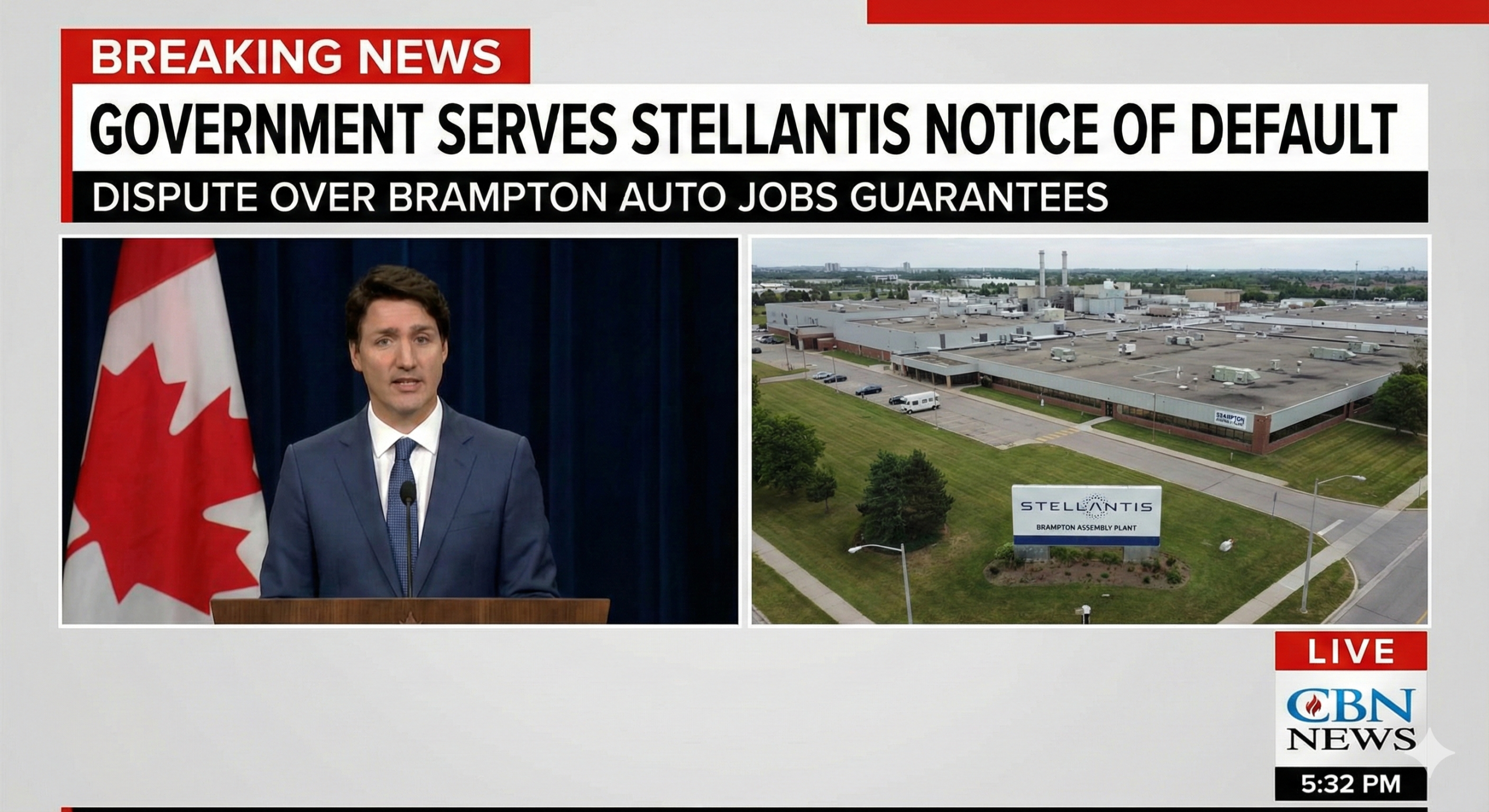
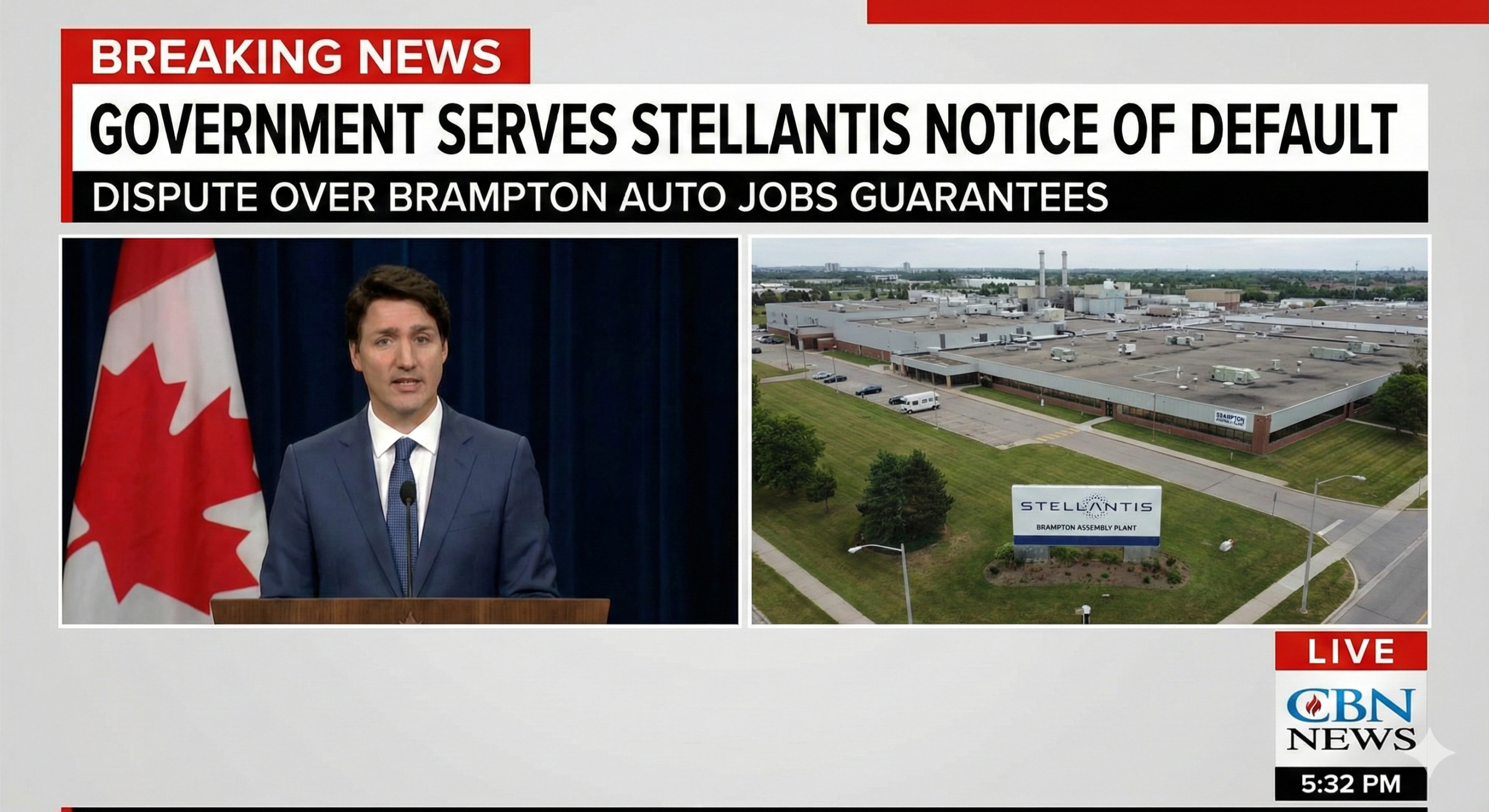
Federal Government Serves Stellantis Notice of Default Over Brampton Auto Jobs

The federal government has formally served automaker Stellantis with a “notice of default” under contracts tied to its operations at the Brampton Assembly Plant, following the company’s plans to move Jeep Compass production to a U.S. facility. The announcement, made by Industry Minister Melanie Joly, signals the government’s commitment to protecting thousands of Canadian auto jobs.

Protecting Auto Jobs at Brampton Assembly

Minister Joly Speaks in Parliament

On December 4, Industry Minister Melanie Joly addressed the House of Commons’ Standing Committee on International Trade, emphasizing the importance of defending domestic auto jobs.

“When it comes to protecting auto jobs, we will not let these industries down. We’ll stand firm for the sake of our workers, our industries and our nation because defending these jobs means defending Canada’s economic backbone and the livelihoods of countless families,” she said.

The notice of default follows a formal dispute-resolution process triggered by Joly on November 3, after the federal government raised concerns over Stellantis’ plan to shift production away from Brampton. At the time, Joly noted that Stellantis had made commitments to invest in the Brampton plant, and the government expected those promises to be honoured fully.

Stellantis Responds

A spokesperson for Stellantis Canada, LouAnn Gosselin, confirmed the company continues to engage with the government as part of the dispute-resolution process.

“We are working toward our shared objective of securing a long-term, sustainable future for automotive manufacturing in Canada, including in Brampton. The process is confidential and so we cannot comment further,” Gosselin said in an email on December 5.

Parliamentary Debate and Contract Questions

Conservative MPs Raise Concerns

During the committee meeting, Conservative MP Adam Chambers questioned Minister Joly about reports that officials had not fully read the Stellantis contracts before they were signed.

Joly clarified that she was not in her current position when the agreements were finalized years ago. She noted there were multiple contracts involved, and while the opposition claimed access, she emphasized that the government’s priority had been to protect jobs at the Brampton plant.

Chambers pressed further about whether the contracts guaranteed 100 per cent of Stellantis’ Canadian footprint. Joly responded that there was a jobs guarantee linked to new funding for plants in Windsor and Brampton, which was crucial for ensuring employment stability.

Historical Context

Joly contrasted the current government’s approach with previous administrations. She said the 2009 Conservative government had negotiated subsidies for GM and Chrysler without a full jobs guarantee, leading to closures of the Oshawa, Windsor, and Ford plants, as well as the Mississauga Orion Bus assembly plant.

“It was devastation, and we were the first government to bring back jobs in the auto sector because we were able to create around 3,000 jobs in Windsor, and we were able to create around 3,000 jobs in St. Thomas,” she said.

The Trigger: Jeep Compass Relocation

October Notice from Stellantis

Minister Joly revealed she became aware of the potential relocation of Jeep Compass production around October 15, after receiving a 24-hour heads-up from Stellantis’ global CEO.

“We thought that was completely unacceptable. We can’t open that floodgate of basically our automakers leaving the country,” Joly said, adding that she immediately sought to ensure Team Canada would work collectively to hold Stellantis accountable.

Stellantis had formally announced the decision to relocate Jeep Compass production to the U.S. on October 14, prompting immediate concern from Canadian auto workers and the federal government.

Union Reaction

The decision triggered a swift response from Unifor’s Stellantis Council, representing over 8,000 workers across Canada. The union held an emergency meeting, issuing a statement calling for the company to reverse its decision and urging a “strong and immediate response” from the government.

Earlier in 2024, the union had already expressed concerns over production delays at the Brampton plant. Unifor Local 1285 president Vito Beato noted that work on the Challenger and Charger gas vehicles stopped at the end of 2023, and retooling for electric vehicle production began in early 2024. However, the process was paused on February 20, initially planned as an eight-week pause, causing anxiety among plant workers.

Economic and Strategic Implications

Auto Sector Employment

The Brampton Assembly Plant is a critical hub for Stellantis Canada, with thousands of jobs at stake. Minister Joly stressed that protecting these positions is not just about a single company but about safeguarding Canada’s broader automotive sector, which employs approximately 125,000 people nationwide.

Federal Support and Industry Investments

The dispute also highlights the government’s approach to linking public support and funding to job creation. Joly emphasized that new funding for the Windsor and Brampton plants was strategically tied to employment guarantees, ensuring taxpayer investments directly supported Canadian jobs.

Risks of Offshoring

The relocation of production to the U.S. underscores a growing concern about offshoring of manufacturing and its impact on Canadian industrial capacity. Joly framed the federal government’s response as a necessary step to prevent further erosion of domestic auto manufacturing.

Next Steps in the Dispute

Notice of Default

Serving Stellantis with a notice of default is part of a formal dispute-resolution process outlined in the company’s agreements with the federal government. The notice signals the government’s position that the automaker may not be meeting its contractual obligations regarding job protection and investment in Canadian operations.

Confidential Negotiations

Both the government and Stellantis are engaged in confidential discussions aimed at resolving the dispute while protecting jobs and maintaining Canada’s automotive manufacturing base. No further public details have been disclosed regarding potential penalties or remedial actions.

Conclusion

The federal government’s action against Stellantis over the planned relocation of Jeep Compass production highlights the ongoing tension between corporate strategy and national industrial policy. By serving a notice of default, Canada is asserting the importance of job protection, investment commitments, and the long-term viability of domestic auto manufacturing.

For workers at the Brampton Assembly Plant and across Stellantis facilities in Canada, the government’s firm stance provides a critical line of support. As negotiations continue, all parties appear committed to finding a solution that safeguards jobs while ensuring a sustainable future for automotive manufacturing in the country.

The coming weeks will be pivotal for the auto sector, with the outcome likely to influence future government-industry relations, investment decisions, and employment security in one of Canada’s most vital manufacturing sectors.

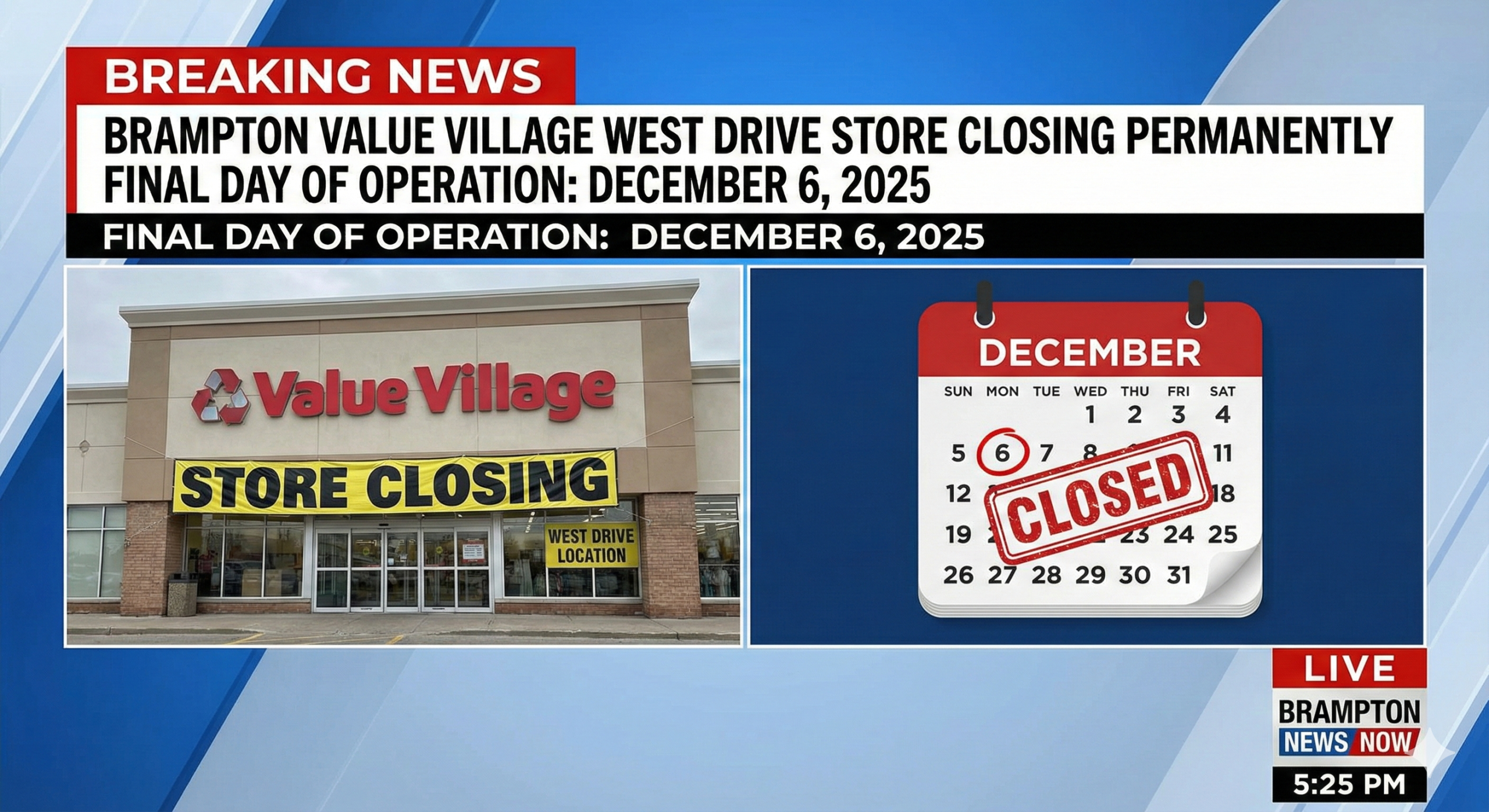
Brampton Value Village West Drive Store Closing Permanently on December 6

Brampton shoppers are preparing to say goodbye to one of the city’s Value Village stores as the West Drive location closes its doors for good this weekend. The closure marks a notable shift for local thrift shoppers who have long relied on the store for second-hand clothing, household items, and collectibles.

West Drive Store Closure Details

Final Day and Liquidation Sale

Staff at the 150 West Drive Value Village confirmed to Metroland Media on December 4 that the store’s final day of operation will be December 6. To clear remaining stock, the store is offering 75 per cent off all merchandise, providing shoppers a last chance to purchase items at steep discounts.

Unfortunately, the closure also means that most employees at the West Drive location will be terminated, as the company winds down operations at this site.

Company Statement on Closure

In an emailed statement, a Value Village spokesperson said the decision to close the store was not made lightly.

“After thoughtful consideration, the company made the difficult decision to close the store. We are grateful to the communities that have embraced our store over the years, and we remain committed to serving our customers and non-profit partners through continued operations across the province.”

The closure was first reported earlier this week on the Value Village Rants & Raves Facebook page, where community members expressed surprise and shared memories of shopping at the West Drive location.

Brampton’s Value Village Landscape

New Shoppers World Store

The West Drive store is located approximately 15 minutes away from the recently opened Value Village at Shoppers World Brampton mall, which opened in May 2025. At the time of the new store’s launch, the company stated that the location would employ 50 to 60 workers, highlighting its commitment to providing local jobs.

It is unclear whether the opening of the Shoppers World store impacted customer traffic at the West Drive location. However, the city still retains two Value Village stores, including the Shoppers World location at 499 Main Street South and a SmartCentres store at 2975 Bovaird Drive East.

Impact on Shoppers

Brampton residents who have frequented the West Drive store will now have to travel to other locations to continue their thrift shopping. Many Facebook users nationwide have commented on the sometimes high prices of second-hand items at Value Village, noting that certain items may be more expensive than new alternatives elsewhere. Nevertheless, the stores remain popular for unique finds and collectibles.

Value Village Business Model

For-Profit Thrift Chain

Value Village, a for-profit operator, is known as one of the largest thrift chains in North America, with approximately 75 stores across Ontario alone. The retailer sells pre-owned clothing, accessories, and household goods, offering shoppers a wide range of products at discounted prices.

While Value Village claims to pay non-profit organizations for donated items, the company emphasizes that purchases made in their stores do not directly support non-profits. Instead, the proceeds primarily benefit the company’s operations and growth.

Support for Non-Profit Organizations

Despite this, Value Village has contributed significantly to Canadian non-profits over the years. According to a news release issued during the opening of the Shoppers World Brampton location, over the past five years, the company has paid Canadian non-profit partners more than $347 million for donated goods, reflecting the company’s large-scale impact on charitable organizations.

Community Reaction

Social Media and Shopper Sentiment

The announcement of the West Drive store closure generated reactions across social media. Facebook commenters shared a mix of disappointment and nostalgia, reflecting on the store’s presence in the community and their personal experiences shopping there.

Many discussions also touched on pricing concerns, with some shoppers noting that certain used items were priced comparably to, or even higher than, similar new products available elsewhere. Despite these criticisms, Value Village continues to attract those seeking unique or vintage items and environmentally conscious shoppers looking to reduce waste through reuse.

Local Economic Implications

The closure of the West Drive store also has economic implications for the neighborhood, as the termination of most staff positions will affect local employment. However, with two other Brampton locations still operational, the company maintains a continued presence in the city, providing alternative employment opportunities and access to second-hand goods.

Looking Ahead

Future Operations in Brampton

While the West Drive location closes, Value Village reaffirms its commitment to serving the Brampton community through its remaining stores. The Shoppers World and Bovaird Drive East locations will continue operations, ensuring that local shoppers still have access to the company’s products and services.

Strategic Considerations

Experts suggest that the closure may be part of a broader strategy to consolidate operations and focus on higher-traffic locations. Retailers often make such decisions to maximize efficiency, optimize customer experience, and reduce overhead costs.

Continued Popularity of Thrift Shopping

Despite the closure, thrift shopping remains popular in Brampton and across Ontario, driven by sustainability trends, affordability, and the thrill of discovering unique items. Value Village, along with other thrift operators, continues to play a significant role in the resale market, balancing commercial operations with community engagement.

Conclusion

The permanent closure of the West Drive Value Village store on December 6 marks the end of an era for local shoppers in Brampton. While the liquidation sale offers an opportunity for bargain hunters, the closure also highlights the evolving retail landscape in the city.

With two other locations still operating, Value Village maintains a presence in Brampton, continuing its dual mission of supporting non-profit partners and providing Canadians with access to affordable, pre-owned goods. For residents, the closure is a reminder of the changing nature of retail and the ongoing evolution of how communities engage with thrift shopping.

As Brampton shoppers prepare to bid farewell to the West Drive store, many will look forward to continued shopping opportunities at the remaining locations, while reflecting on the unique finds and memories the now-closed store has provided over the years.

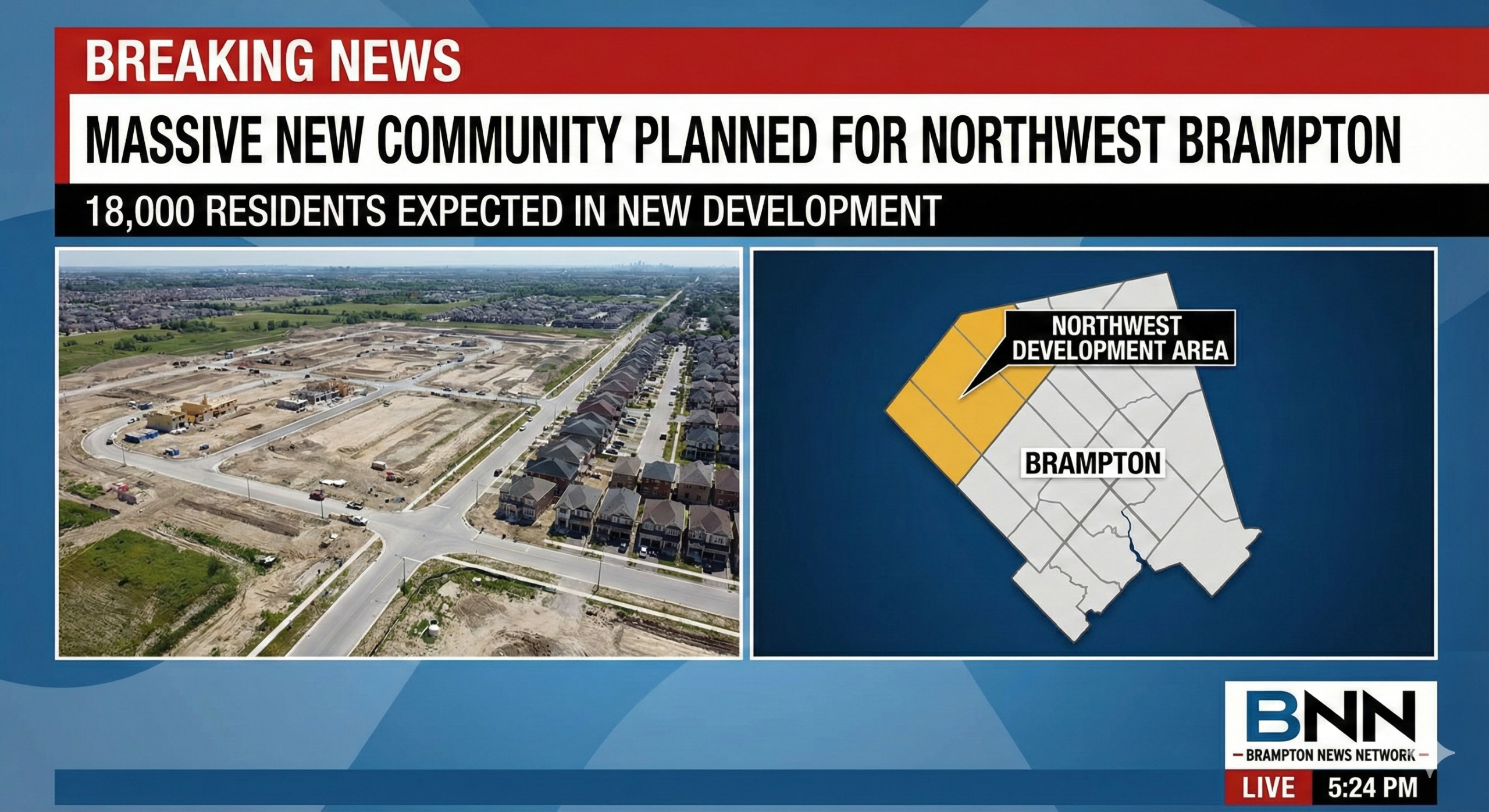
Massive New Community Planned for Northwest Brampton: 18,000 Residents Expected

Brampton is preparing for a major expansion with plans for a new, vibrant community in the city’s northwest region. The ambitious development aims to provide housing, recreational spaces, and educational facilities for over 18,000 residents, marking a significant milestone in the city’s ongoing urban growth.

Overview of the Proposed Development

The proposed community spans approximately 372.92 hectares, strategically located between major transportation routes and natural boundaries. The site is roughly bordered by Winston Churchill Boulevard to the west, the CN Railway to the north, Bovaird Drive to the south, and the proposed Highway 413 to the east. This prime location offers both accessibility and the potential for sustainable urban living.

City planners envision a mixed-use neighbourhood that blends residential living with ample green space and community services. The development proposal includes:

  • Nearly 6,000 new homes

  • Seven parks

  • Three new schools

These features aim to meet the diverse needs of future residents, providing a balanced lifestyle with convenient amenities and recreational opportunities.

Residential Components

Diverse Housing Options

The new community is expected to feature a wide variety of housing types to accommodate different family sizes and income levels. From single-family homes to townhouses and low-rise condominiums, the development will aim to cater to a diverse population, ensuring affordability and inclusivity.

City planners have emphasized sustainable design principles, including energy-efficient buildings, pedestrian-friendly streets, and integrated cycling networks. By focusing on walkability and connectivity, the project seeks to create a cohesive community where residents can live, work, and play without relying heavily on cars.

Anticipated Population Growth

Once fully developed, the community is projected to house more than 18,000 people, contributing significantly to Brampton’s population growth. The expansion aligns with the city’s long-term urban planning strategy, which emphasizes responsible growth, infrastructure development, and sustainable neighbourhood design.

Parks and Recreational Spaces

Seven Parks for Community Well-being

A key highlight of the development is the inclusion of seven parks, which will provide ample recreational space for residents of all ages. These parks are expected to feature playgrounds, walking trails, sports fields, and green corridors, promoting active lifestyles and environmental stewardship.

By incorporating green spaces throughout the community, planners aim to enhance quality of life, reduce urban heat effects, and create habitats for local wildlife. Public consultation sessions have emphasized the importance of accessible and safe outdoor spaces for families, seniors, and youth.

Connectivity and Trails

In addition to individual parks, the development plan includes a network of walking and cycling trails, connecting residents to schools, parks, and nearby commercial areas. This approach encourages alternative transportation methods, supporting Brampton’s broader sustainability goals and reducing traffic congestion.

Education and Schools

Three New Schools Planned

Education infrastructure is a critical component of the proposed community. The development includes plans for three new schools, ensuring that children have access to quality education close to home.

City planners are coordinating with local school boards to determine the type of schools needed, including elementary and secondary institutions, to accommodate the anticipated population. The schools will be strategically located to ensure safe pedestrian access and to integrate seamlessly with surrounding parks and residential areas.

Focus on Community-Centric Learning

The schools are expected to adopt modern educational facilities and resources, designed to support both academic achievement and extracurricular engagement. This includes spaces for arts, sports, and community events, fostering an environment where students can thrive.

Transportation and Accessibility

Proximity to Major Roads and Highway 413

The proposed development is strategically located near major transportation corridors, providing residents with easy access to Brampton’s city centre and surrounding regions. Winston Churchill Boulevard, Bovaird Drive, and the CN Railway line define the community’s boundaries, while the proposed Highway 413 will enhance regional connectivity once completed.

Sustainable Transit Solutions

City planners are also focusing on public transit integration, including potential bus routes and transit hubs within the community. The goal is to reduce dependency on personal vehicles and promote environmentally friendly travel options.

Economic and Social Impact

Boost to Local Economy

The new community is expected to generate significant economic benefits for Brampton. The construction phase alone will create jobs in engineering, construction, landscaping, and planning, while the completed community will support local businesses, retail outlets, and service providers.

Strengthening Community Ties

Beyond economic impact, planners emphasize the social benefits of a well-designed neighbourhood. By incorporating parks, schools, community centres, and public spaces, the development aims to foster a strong sense of belonging, social interaction, and overall well-being for residents.

Planning and Consultation

City Approval Process

The proposed community is currently under review by Brampton’s city planning department. The approval process involves public consultation, environmental assessments, and detailed planning studies to ensure the project meets all regulatory and sustainability standards.

Community Engagement

City officials have highlighted the importance of resident input, with public meetings and feedback sessions scheduled to gather opinions on housing types, park designs, and overall community layout. This approach ensures that the development reflects the needs and aspirations of future residents.

Environmental Considerations

Sustainable Design Principles

Environmental sustainability is central to the planning of this new community. Measures include stormwater management systems, energy-efficient building standards, and preservation of natural habitats.

Green Corridors and Wildlife Protection

Planners aim to maintain green corridors to support local flora and fauna, ensuring that urban expansion does not come at the expense of biodiversity. The seven parks and surrounding trails are designed to provide safe spaces for wildlife while offering residents access to nature.

Looking Ahead

Timeline and Future Developments

While the development is still in the planning stages, city officials anticipate that construction could begin within the next few years, pending approvals and final planning decisions. Over time, the community is expected to evolve into a self-sustaining neighbourhood, combining residential, educational, recreational, and commercial elements.

Long-Term Benefits

Once completed, this new community in northwest Brampton will serve as a model for sustainable urban planning, balancing growth with quality of life. The integration of parks, schools, trails, and diverse housing options demonstrates a commitment to creating a livable, vibrant, and inclusive neighbourhood for all residents.

Conclusion

The proposed northwest Brampton community represents a significant milestone in the city’s growth, with plans for over 18,000 residents, nearly 6,000 homes, seven parks, and three schools. By prioritizing sustainability, accessibility, and community engagement, Brampton is set to create a thriving neighbourhood that meets the needs of current and future generations. As planning progresses, the city will continue to seek input from residents and stakeholders to ensure the development reflects the vision of a modern, inclusive, and environmentally responsible community.

Inside a Turbulent Time for Canada Basketball: A Raptors Connection, an “Embarrassing” Event — and Allegations of Racism

The story of Canadian basketball is often told as a tale of steady growth. But behind the success lies a fraught history of controversy — from rejected bids to host world championships, sudden relocations, racial bias, and internal strife. Journalist Oren Weisfeld, in his forthcoming book The Golden Generation: How Canada Became a Basketball Powerhouse, dives into a turbulent chapter that shaped the sport’s evolution in Canada.

An essential moment in that history was the dramatic relocation of the 1994 world championship — a shift that would briefly raise Canada’s international basketball profile, while spotlighting deep-rooted issues within the national program.


The 1994 World Championship — From Belgrade to Toronto

War in Yugoslavia Forces a Change in Plans

The 1994 1994 FIBA World Championship was originally awarded to Belgrade, in what was then Yugoslavia. However, by 1991, the region was engulfed in civil war. Amid the escalating conflict and consequent political instability, international bodies began imposing sanctions. As a result, the hosting rights—once confidently granted to Belgrade—were revoked.

Faced with a sudden need for a new host, the FIBA reopened the bidding process. In 1992, Canadian businessman John Bitove was approached by then-FIBA secretary general Boris Stanković with an unusual request: would Canada step in to host on short notice? The answer would reshape Canadian basketball history.

Toronto Steps Up — A Tournament with High Stakes

Canada accepted the challenge. The tournament was shifted to take place from August 4–14, 1994, with games played at venues including SkyDome, Maple Leaf Gardens in Toronto, and Copps Coliseum in Hamilton.

This was a landmark moment: the first time the FIBA men’s world championship would be held in North America, and the first time that current NBA players — those who had already appeared in a regular NBA season game — were allowed to compete.

The tournament culminated in dominance by the U.S. “Dream Team II,” which humiliated Russia 137–91 in the final, with legendary center Shaquille O’Neal earning MVP honours.

For Canada, the results were modest — finishing 7th — but the event sparked renewed interest in basketball nationwide.

Yet beyond the glitz and global spotlight, behind-the-scenes tensions simmered — tensions rooted not in performance, but in race, identity, and institutional bias.


The Racism Allegations: A Dark Underbelly

An Overlooked History Comes to Light

In his reporting, Weisfeld uncovered stories and testimonies that suggest systemic racism within the governing body of Canadian basketball (then known as Canada Basketball). According to many former players — especially Black Canadians from urban centres — talent and performance were often overshadowed by prejudice and stereotypical views about their “backgrounds” and playing style.

One of the most controversial episodes occurred in the lead-up to the 1994 World Championship. Two Black players, Cordell Llewellyn and Wayne Yearwood, claimed to have been unfairly cut from the senior men’s team — not due to lack of skill, but because they weren’t seen as the “type” of players Canada wanted.

Interviews with 10 to 15 individuals — including former players and coaches — revealed a recurring pattern: Black players had to work twice as hard as others to secure half as much recognition. The bias, according to these accounts, was institutional, not anecdotal.

A Hidden Legacy

Although these stories were known in some circles, they were largely absent from mainstream discourse. Weisfeld said that during his initial research, he “had no idea” how pervasive these issues were. It was only after speaking to several former players and coaches that the scale of the problem became clear.

By documenting this painful history, The Golden Generation aims to bring to light “the forgotten chapters” — not to shame individuals, but to provoke a reckoning about how systemic bias shaped Canadian basketball for decades.


The Aftermath: Success, Neglect — and a New Generation

Mixed Legacy of the 1994 Championship

Holding the 1994 FIBA World Championship in Canada proved a double-edged sword. On one hand, it exposed Canadian basketball to global attention, brought international stars and media, and energized a generation of young players. On the other hand, the internal biases and the mishandling of player selection cast a long shadow.

Some critics argue that despite the exposure, Canada failed to fully leverage the momentum. For decades after 1994, the senior men’s national team seldom advanced deep in major tournaments. Part of the blame lies with inconsistent participation of top-tier players in international competition — an issue that still triggers debate today.

“The Golden Generation” — Finally Getting its Due

According to Weisfeld, the story of that generation — and the injustices many of its players faced — had mostly been lost to time. With so much focus on the “NBA lens,” the institutional problems within Canada Basketball seldom received attention. The Golden Generation seeks to change that.

The book traces how a combination of immigrant communities, inner-city athletic talent, and growing grassroots basketball slowly overcame decades of marginalization. That determination eventually helped Canada produce a wave of NBA-calibre players — making it one of the most prolific countries outside the U.S. in terms of NBA representation.

Weisfeld hopes that by shining a light on the past, Canadians can better appreciate how far the sport has come — and recognize the obstacles early players had to overcome. “People can read the book and decide for themselves what they think it actually is — whether they think it was systemic racism or not,” he said. “But to me, it was kind of alarming that this just didn’t exist in the public sphere.”


Why This Story Matters — Far Beyond 1994

Basketball, Identity, and Inclusion in Canada

The controversy surrounding Canada’s 1994 World Championship team serves as a microcosm of broader social and institutional issues. It forces the country to confront the intersection of race, sport, and national identity. The exclusion of talented players based on perception rather than performance reflects a legacy of inequality — one that many in Canada may prefer to forget, but which has shaped generations of athletes.

By bringing these stories forward, The Golden Generation invites a national conversation — on fairness, representation, and what it means to build a truly inclusive sports culture.

A Legacy That Shapes Today’s Canada Basketball

The ripple effects of those early controversies still influence how Canadian basketball operates and how its players are perceived. Today’s success — with dozens of Canadian players in the NBA and rising global respect — did not come easily. It built on the resilience of overlooked athletes, and the quiet determination of communities that refused to accept marginalization.

Weisfeld’s book argues that real progress comes not just from wins on the court, but from confronting the sport’s history honestly. For Canada to truly claim a place among the basketball elite — not merely in talent, but in values — it must reconcile with its past.


Conclusion

The 1994 FIBA World Championship stands as a landmark event in the history of Canadian basketball. But behind its immediate success lay deep-rooted problems: systemic bias, racial exclusion, and institutional neglect.

Through The Golden Generation, Oren Weisfeld aims to lift the veil on this turbulent era — giving voice to players who were sidelined not for lack of talent, but because of prejudice. His work reminds us that progress isn’t just about trophies or global exposure — it’s about fairness, recognition, and giving every athlete a shot, regardless of background.

As Canada continues to rise on the world basketball stage, the stories of the past — painful, controversial, but critical — deserve to be heard. Only then can the sport grow in strength, unity, and integrity.

Investing is an Emotional Roller-Coaster — Patience Pays Off

Investing can stir up strong emotions, especially during times of volatility. However, history shows that the greatest gains usually come to those who remain patient and committed for the long term.

Many investors are tempted to time the market — trying to buy at the lowest point and sell at the highest. This urge often comes from negative news, troubling research, or simply a gut feeling that something is about to go wrong.

But timing the market can prove to be a costly mistake.

The stock market is influenced by millions of investors around the world making independent buy-and-sell decisions based on their own perspectives and information. These collective actions determine where the market moves each day.

To illustrate the power of staying invested:
If an investor had placed $1,000 into the U.S. Russell 3000 Index in 1999, that investment would have grown to approximately $6,449 by 2023 — over a 25-year period, or roughly 1,300 weeks.

However, missing just one of the market’s best-performing weeks during that time would have reduced the total value to around $5,382 — a loss of more than $1,000 simply for being out of the market too long.

Leaving the market, especially as a long-term investor, carries significant risk.

Over the past century, the U.S. stock market — as measured by the S&P 500 — has delivered positive returns in about three out of every four years. Even when markets decline, they have historically rebounded relatively quickly, giving investors the opportunity to recover temporary losses.

That said, this trend applies to the overall market, not to individual stocks. Some companies decline and never recover — in extreme cases, their value can drop to zero. This is why diversification and research are essential.

There are situations where selling makes sense: for example, if your personal circumstances change, or your financial goals shift. Outside of such cases, history suggests that staying invested is usually the wiser decision.

In the end, successful investing is less about perfect timing and more about time in the market.

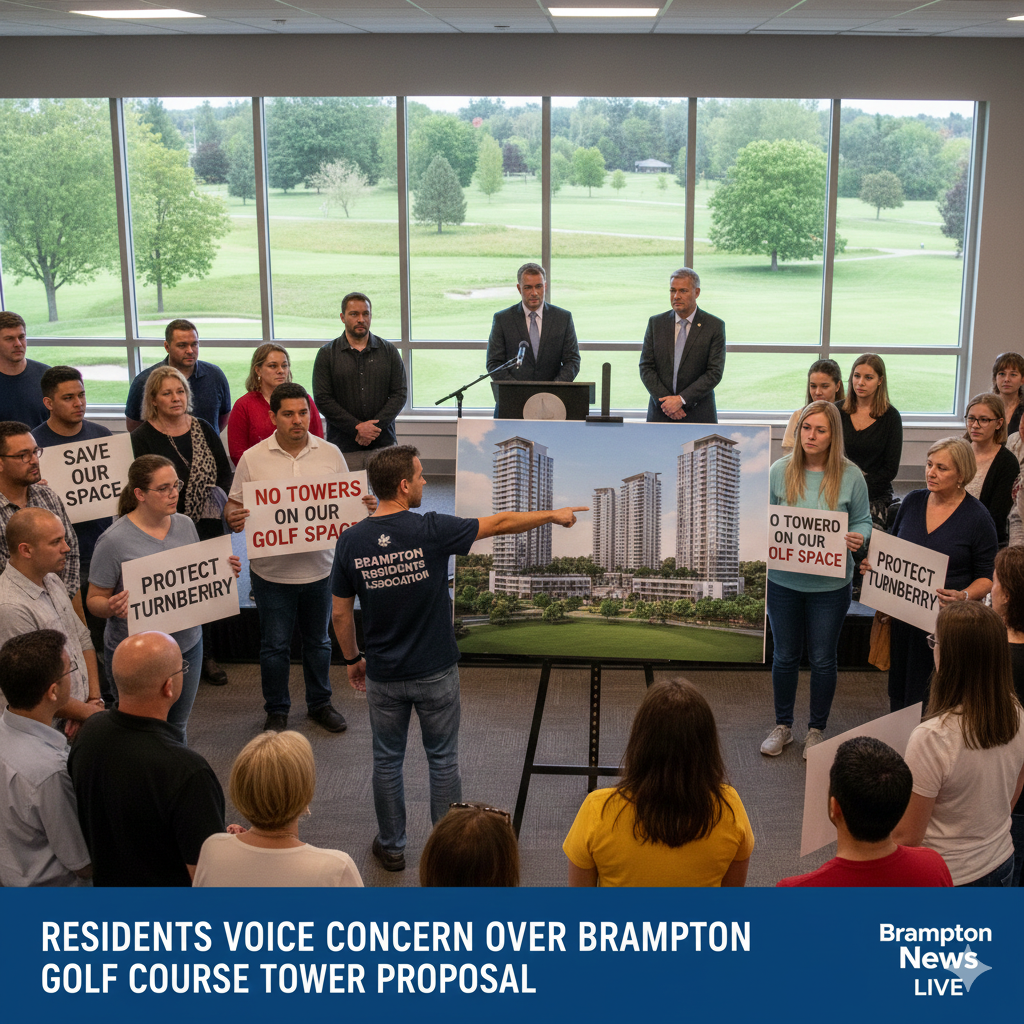
Residents Raise Concerns Over Proposed Towers at Brampton’s Turnberry Golf Course

Residents living near Turnberry Golf Course in Brampton are voicing strong concerns over a proposed redevelopment plan that would introduce residential towers and commercial buildings to the area.

The project would keep the golf course at 10100 Heart Lake Road, near Bovaird Drive and Highway 410, but reduce it from 18 holes to 12 holes. In addition to four residential towers, the proposal includes four commercial buildings, a public park and a stormwater management pond.

‘A direct threat to our quality of life,’ residents say

Michael O’Neill, representing the Cheviot Neighbourhood Association, described the proposal as a “direct threat to the quality of life” for residents during a statutory public meeting at the city’s Dec. 1 planning and development committee session.

He stated that the community was originally planned and zoned for single-family homes, and the addition of four high-rise towers would fundamentally change the character of the neighbourhood.

“Four towers jammed beside a stable low-rise neighbourhood represents an extreme density shock. It would permanently and irreversibly damage the character, privacy and liveability of our community,” O’Neill said.

O’Neill and other residents also expressed concern that the surrounding streets are already congested and cannot handle increased traffic.

Local resident Suresh Anandham echoed the concerns, warning that the development would put additional strain on roads, schools, utilities and healthcare services, which he says are already stretched.

“We don’t have enough school or hospital facilities to manage the existing population. This would create havoc in the area.”

Longtime resident Raul Ortiz Romero suggested that if the development proceeds, it should include affordable childcare, medical offices, family-sized units, and a transit terminal.

“If high-density housing is going to be included, it should provide livable space for families and include vital community services,” he said.

Details of the proposed development

The application, submitted by KLM Planning Partners Inc. on behalf of Vardon Flyer Inc. and York Major Holdings Inc., is currently under review by city staff. The proposal requires amendments to Brampton’s official plan and zoning bylaw.

According to the city:

  • Four residential towers are proposed at the southwest portion of the seven-hectare site

  • Total residential units: 945

  • Tower heights: Two at 22 storeys, one at 29 storeys, and one at 8 storeys

  • Four commercial buildings would be constructed along Heart Lake Road

  • Combined commercial floor space: 11,320 square metres

  • Additional features: Public park and stormwater management pond

A draft subdivision plan is also currently under city review.

Change.org petition gains support

A Change.org petition started by Michael O’Neill has gathered 490 signatures as of Dec. 2, opposing the project.

The petition calls the proposal a “monstrosity”, claiming it would bring:

  • Increased traffic congestion

  • Overcrowded schools

  • Noise and safety concerns

  • Permanent loss of neighbourhood character

The petition urges Brampton City Council to reject the development outright.

Developer says project will ‘bring new life’ to the site

Despite opposition, Ryan Mino-Leahan of KLM Planning Partners defended the proposal, stating that the golf course is no longer operating at full capacity, especially during winter months.

“The site is slowing down. We’re looking for ways to bring new life there and introduce new opportunities,” he said.

Mino-Leahan noted that the surrounding area lacks retail and medical services, which the proposed commercial buildings aim to provide.

He also highlighted that there are currently no apartment buildings in the area, and the residential component would offer a wider range of housing options.

“We understand the concerns and we are working with city staff through our consulting team to address the feedback we’ve heard.”

What happens next?

City planners will continue reviewing the application and collecting public feedback before making formal recommendations to council.

For now, the proposal remains under consideration, with strong opinions on both sides — residents pushing to protect the existing community character, and developers arguing the project is a necessary step toward revitalization and modernization.