UPDATED: Missing Brampton Woman, 70, Safely Located After Extensive Search, Peel Police Confirm

Introduction

A 70-year-old woman reported missing in Brampton earlier this week has been found safe, Peel Regional Police announced late Monday evening. The case, which drew concern from family members, residents, and local authorities, highlights the critical role of community awareness and rapid response in missing person investigations — particularly those involving vulnerable individuals.

The woman, identified by police only as Donna, disappeared on the afternoon of December 8, prompting an urgent search effort across several Brampton neighbourhoods. After more than a day of public appeals and active police work, officers confirmed shortly before 10 p.m. on December 9 that she had been located.

While police did not release details about the circumstances surrounding her disappearance or how she was found, they expressed relief at the positive outcome and extended appreciation to residents who shared information and remained alert during the search.


Timeline of the Disappearance

Last Known Location

According to Peel Regional Police, Donna was last seen around 3:45 p.m. on Monday, December 8, in the vicinity of Northwood Drive and Welbeck Drive — a residential area near several parks, schools, and community spaces. The location is known for moderate foot traffic during the day but becomes quieter in the late afternoon and evening, making it crucial for investigators to quickly establish a timeline of her movements.

Initial Response

After Donna was reported missing, officers initiated standard missing person protocols, which include:

  • Conducting door-to-door inquiries

  • Reviewing potential surveillance footage from nearby homes and businesses

  • Speaking with friends, neighbours, and anyone who may have had recent contact with her

  • Assessing whether there were any known medical concerns or mobility issues that could increase the level of risk

Because Donna is a senior and was alone at the time she disappeared, the case was treated with a heightened sense of urgency.


Peel Police Issue Public Appeal

Why Public Alerts Are Crucial in Missing Senior Cases

Early on December 9, Peel Regional Police issued a formal alert to the public, sharing a description of the missing woman and urging residents to stay vigilant. These alerts are an essential tool in cases involving older adults who may be unfamiliar with their surroundings, living with medical conditions such as dementia, or at risk of becoming disoriented.

In Donna’s case, police omitted her last name to protect her privacy, a common practice when families request limited disclosure or when investigators determine that full identification is unnecessary for locating the individual.

Public appeals leverage several critical channels:

  • Social media platforms, where information spreads rapidly

  • Local news outlets, which amplify alerts to a wider audience

  • Neighbourhood groups and community networks that often mobilize quickly in emergencies

  • Regional communication systems, allowing officers to collaborate with other police services in case the individual travels outside the city

The hours immediately following a disappearance are often considered the most important, as early visibility greatly increases the likelihood of a safe recovery.


Community Concern and Increased Awareness

Residents Join Efforts to Assist

Within hours of the public notice, Brampton residents began circulating the missing person alert across social media, with many community members posting in neighbourhood discussions and sharing the police bulletin. Peel Region has a history of strong community involvement in missing person cases, often contributing valuable tips or sightings that help narrow search zones.

Residents living near Northwood Drive and Welbeck Drive reported increased police presence during the afternoon and evening of December 9, with officers canvassing the area, checking common walking paths, and speaking with passerby who may have noticed unusual activity.

Vulnerable Older Adults and Wandering Risks

Wandering is a known concern for seniors, especially those who may be coping with:

  • Cognitive decline

  • Memory-related conditions

  • Confusion triggered by stress, unfamiliar surroundings, or changes in routine

Even when no confirmed medical condition exists, older adults are statistically more likely to become lost or disoriented, particularly in colder weather when daylight hours are shorter. Such factors make community assistance even more valuable, as neighbours often serve as the first line of observation.


Police Confirm Donna Has Been Located

A Positive Outcome

At approximately 9:50 p.m. on December 9, Peel Regional Police issued a welcome update:

“We are glad to share that Donna has been located.”

The short statement, shared publicly on social platforms and through police communication channels, signaled the end of the search and the safe recovery of the missing woman. Officers did not release further information about where she was found or her condition, citing privacy considerations — a standard approach in non-criminal missing person cases.

Family members, who had been anxiously awaiting updates throughout the day, expressed gratitude to police and community members for their efforts.


Understanding Missing Person Protocols in Ontario

How Police Prioritize Cases

Ontario police services classify missing persons based on several factors, including:

  • Age and vulnerability

  • Known medical, mental health, or mobility issues

  • Weather conditions

  • Time elapsed since last contact

  • Circumstances of the disappearance

When seniors go missing, especially without necessary medication or support, the case is usually escalated swiftly due to increased risk. Although not every missing senior case triggers an Amber Alert–style broadcast, police often deploy additional resources such as search teams, K9 units, or aerial support depending on the situation.

Collaboration With Family and Health Services

In such cases, officers often work closely with:

  • Family members

  • Caregivers

  • Health professionals

  • Emergency service partners

This collaboration ensures that authorities understand the individual’s habits, routines, and possible destinations — information that can significantly speed up search efforts.


Community Safety Initiatives for Supporting Seniors

Programs That Help Prevent Similar Incidents

Peel Region and other municipalities across Canada have introduced several programs intended to reduce the risk of seniors becoming lost or endangered. These include:

1. Vulnerable Person Registry

Some police services offer voluntary registries where families can provide details about individuals who may be at risk of wandering. This information assists officers in locating them quickly should they go missing.

2. Identification Bracelets or Cards

Medical alert bracelets, ID cards, and GPS-based devices help ensure that first responders can identify an individual and contact their family promptly.

3. Community Awareness Campaigns

Local community centres, senior living residences, and healthcare organizations frequently run programs that bring attention to the risks seniors face when navigating alone.

4. Neighbourhood Watch and Community Networks

Modern neighbourhood support groups, often organized online, can rapidly mobilize whenever a vulnerable person is reported missing.

Such initiatives have proven effective across the province, underscoring the importance of community involvement not only during search efforts but also in prevention.


Reflections on the Case and Its Broader Implications

A Reminder of the Importance of Vigilance

While Donna’s safe recovery is cause for relief, the incident serves as a reminder of the challenges older community members may face and the importance of swift action when a disappearance occurs.

Families, caregivers, and neighbours play a vital role in maintaining awareness of vulnerable individuals’ well-being. Even small changes in routine or behaviour can be early indicators that additional support may be needed.

Police Encourage Continued Community Engagement

Peel Regional Police routinely emphasize that the public is an essential partner in missing person investigations. Accurate tips, timely reporting, and shared information significantly improve outcomes.

The service continues to encourage residents to:

  • Report missing persons immediately, especially seniors

  • Provide as much detail as possible to officers

  • Assist police searches when requested

  • Stay informed through official communication channels


Conclusion

The safe location of 70-year-old Donna brings a positive end to what could have been a far more troubling situation. As Peel Regional Police, family members, and the local community come together to acknowledge the successful resolution, the case underscores the crucial role that rapid response, thorough investigation, and community cooperation play in safeguarding vulnerable individuals.

As cities like Brampton continue to grow and diversify, maintaining strong community ties and prioritizing the safety of seniors will remain a key focus for local authorities. This incident serves as both a relief and a reminder — that while emergencies may arise unexpectedly, collective vigilance and timely intervention can make all the difference.

Brampton Man Fatally Shot in Targeted Attack as Peel Police Launch Intensive Homicide Investigation

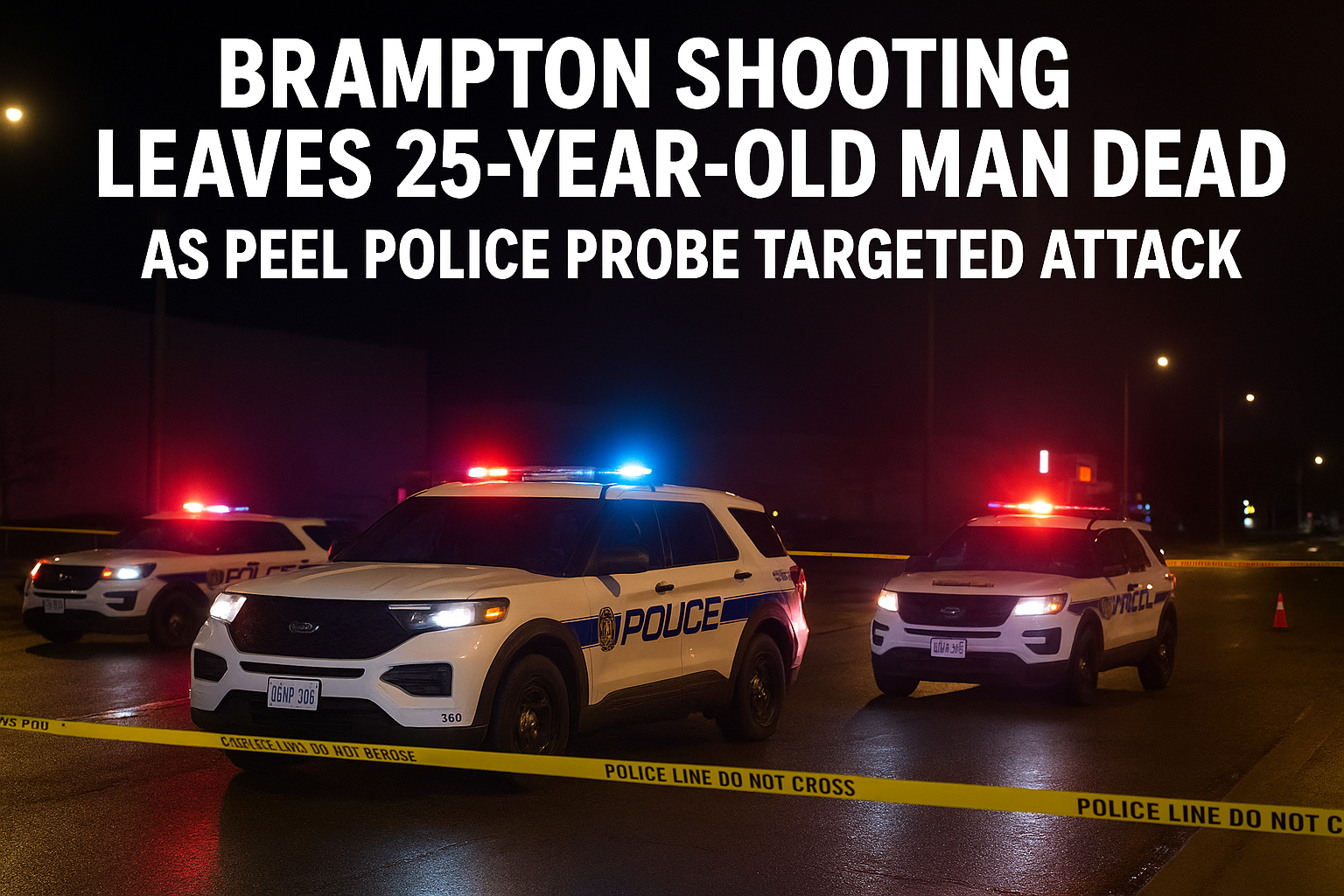
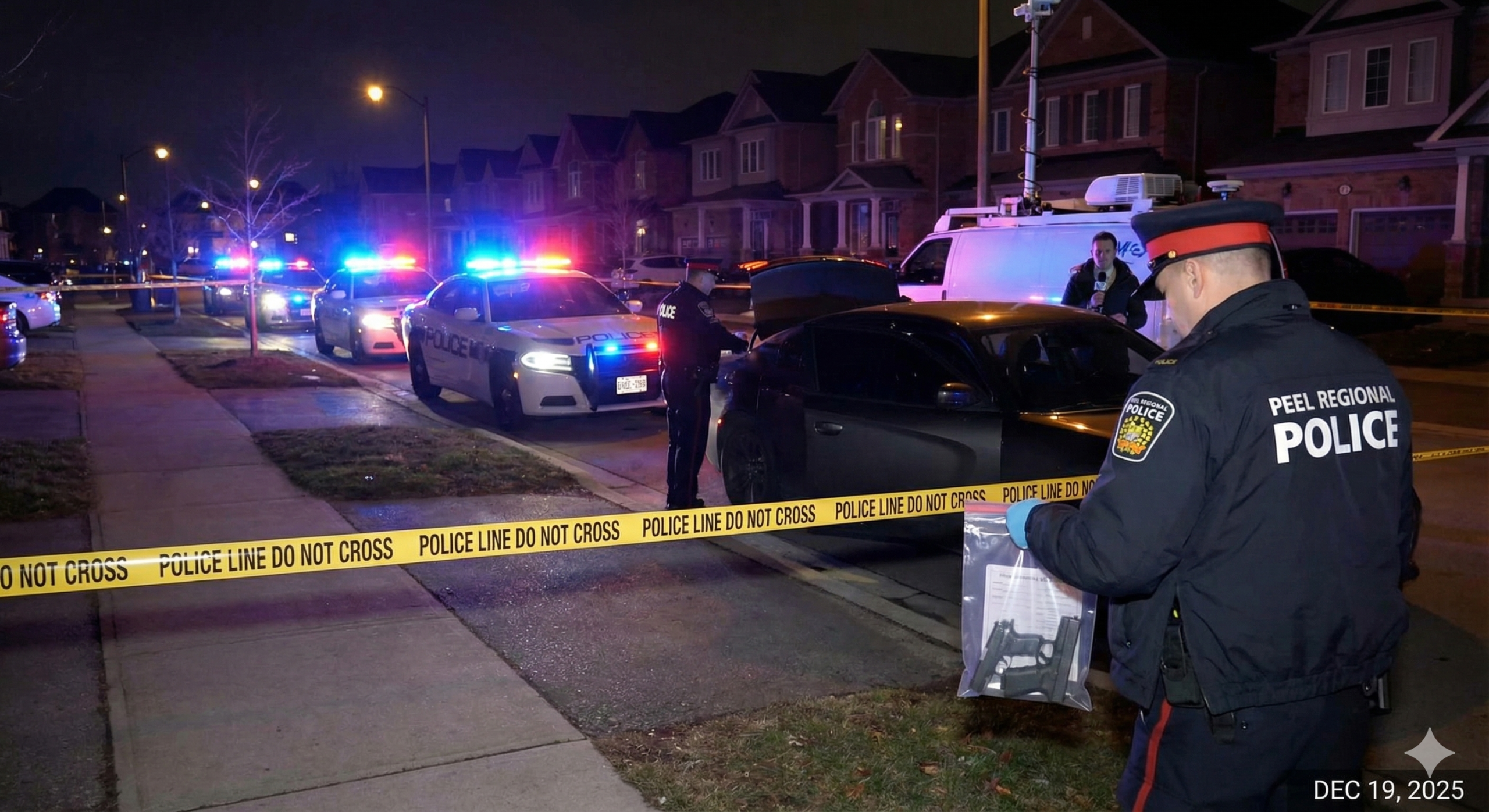
A 25-year-old Brampton man was killed Monday evening after shots were fired at a vehicle in a busy commercial area, prompting a large-scale homicide investigation and renewed police appeals for witnesses. Peel Regional Police say the incident, which unfolded shortly after 7 p.m. on December 8, has left an entire community searching for answers while investigators work around the clock to track down the suspects.


A Fatal Shooting in a Public Parking Lot

Gunfire Erupts Near Hurontario Street and Bartley Bull Parkway

According to Peel Regional Police, the shooting occurred in the parking lot near Hurontario Street and Bartley Bull Parkway—an area frequently used by visitors to the nearby Shopper’s World plaza. Officers were called to the scene after multiple reports of gunfire directed toward a parked vehicle.

When police arrived, they discovered a man inside the vehicle who appeared unresponsive. Const. Mandeep Khatra, speaking to reporters at the scene, explained that officers immediately attempted to gain entry into the vehicle to assist the victim.

Officers Break Window to Perform Life-Saving Efforts

In an urgent attempt to reach the man, officers broke one of the vehicle’s windows and began providing emergency medical care. Despite their efforts, the man was pronounced dead at the scene. Police later confirmed that he was a Brampton resident, though his identity has not yet been released pending next-of-kin notification.

The dramatic nature of the emergency response, paired with the location’s proximity to a highly populated commercial hub, has heightened concerns among residents who regularly use the area.


Investigators Believe the Attack Was Targeted

No Risk to the Broader Public, Police Say

While details remain limited, investigators believe the shooting was a targeted attack rather than a random act of violence. Const. Khatra emphasized that although the incident is deeply troubling, there is currently no indication of an ongoing threat to the general public.

“What’s happened here is terrible,” Khatra said during media briefings. “But at the same time, we’re glad that nobody else was hurt in this incident. I can assure you that investigators are going to be working on this non-stop until they can try to figure out further leads.”

The suspects reportedly fled the scene before police arrived, and as of Tuesday morning, no arrests had been made.

Homicide Unit Takes Over the Case

Given the nature of the incident and the victim’s death, Peel police have officially reclassified the case as a homicide. A team of specialized investigators has now taken over, conducting interviews, reviewing surveillance footage, and collecting forensic evidence from the crime scene.

Homicide detectives are expected to remain on site for an extended period as they continue gathering information.


Area Cordon and Traffic Disruptions

Portion of Shopper’s World Parking Lot Closed

On Tuesday morning, Peel police confirmed that a section of the Shopper’s World parking lot remained cordoned off to preserve evidence and allow officers to continue their investigation. The closure impacted both vehicle and pedestrian access in the immediate vicinity, though businesses in the shopping centre continued to operate.

The high visibility of the police presence drew attention from shoppers, employees, and local residents, many of whom expressed shock that such an incident had occurred in an area known for heavy foot traffic and evening activity.

Business Owners and Shoppers React

Although police have reassured the public that the attack was isolated, the shooting has left business owners unsettled. Several staff members at nearby stores said they were startled by the sudden influx of emergency vehicles and expressed concern for their own safety during late-night operating hours.

Residents who frequent the plaza echoed similar sentiments, saying they hope police will release more information soon to ease anxieties and help the community better understand what transpired.


Few Details Released About Suspects

No Suspect Descriptions Provided

Despite ongoing inquiries, investigators have not yet released descriptions of the suspects involved. Police have not confirmed whether one or multiple individuals were responsible or if the shooters arrived on foot or in a separate vehicle.

The absence of suspect details has prompted police to renew their call for public assistance, urging anyone who may have witnessed suspicious activity in the area to come forward.

Appeal for Witnesses and Surveillance Footage

Police are specifically asking for information from individuals who were in or around the busy commercial zone on Monday evening, as well as from motorists or local businesses that may have dashcam or security footage capturing the moments before or after the shooting.

Residents with any relevant information are urged to contact Peel police at 905-453-3311. Anonymous tips can also be provided through Crime Stoppers.


Community Impact and Ongoing Concerns

Growing Worries About Violence in Peel Region

The deadly shooting has once again placed a spotlight on violent crime trends in the region. Although Peel police have consistently reported ongoing community engagement efforts and targeted enforcement strategies, high-profile incidents such as this continue to raise public concern.

For many Brampton residents, the fact that the shooting occurred in a location frequently visited by families, commuters, and students intensifies the emotional impact of the tragedy.

Calls for More Visibility and Prevention Measures

In the wake of the incident, some community members are calling for increased police presence in public areas and improved security measures in parking lots. Local advocacy groups argue that enhanced lighting, expanded surveillance coverage, and quicker reporting mechanisms may help deter future incidents.

City officials have not yet issued a formal response regarding long-term safety measures but have expressed support for the ongoing investigation.


Police Continue to Pursue Leads

Investigators Working “Non-Stop”

Peel police say their investigative teams are reviewing every available lead and piecing together the circumstances that led to the fatal shooting. Const. Khatra reiterated that officers remain committed to identifying those responsible and providing answers to the victim’s family and the broader community.

Investigators are expected to release updates as new information becomes available, though they have cautioned that the early stages of homicide investigations can be complex and time-consuming.


Conclusion: Community Awaits Answers as Investigation Intensifies

The fatal shooting of a 25-year-old Brampton man has left a community shaken and searching for clarity. With suspects still at large and few public details released so far, many residents are anxiously awaiting developments in the police investigation.

As officers continue to gather evidence and canvass the area for witnesses, police are urging anyone with information—no matter how minor it may seem—to contact investigators. Their goal is not only to solve the case but also to restore a sense of safety to a community deeply affected by this tragic event.

Ontario Unveils Highway 410 Extension Plan as Part of Advancing Highway 413 Project

The Ontario government is moving forward with a major transportation initiative that has long sparked discussion across the Greater Toronto Area: the controversial Highway 413. As part of the broader project, provincial officials have introduced a new plan to extend Highway 410 northward, creating a direct connection between Brampton, Caledon, and the future Highway 413 corridor.

The announcement marks a significant step in the province’s efforts to address regional congestion, improve goods movement, and expand infrastructure to meet the needs of rapidly growing communities. But it also reinforces the ongoing debate surrounding the environmental and planning implications of the larger Highway 413 proposal.

Province Seeks Proposals for 9.1-Kilometre Highway Extension

During a press conference in Caledon on December 9, Ontario’s Minister of Transportation, Prabmeet Sarkaria, confirmed that the province is now seeking formal proposals to design the upcoming Highway 410 extension. The 9.1-kilometre stretch would run from the current terminus of Highway 410 at Countryside Drive in Brampton, continuing north to meet the planned Highway 413 and west toward Highway 10 in Caledon.

A New Link Between Two Major Corridors

If completed, the extension would create a new north–south connection feeding directly into the proposed Highway 413, a 52-kilometre route intended to link Highway 400 in the east with the Highway 401/407 interchange in the west. The Ministry of Transportation noted in its announcement that this connection is expected to streamline travel across York, Halton, and Peel regions, offering both commuters and commercial drivers an alternative to heavily congested local roadways.

In a statement distributed shortly after the event, the ministry highlighted the potential benefits of the planned extension: “This extension will give drivers a direct link between the two highways, cutting travel times and relieving gridlock on local roads.”

This direct link is considered a strategic component of the larger Highway 413 network, which—if constructed—would provide a new high-capacity corridor designed to support long-term population growth and economic expansion throughout the western GTA.

Caledon Leadership Welcomes the Move

Caledon Mayor Annette Groves expressed clear support for both the Highway 413 project and the Highway 410 extension, emphasizing that the local community stands to gain from the improvements in regional mobility. With Caledon experiencing significant development pressures and ongoing transportation challenges, municipal leaders have frequently called for infrastructure investments that can accommodate the area’s expanding population.

Expected Relief for Congested Local Roads

In her written remarks, Mayor Groves noted that the extension will “help ease local traffic congestion,” specifically highlighting the strain on Highway 10 through Valleywood and Caledon Village.

“The Hwy. 413 corridor will be a big help for our villages by supporting the extension of Hwy. 410 and easing traffic congestion on Hwy. 10,” she said. Groves also indicated that the project will complement ongoing efforts to extend Highway 427 further north, which she believes will reduce the volume of heavy trucks currently using Highway 50 to bypass congested routes.

Commitment to Community Impact Mitigation

While supporting the province’s push to advance the project, Groves also stressed that Caledon officials will work closely with provincial partners to reduce potential impacts on local communities. She stated that Caledon staff will “make every effort” to support the project’s success while ensuring that environmental, agricultural, and residential concerns are addressed through careful planning and consultation.

Highway 413: A Project Still Surrounded by Debate

Although provincial leaders continue to advance the Highway 413 and related extensions, the plan remains highly controversial. Supporters argue that the highway will play a vital role in supporting economic growth, strengthening supply chains, and relieving pressure on existing corridors such as Highways 401 and 407. Opponents, however, have raised concerns about the project’s environmental footprint, potential loss of farmland, and long-term costs.

A Major Economic Driver, According to the Province

The Ontario government maintains that Highway 413 will significantly boost the province’s economy, estimating that it will contribute more than $1 billion annually to Ontario’s gross domestic product once operational. Officials also highlight the projected time savings for commuters, with estimates suggesting that the route could reduce travel times by up to 30 minutes per trip.

For logistics companies, manufacturers, and agricultural producers in the region, these projected time efficiencies could translate into substantial improvements in productivity and supply chain reliability.

Environmental and Planning Concerns

Despite the economic arguments, critics—including environmental groups, urban planners, and some municipal leaders—have warned that the project could lead to the loss of ecologically sensitive lands, impact wildlife habitats, and encourage unsustainable patterns of suburban sprawl. Concerns have also been raised about the future highway’s alignment, which cuts through sections of the Greenbelt and prime agricultural areas.

Nonetheless, the provincial government has remained committed to the project, framing it as a necessary response to projected transportation demands and population expansion over the next several decades.

What the Highway 410 Extension Means for the Region

The planned extension represents more than just a new stretch of road; it signals a broader provincial strategy to transform regional transportation networks. If approved and constructed, the extension will play a central role in shaping future travel patterns and economic development between Brampton, Caledon, and the wider GTA.

Supporting Population Growth

Both Brampton and Caledon have experienced rapid population increases in recent years, and provincial forecasts indicate continued growth well into the future. Expanding highway capacity is seen by the Ontario government as a necessary step to accommodate rising demand.

The new 410 extension is expected to serve as an essential connector between existing urban centres and future development areas in Caledon, many of which are slated for residential and commercial expansion under local growth plans.

Enhancing Goods Movement

With Peel Region operating as one of Canada’s leading logistics hubs, efficient freight movement remains a top priority for the provincial government. The combined network of Highway 413 and the Highway 410 extension is anticipated to provide improved access for commercial vehicles, reducing bottlenecks on routes commonly used by transport trucks.

Mayor Groves’s comments regarding the anticipated reduction in truck volumes on Highway 50 further underscore the potential benefits for both safety and road quality.

Next Steps in the Planning Process

The province’s request for proposals marks the beginning of a formal design process for the extension. The government will evaluate submissions from qualified engineering and planning firms, with the selected team responsible for developing alignment options, preliminary designs, and detailed cost estimates.

Public consultation, environmental review processes, and collaboration with local municipalities—including Brampton and Caledon—will occur throughout the planning stages.

Conclusion: A Significant Transportation Investment With Broad Implications

The Ontario government’s decision to move ahead with the Highway 410 extension reinforces its commitment to expanding transportation infrastructure across the Greater Toronto Area. While the broader Highway 413 project continues to provoke debate, the latest announcement signals the province’s intent to deliver long-term solutions aimed at easing congestion, supporting economic growth, and preparing for future population increases.

As planning progresses and public discussions continue, the Highway 410 extension will remain a central component of Ontario’s evolving transportation landscape—one that will shape travel, development, and community planning for decades to come.

Brampton Highrise Proposal Sent Back for Further Review Amid Intensifying Resident Concerns

Introduction: A Routine Application That Became Anything But

A seemingly straightforward planning application in Brampton’s west end has taken an unexpected detour. What began as a proposal to transform a vacant commercial site into an eight-storey mixed-use development has become a focal point for neighborhood concerns, political scrutiny, and a renewed push for community engagement.

At the heart of the matter is a project slated for 1453 Queen Street West—an address sitting near Creditview Road and poised, according to city staff, to support Brampton’s long-term ambitions for transit-oriented intensification. Yet the project’s momentum hit a pause button when local councillors, echoing residents’ unease, referred the application back to staff for reconsideration.

In moments like these, one can almost hear the dry humor of Mark Twain reminding us that “progress has its drawbacks.” And for many residents, the proposed building height, backyard visibility, and traffic implications felt like drawbacks worth discussing—again.

Background: A Development Aimed at Growth

What Was Proposed

The application before council sought amendments to the official plan and zoning bylaw to allow an eight-storey building combining housing, commercial uses, and office space. The development, submitted by Glen Schnarr and Associates Inc. on behalf of Fateh Developments Inc., envisioned 94 residential units occupying the upper floors.

According to the city staff report, ground-floor plans included 400 square metres of retail space, while 973 square metres of office space would be distributed across the first and second floors. The project was positioned as a blend of housing and employment uses—key ingredients in Brampton’s strategy to promote complete communities.

The 0.69-hectare site, currently home to a one-storey vacant commercial building, seemed ripe for redevelopment. Staff emphasized that the proposal aligned with Queen Street’s transit corridor vision, noting it would encourage density, support local businesses, and make efficient use of existing infrastructure.

A Fictional Glimpse: One Resident’s Perspective

A longtime resident, Maria Singh, recalls driving past the vacant structure for years. “It looked like a forgotten shoebox,” she joked while speaking to neighbors at a community meeting. She admitted she wasn’t opposed to change—after all, cities evolve. But Maria wondered whether the shadow of a new eight-storey neighbour would loom a little too literally over nearby backyards. Her remarks sparked knowing nods from others who shared similar questions.

Her comment, half lighthearted and half sincere, underscored the delicate balance between growth and neighborhood comfort. It also demonstrated why intensified consultation felt necessary.

The Turning Point at Council

Concerns Amplified at the Committee Meeting

When the planning and development committee convened on December 1, it became clear that residents’ earlier concerns had not dissipated. Councillors Dennis Keenan and Martin Medeiros, who represent Wards 3 and 4, voiced apprehension that constituents still felt unheard.

Keenan explained that several residents had expressed frustration that their “questions or concerns were not answered.” Medeiros echoed the sentiment, noting worries about visibility from the proposed building into neighboring yards, a recurring theme since the spring.

Both councillors acknowledged the thoroughness of staff’s technical review. Still, they argued that community comfort remained an essential factor in planning decisions. As Medeiros put it, more time was needed “to review it and communicate with our residents better.”

A Procedural Reset

With these remarks, the committee voted to refer the application back to city staff. This sends the project into a holding pattern while planning teams revisit the concerns, re-evaluate information, and prepare additional responses or revisions as needed.

The application will return to the planning committee at a later date—though no timeline has yet been set.

Resident Feedback: Height, Traffic, and Natural Systems

Issues Raised at the Public Meeting

A statutory public meeting held on April 7 offered one of the earliest windows into resident sentiment. Four attendees spoke, raising issues tied principally to building height, traffic pressures, and the safeguarding of the adjacent natural heritage system.

City staff also received two written submissions, one signed collectively by fifteen residents. Many worried that a building of this scale would alter sightlines and cast larger shadows than what the neighborhood was accustomed to. Others questioned whether local roads could handle increased traffic volumes, particularly during rush-hour windows when Queen Street already strains under commuter demands.

A Closer Look at Environmental Concerns

The site sits near natural heritage features, which triggered additional questions about ecological protection. Staff acknowledged these factors in their recommendation report and explained that the proposal included required buffers and mitigation measures to safeguard sensitive areas.

However, as any planner knows, the presence of protective measures does not automatically assure residents. Anecdotes shared at the meeting reflected fears—some practical, some emotional—that too much development too quickly could erode the character of the adjoining natural corridor.

One resident humorously remarked that the local rabbits “deserved consultation too,” a comment that earned a few laughs but served a more serious point: maintaining balance is vital.

Staff’s Position: A Project Aligned With City Goals

Supporting Housing and Transit Goals

The city staff report outlined several benefits of the development. It emphasized the proposal’s alignment with Brampton’s broader housing objectives, noting that adding 94 residential units could contribute meaningfully to supply in a high-demand market.

Staff also pointed to the Queen Street corridor as a key location for intensification due to its transit connections. Concentrating growth near transit is a strategy embraced across the Greater Toronto Area, one that aims to reduce car dependency and support public infrastructure more efficiently.

Mixed-Use Benefits

The inclusion of retail and office space was highlighted as another positive. Mixed-use buildings create daytime activity, diversify land use, and support a more dynamic and inclusive community fabric. In theory, this reduces the need for residents to travel far for everyday services—something planners celebrate as a “15-minute community” concept.

Infrastructure Compatibility

The staff report further emphasized that municipal systems—water, wastewater, and transportation—currently have the capacity to support the development. With infrastructure already in place, redevelopment can occur more sustainably and without extensive new servicing.

What Happens Next?

Awaiting Revised Analysis

With the motion for referral now confirmed, city staff will re-engage with the concerns raised, potentially adjusting their recommendations or providing deeper analysis. Developers may also revisit aspects of the project—particularly height, buffering, or design—to address community expectations.

This stage often determines the long-term trajectory of a proposal. Sometimes solutions emerge smoothly; other times, tensions remain. As comedian George Carlin once quipped, “Some people see things that are and ask why. Some people dream of things that never were and ask why not.” Planning often places these viewpoints in the same room.

Continued Resident Engagement

Public participation will continue to play a central role. Additional meetings, updated reports, and opportunities for written feedback will likely help refine the project’s next iteration. For residents, this represents another chance to influence the future of their neighborhood.

Conclusion: A Reminder That City-Building Is Collaborative

The temporary setback for the Queen Street West proposal demonstrates that redevelopment is rarely a linear process. Despite meeting many technical planning expectations, the project must also satisfy community comfort and address the lived experiences of residents.

The outcome remains undecided, but the conversation has already yielded something valuable: a renewed commitment to transparency, engagement, and thoughtful growth. Brampton continues to evolve, and this moment serves as a small but meaningful reminder that city-building works best when residents, staff, and elected officials move forward together—even if they occasionally pause to ask a few more questions along the way.

Brampton and Mississauga Condo Prices Hit Multi-Year Lows Amid Prolonged Market Slowdown

Introduction

The real estate landscape in Peel Region has shifted dramatically in 2025, with condo prices in both Brampton and Mississauga falling to their lowest levels since the early months of the pandemic. According to the latest market figures released by the Toronto Regional Real Estate Board (TRREB), the steady downturn in average selling prices—particularly within the condominium apartment category—signals a broader reset in two of the Greater Toronto Area’s (GTA) most active housing markets.

While the GTA as a whole continues to grapple with affordability pressures, elevated borrowing costs, and uncertain economic conditions, the sharp decline in condo values across these neighbouring cities is drawing the attention of buyers, sellers, and market analysts alike. The data reveal a significant shift in demand patterns, with many potential purchasers waiting on the sidelines and investors reassessing their long-term strategies.


Condo Market Weakens Across Peel Region

Prices Fall to Lowest Point in Years

TRREB’s recent sales report confirms that average condo apartment prices in both Brampton and Mississauga have declined to levels not seen since the pandemic era. While price fluctuations are not unusual in the region’s dynamic real estate market, the sustained downward trend throughout 2025 marks a noteworthy change in market sentiment.

Industry experts say the decline is driven by a combination of lower buyer confidence, rising inventory, and hesitation brought on by persistent interest-rate pressures. Although the Bank of Canada has taken a cautious approach to rate adjustments through the year, borrowing costs remain significantly higher than the historic lows seen in 2020–2021—conditions that previously fuelled rapid price appreciation.

Impact of Slower Market Activity

The cooling trend has not been confined to condos alone. Detached, semi-detached, and townhouse segments have also experienced softer demand, though their price drops have been less pronounced than those seen in the condominium category.

Condo apartments, traditionally the most affordable entry point for first-time homebuyers in the region, have proven more sensitive to economic headwinds. With more listings hitting the market each month and fewer active buyers competing for units, the environment has shifted decisively in favour of purchasers.


Why Are Condo Prices Declining?

Higher Borrowing Costs Continue to Shape Buyer Behaviour

One of the dominant drivers behind the price decline is the cost of borrowing. Even modest interest rate increases have a disproportionate impact on condo buyers, many of whom operate within tighter budget constraints compared to detached-home purchasers. When mortgage payments rise, demand naturally cools—especially among first-time buyers.

Real estate economists note that many individuals who might otherwise consider purchasing a condo are pausing their plans until either interest rates decrease further or prices stabilize. This shift in behaviour has contributed to a buildup of unsold inventory, adding downward pressure on prices.

Investor Pullback Intensifies

Another significant factor is the growing reluctance among small-scale investors. For years, condos in Mississauga and Brampton were favoured investment properties due to their relative affordability and strong rental demand. However, higher mortgage rates have eroded profitability, particularly for investors relying on rent to offset monthly carrying costs.

Some investors are opting to sell existing units rather than acquire new ones, increasing supply in a market where buyer activity is already subdued.


Mississauga: A Market Losing Momentum

Former High-Demand Hub Sees Sharp Correction

Mississauga, once considered one of the most desirable and active condo markets in the GTA, has undergone a notable correction in 2025. Its city centre—home to the iconic Square One district and numerous high-rise developments—has been particularly affected.

As more units from previously launched preconstruction projects reach occupancy, the resale market has become crowded. Combined with softer demand, this has led to price reductions that stand out even in comparison with other GTA markets.

Increased Choice for Buyers

For prospective buyers, the silver lining is the increased variety of condos available at more competitive prices. Those who were previously priced out of Mississauga’s booming market now have a rare opportunity to enter the market at a more accessible price point. Real estate agents report that units which once received multiple offers are now sitting longer, giving buyers greater bargaining power and flexibility.


Brampton: Affordability Improves but Signals Mixed Market Conditions

Market Sees Gradual Yet Consistent Price Declines

Brampton’s condo market has followed a similar downward trajectory, with average prices sliding steadily throughout 2025. Historically, Brampton’s condo sector has been smaller than Mississauga’s but has grown significantly over the past decade as developers respond to population growth and housing demand.

The recent price drop is partly attributed to a surge in new listings coupled with reduced purchasing activity. Some sellers have adjusted expectations in response to prolonged listing times, contributing to deeper price cuts.

First-Time Buyers Reconsidering Their Options

For first-time homebuyers, Brampton’s lower prices present a compelling advantage compared to both Mississauga and Toronto. However, uncertainty—driven by macroeconomic factors—has prevented many from making definitive moves. Some prefer to save longer, anticipating further price reductions or improved lending conditions.

Despite the hesitation, realtors expect that the dip in Brampton condo prices will eventually reenergize buyer interest, particularly among young families transitioning from rental housing.


Market Experts Predict Slow Recovery, Not Immediate Rebound

Outlook for 2026

Analysts maintain that while the condo market in Brampton and Mississauga has cooled significantly, the decline does not indicate a long-term collapse. Instead, the trends point to a market correction after years of rapid appreciation.

TRREB economists suggest that prices may stabilize sometime in 2026, depending on external factors such as interest rate movements, employment stability, and consumer confidence. If borrowing costs ease as projected, demand for condos—especially from first-time buyers and investors—could rebound gradually.

What Sellers Should Expect

Sellers in both cities are advised to adopt realistic pricing strategies and prepare for potentially longer listing timelines. Industry professionals emphasize that while demand has softened, condos in well-maintained buildings and desirable locations remain competitive when priced appropriately.

Opportunities for Buyers

On the buyer side, the current market provides a rare opening. Those with stable employment and solid financial footing may find 2025–2026 an ideal time to purchase a condo at prices unseen in several years. With more negotiation room and less competition, buyers have the chance to secure strong long-term value.


Conclusion: A Market Reset Rather Than a Downturn

Condo prices in Brampton and Mississauga reaching multi-year lows is a significant milestone—but not one without context. The decline represents a broader recalibration of the housing market as it adjusts to economic realties, shifting buyer priorities, and the lingering effects of elevated interest rates.

As both cities navigate these changes, the coming year will be crucial in determining how quickly confidence returns. For now, the Peel Region condo market stands at a crossroads—offering challenges for sellers but considerable opportunities for buyers ready to take advantage of historically favourable conditions.

FintechWerx: Could This AI-Powered Fintech Innovator Deliver 500% Returns?

AI’s Next Frontier: Beyond Chips

Artificial intelligence is transforming the financial industry at an unprecedented pace. While much of the initial AI hype centered on faster processors and advanced computing, experts now argue that AI’s true power lies in its versatility. Unlike niche technologies, AI can be integrated into almost any sector—streamlining operations, reducing costs, and creating entirely new business models.

Finance stands out as a particularly fertile area for disruption. At its core, money is simply information flowing through digital channels, making it uniquely suited to the efficiencies and insights AI can provide. Analysts estimate that the AI-in-financial-services market could surge from roughly $20 billion today to over $80 billion within the next four years, highlighting the speed at which this sector is expanding.

The Second Wave of AI: Fintech at the Helm

Why Fintech Is Poised for Explosive Growth

Investors who tracked the first wave of AI infrastructure—dominated by companies like Nvidia in semiconductors, Microsoft in cloud computing, and Amazon in data centers—saw enormous gains. However, much of that upside has already been realized, prompting attention to the next stage of AI adoption: fintech.

This “second wave” focuses on AI-enabled financial infrastructure. It encompasses digital banking, automated payment systems, merchant onboarding, fraud detection, and real-time analytics—all areas where traditional banks and legacy processors often struggle.

Fintech is increasingly becoming the battlefield where AI proves its practical value. Warren Buffett’s investment in digital bank NuBank illustrates the potential: the stock surged from $3 to nearly $20, rewarding early backers who recognized the fintech opportunity early.

Spotting the Next Market Disruptor

Amid this environment, one stock has emerged as a potential leader in fintech infrastructure: FintechWerx (Symbol: WERX). Early investor interest is growing, yet institutions and retail investors are only beginning to take positions. Analysts suggest that now may be a critical moment to enter before the stock experiences substantial price appreciation.

The Numbers Speak for Themselves

AI Market Growth Forecast

The broader AI market is projected to skyrocket from $371 billion in 2025 to over $2.4 trillion by 2032. This growth underlines AI’s role as a catalyst for financial innovation and illustrates the massive scale of opportunities within fintech.

In the industrial era, oil powered the global economy. In the digital era, the lifeblood is transactions. AI doesn’t just analyze data—it creates commerce, generating billions of payments, subscriptions, and micro-transfers across more than 120 currencies. Every software download, SaaS subscription, or automated workflow triggers money in motion, highlighting the critical importance of infrastructure platforms that can process, secure, and optimize these financial flows.

Why Infrastructure Stocks Matter

Companies that provide the underlying pipelines for these transactions stand to capture substantial profits. Investors who identify the next indispensable fintech infrastructure providers—before mainstream adoption—can potentially realize significant upside.

Unlike the first wave, where gains were concentrated in a handful of market leaders, the second wave of AI adoption is more fragmented, creating opportunities for smaller, innovative companies to emerge as dominant players.

FintechWerx: Filling the Gap Left by Legacy Systems

Addressing Modern Payment Bottlenecks

FintechWerx is strategically positioned to tackle inefficiencies in today’s financial ecosystem. Traditional banks and legacy payment processors often struggle with:

  • Slow merchant onboarding processes

  • Delays in cross-border transactions

  • Limited automation in fraud detection and compliance

  • Inefficient payment routing for micro-transactions

WERX aims to provide AI-driven solutions to these challenges, enabling businesses to process payments faster, reduce operational costs, and enhance security.

Unlocking New Revenue Streams

By integrating AI across its platform, FintechWerx not only optimizes existing workflows but also enables entirely new business models. This includes:

  • Real-time financial analytics for businesses

  • Automated reconciliation of multi-currency transactions

  • AI-powered credit scoring and lending platforms

  • Scalable merchant solutions for micro-payments and subscriptions

Such capabilities position FintechWerx as a critical infrastructure player, supporting the next generation of digital finance and allowing investors to capitalize on the growing demand for efficient, AI-enabled financial systems.

Early Entry Could Mean Significant Returns

Current Stock Position

FintechWerx is currently trading at around $2 per share, presenting a potential opportunity for investors to participate early. Analysts note that early adoption and integration of AI within fintech could mirror the explosive growth seen in previous technology waves, similar to Nvidia in semiconductors or cloud computing leaders like Microsoft.

Early investors may have an advantage in capturing potential upside before wider institutional adoption drives the stock price higher. The convergence of AI and finance is still in its early stages, making infrastructure-focused fintech companies particularly attractive.

Comparison to Previous AI Winners

The precedent for early gains is clear. When Nvidia cornered the chip market, or Microsoft dominated the cloud space, investors who acted early were rewarded with multi-bagger returns. In the digital finance space, FintechWerx could be poised to deliver a comparable surge if it captures a significant share of AI-driven transaction processing.

“FintechWerx is stepping into exactly the gap that traditional banks and legacy processors have struggled to fill,” said an industry analyst. “It’s addressing bottlenecks in modern payments and merchant onboarding that incumbents have left unresolved.”

The Bigger Picture: Why AI Fintech Matters

Transforming the Financial Ecosystem

AI in finance isn’t just a productivity tool—it’s a game-changer. By automating payments, enhancing compliance, reducing fraud, and enabling real-time analytics, AI fundamentally alters how financial transactions flow. Investors who recognize this transformation early may benefit as new standards for efficiency and scalability become industry norms.

Potential Risks and Considerations

While the upside potential is substantial, investors should also consider risks. Fintech infrastructure companies often face:

  • Regulatory scrutiny, especially around payments and data privacy

  • Competition from established banks and emerging startups

  • Execution risk in scaling AI platforms across multiple markets

  • Market volatility affecting technology adoption rates

A balanced approach to investment—combining research, risk assessment, and strategic timing—remains critical for capturing long-term gains.

Conclusion

The integration of AI into financial services is accelerating, and fintech companies like FintechWerx are positioned to capture significant value in this emerging landscape. By addressing critical infrastructure gaps, optimizing transaction flows, and enabling new business models, WERX has the potential to deliver outsized returns for early investors.

With AI’s global market projected to grow exponentially in the coming years, and finance serving as a central pillar of this growth, investors now face a pivotal choice: enter early and potentially ride the next Nvidia-like surge, or risk missing the window of opportunity.

As always, prospective investors should perform due diligence, consider market risks, and weigh the long-term potential of AI-driven fintech platforms before making investment decisions. For those tracking the second wave of AI adoption, FintechWerx represents one of the most closely watched and potentially transformative opportunities in digital finance today.

Peel Police Launch Urgent Search for Missing 70-Year-Old Woman Last Seen in Brampton

Introduction

Peel Regional Police are asking for the public’s help in locating a 70-year-old woman who went missing in Brampton on Monday afternoon. The woman, identified only as Donna, was last seen on December 8 in a residential neighbourhood in the city’s northwestern area. As temperatures continue to drop and concern for her wellbeing grows, police are intensifying their search efforts and urging residents to remain alert for any signs of the missing senior.

The case has prompted widespread attention across the community, especially as police continue to stress the importance of public assistance in missing-person investigations involving vulnerable adults.

Details of the Last Known Sighting

Seen Near Northwood Drive and Welbeck Drive

According to Peel Regional Police, Donna was last spotted around 3:45 p.m. on Monday near the intersection of Northwood Drive and Welbeck Drive, a quiet residential zone in Brampton dotted with townhomes, parks, and walking paths.

The circumstances surrounding her disappearance have not yet been disclosed. Police have not said whether she was walking alone, if anyone saw her speak to anyone, or if her disappearance appears voluntary or concerning. However, given her age, investigators are treating the case as time-sensitive.

Description Provided by Police

Officers have released a detailed physical description to assist the public in identifying Donna. She is described as:

  • Age: 70

  • Height: 5’6” (five feet six inches)

  • Build: Medium

  • Hair: Shoulder-length, frizzy brown and grey hair

Her clothing at the time she was last seen may help the public recognize her more easily. According to police, she was wearing:

  • A furry brown vest

  • A tan-coloured inner sweater

  • Light brown pants

  • Brown boots

  • A distinctive pink scarf with heart-shaped patterns

This layered, colourful clothing is easily noticeable and could help residents recall seeing her in the neighbourhood.

Police Response and Search Efforts

Officers Conducting Localized Search

Shortly after the missing-person report was filed, Peel police deployed officers to conduct a thorough search of the area where Donna was last seen. Investigators are canvassing homes, reviewing outdoor security footage, and checking walkways and trail paths as part of their standard procedure for missing seniors who may become disoriented or confused.

Given that the area includes parks, side streets, and multiple access points for pedestrians, officers are moving methodically from one street to the next.

Why Time Is Critical in Missing Senior Cases

Missing-person cases involving older adults are often considered urgent, especially when the individual may require medication, have mobility challenges, or face cognitive difficulties such as early-stage memory loss. Police have not specified whether any of these factors apply to Donna, but their prompt appeal to the public indicates a heightened level of concern.

In winter months, exposure to cold can quickly become dangerous, even during daylight. Overnight temperatures have been dropping significantly, increasing the urgency of locating Donna as soon as possible.

Community Involvement in the Search

Residents Encouraged to Check Cameras and Yards

Peel police are urging residents in the Northwood Drive and Welbeck Drive area—and surrounding neighbourhoods—to review surveillance videos from doorbell cameras, home security systems, and dashcams. Many missing seniors are located because of a resident spotting them on footage heading in a specific direction.

Officers also recommend that residents:

  • Check backyards, sheds, garages, and side pathways

  • Alert police if they notice someone matching Donna’s description wandering or appearing lost

  • Call immediately rather than attempt to approach or bring the person home themselves

Even a small detail—such as seeing her walking down a street or sitting on a bench—can significantly narrow the search area.

Social Media Boosting Visibility

The missing-person alert has been widely shared across local social media groups, neighbourhood forums, and community WhatsApp chats. In many cases, online visibility plays a crucial role in reuniting families with missing loved ones. Community members have been sharing photos and clothing descriptions to help widen the search beyond the immediate area.

Police have thanked residents for their cooperation but have emphasised that official information should always come directly from Peel Regional Police channels to avoid misinformation.

What We Know — and What Remains Unclear

Unanswered Questions About the Disappearance

At this stage, police have not released information regarding:

  • Whether Donna has any medical conditions

  • If she is familiar with the area or could navigate on her own

  • How long she was missing before the report was filed

  • If she had any scheduled appointments or activities earlier in the day

  • Whether police believe she may have used public transit or accepted a ride

Investigators typically share additional details as the search progresses, especially if new information suggests Donna may have travelled outside the immediate neighbourhood.

Weather Conditions Could Impact Search

Monday afternoon was mild, but temperature drops in the evening may pose risks for someone outdoors without proper winter layers. While Donna was wearing warm clothing—including boots and a layered vest—prolonged exposure remains a concern, especially overnight.

Police usually coordinate with local emergency services, search teams, and community volunteers when weather increases urgency in a missing-person case.

Why Public Assistance Is Essential

Most Missing Seniors Are Found Thanks to Community Tips

Statistics in Canada show that a large percentage of missing seniors are located because of tips from the public rather than police patrols alone. Seniors who walk away from home or wander often follow unpredictable paths, sometimes entering parks, secluded areas, or unfamiliar streets.

Public awareness increases the chances of a quick and safe recovery dramatically.

How the Public Can Help

Peel police encourage anyone who sees a woman matching Donna’s description to:

  • Call Peel Regional Police immediately

  • Avoid delay even if unsure

  • Provide the exact time and location of the sighting

  • Note the direction she was traveling

Residents should avoid making assumptions that someone else has already called. Multiple reports help investigators establish movement patterns.

Conclusion

Peel Regional Police are continuing their urgent search for Donna, a missing 70-year-old woman last seen on Monday afternoon near Northwood Drive and Welbeck Drive in Brampton. With concerns increasing for her safety, officers are appealing to the public to remain vigilant and report any possible sightings.

Donna’s detailed physical description and clothing have been shared widely, and investigators are urging residents to check their cameras, yards, and surroundings. As the search continues, the community’s cooperation may be critical in bringing her home safely.

Man Killed After Vehicle Targeted in Brampton Shooting, Peel Police Launch Homicide Investigation

Introduction

A quiet Monday evening in Brampton turned tragic after a man was fatally shot when gunfire erupted near a busy intersection. Peel Regional Police have launched a homicide investigation following the deadly incident, which took place shortly after 7 p.m. on December 8. The shooting, which targeted a vehicle, has raised renewed concerns about gun violence in the region and left residents seeking answers about what unfolded in their neighbourhood.

Shots Fired Near Busy Brampton Intersection

Gunfire Reported Around 7 p.m.

According to Peel Regional Police, officers were called to the area of Hurontario Street and Bartley Bull Parkway after reports that shots were fired at a vehicle driving in the vicinity. The intersection, located in a central and well-trafficked part of Brampton, is surrounded by residential streets, retail plazas, and commuter routes, making the sudden eruption of gunfire even more alarming for those living nearby.

Police say the shots appeared to be directly aimed at the vehicle, though investigators have not yet provided details about how many rounds were fired or the type of weapon used.

Officers Arrive to Find Victim Suffering Life-Threatening Injuries

When emergency responders arrived, they located a man suffering from critical injuries resulting from the gunfire. Despite attempts to save his life, the victim was pronounced dead a short time later. Officials have not yet released the age or identity of the deceased, pending notification of next of kin.

Police Presence Intensifies Quickly

Large Number of Officers on Scene

Shortly after the shooting, the area saw a significant police presence. Numerous cruisers, homicide detectives, and forensic units converged on the neighbourhood as officers worked to secure the scene. Flashing lights, police tape, and road closures created a disruptive but necessary perimeter as investigators began gathering evidence.

Residents reported seeing officers canvassing door-to-door, searching for surveillance footage, and speaking with witnesses who may have seen or heard the gunfire.

Area Placed Under Investigation

The intersection and surrounding streets remained partially closed for hours as police examined the vehicle and nearby surroundings. Forensic teams were seen taking photographs, marking shell casings, and analyzing the path of the gunfire.

Police have not confirmed whether the vehicle came to a stop following the shooting or whether it had been moving at the time it was hit. Authorities also did not release information about whether the victim was the driver or a passenger.

Police Declare the Incident a Homicide

At approximately 8 p.m., less than an hour after the initial 911 call, Peel Regional Police posted an update on social media declaring the case a homicide. The rapid classification underscores the seriousness of the investigation and the clear confirmation that the man’s death resulted from criminal violence.

Homicide investigators have now taken over the case and will lead the process of determining the motive, suspect identity, and any potential connections the victim may have had.

No Suspect Information Released

No Arrests Made So Far

As of the latest update, police have not confirmed any arrests in connection with the shooting. There are also no suspect descriptions available to the public, and investigators have not said whether the shooter fled on foot or in a vehicle.

Police have remained tight-lipped about several details, including:

  • Whether the victim was targeted or randomly attacked

  • If there were other people inside the vehicle

  • Whether the shooting may be linked to other investigations

  • The number of shots fired

Investigators typically withhold information early in a homicide probe to prevent compromising evidence or influencing witness statements.

Community Reacts with Shock and Fear

Residents Describe a Disturbing Scene

Residents in the surrounding neighbourhood described hearing sirens and seeing police vehicles racing to the scene shortly after 7 p.m. Some reported hearing loud bangs that they initially thought were fireworks before realizing they were gunshots.

“This area is usually quiet,” said one resident who lives a short distance from the intersection. “When I heard multiple sirens and saw officers setting up tape, I knew something serious had happened.”

Another resident said they saw police searching driveways and knocking on doors: “The officers asked if we had cameras pointing toward the street. They seemed very focused, very urgent.”

Fear Over Continued Gun Violence

Incidents involving firearms have become a growing concern in Brampton and across Peel Region. While police have repeatedly emphasized that many shootings are targeted and not random attacks, the frequency of such events has prompted calls for stronger preventive measures.

For many locals, Monday night’s homicide added to ongoing anxieties about safety and crime.

What Happens Next in the Investigation

Forensics and Witness Testimony Are Key

Homicide detectives will now rely on a combination of physical evidence, video surveillance, and witness testimony to identify suspects and piece together what happened. Doorbell cameras, business surveillance systems, and dashcams from passing vehicles could play a critical role in establishing a timeline.

Police will also conduct a thorough examination of the vehicle targeted in the shooting, which may contain ballistic evidence, fingerprints, or other forensic clues.

Appeal for Witnesses Expected

While Peel police have not yet issued an official appeal for witnesses, it is standard practice for homicide investigators to request assistance from the public as the case progresses. Anyone who was in the area at the time of the shooting or who may have seen a suspicious vehicle or person is likely to be asked to come forward.

Broader Implications for Public Safety

The killing marks another violent incident in Brampton at a time when the city continues to grapple with concerns over crime. Local officials have previously discussed the need for increased community policing, better street lighting, more youth programs, and stronger enforcement targeting illegal firearms.

Public perception of safety often shapes discussions at city council and within Peel Region’s police services board, and incidents like Monday’s shooting are certain to renew those conversations.

Conclusion

A man’s life was cut short Monday evening after shots were fired at a vehicle near Hurontario Street and Bartley Bull Parkway, prompting a full homicide investigation by Peel Regional Police. With no suspects identified and few details released, the community is left with many unanswered questions as the investigation moves forward.

Police continue to examine evidence, canvass the area, and interview witnesses in the coming days. The identity of the victim and the motive behind the shooting remain unknown. For now, the neighborhood remains shaken, and residents await further updates as officers work to uncover the circumstances behind this tragic crime.

Brampton Transit Ridership Plunges as City Blames Federal Cap on International Student Visas

Brampton officials are sounding the alarm after a dramatic decline in transit ridership this year, which city staff say is directly tied to federal immigration policy changes limiting international student visas.

A report presented at the Nov. 26 general committee meeting by chief budget officer Mark Medeiros shows Brampton is facing a projected $17.5-million operating deficit for 2025. The single largest factor: a steep drop in Brampton Transit ridership.

According to the third-quarter budget forecast, transit use dropped by a record 20 per cent year-over-year, resulting in a $26-million shortfall in fare revenue.

Visa Cap Blamed for Sharp Decline

City staff attribute the ridership crash largely to the federal government’s two-year cap on international student visas, introduced in May 2024 and implemented in September. The policy reduced the number of new student permits by 35 per cent compared to 2023.

Brampton—home to large numbers of international students and private colleges—has long relied on this demographic as one of its core transit user groups.

“The projected deficit is primarily driven by the impacts of federal immigration policy changes,” the staff report states, adding that fewer international post-secondary students and temporary residents have combined with broader economic pressures, including rising unemployment, to fuel the sudden downturn.

From Fastest-Growing to Sudden Decline

The drop marks a sharp reversal from the city’s recent trajectory.

Brampton, which was Canada’s fastest-growing major city in the 2021 census and recently surpassed Mississauga as the seventh-largest city in the country, has seen explosive transit growth over the past decade.

In 2024 alone, the city reported a 30 per cent increase in public transit ridership compared to pre-pandemic levels.

Mayor Patrick Brown, who previously supported the federal visa cap as a tool to relieve Brampton’s housing and illegal rooming house pressures, acknowledged that the consequences on transit are serious.

“A 20 per cent decline because of the changes to international students is quite alarming,” Brown told council.
“We’ve been the fastest-growing transit system in the country — and then all of sudden, we have this year where there’s this massive change because of the federal immigration policy adjustment.”

Next Steps: Staff to Propose Solutions

In response, council has directed staff to return with options for mitigating both the revenue loss and the ridership collapse. Potential strategies may include:

  • Reallocating routes or adjusting service levels

  • Increased marketing for local riders

  • Financial support requests to higher levels of government

  • Operational efficiencies within the transit system

No timelines have yet been released for when staff will present their recommendations.

Resident Concerns Stall Approval of Proposed 8-Storey Development on Queen Street West

Councillors Send Project Back for Further Review

A proposal to build an eight-storey mixed-use development in west Brampton has been put on hold after local councillors raised concerns about insufficient community consultation.

City planning staff had recommended approval for an official plan amendment and zoning bylaw change that would allow the development at 1453 Queen St. W., near Creditview Road. The project includes retail, office space, and 94 residential units.

However, during the Dec. 1 planning and development committee meeting, Wards 3 and 4 councillors Dennis Keenan and Martin Medeiros moved to refer the application back to staff. Both said residents felt their questions remained unanswered.

“Residents Need More Clarity”

Councillor Keenan said some community members expressed frustration that their concerns were not adequately addressed during the consultation process.

Medeiros echoed those concerns, noting that residents raised issues about privacy and sightlines from the proposed building into neighbouring backyards.

“Our residents have expressed issues around visibility and the proximity toward their backyards,” Medeiros said. “We appreciate staff’s work, but we need more time to review the report and communicate with our residents.”

Councillors subsequently passed a motion to send the application back to staff for further review. The updated application will return to committee at a later date.

Community Concerns: Height, Traffic, and Natural Heritage

The application, submitted by Glen Schnarr and Associates Inc. on behalf of Fateh Developments Inc., was first presented at an April 7 statutory public meeting. Only four residents attended, but the concerns raised were significant, focusing primarily on:

  • Building height and neighbourhood compatibility

  • Potential traffic impacts along Queen Street West

  • Protection of the adjacent natural heritage system

The city also received two written submissions from residents, including one petition signed by 15 individuals.

Project Details

According to the city staff report, the applicant is proposing:

  • 94 residential units on floors three through eight

  • 400 sq. m of ground-floor retail space

  • 973 sq. m of office space across the ground and second floors

  • Redevelopment of a 0.69-hectare site currently occupied by a vacant one-storey commercial building

Staff noted the proposal aligns with Brampton’s vision for transit-oriented development along Queen Street and supports municipal housing goals. The report stated the design integrates mixed-use components intended to create a “complete and inclusive community.”

Environmental Protections Included, Staff Say

The recommendation report indicated that the plan includes required buffers and mitigation measures to protect nearby natural heritage features. Staff also stated the development would make efficient use of existing municipal infrastructure.